


Glossary: Facet
A gemstone’s brilliance is subtle. Faceting determines how light moves through the stone, creating balance, movement, and reflection.
Facets are the flat, polished surfaces cut into a gemstone. Together, they determine how light enters the stone, reflects internally, and returns to the eye. Brilliance, fire, and scintillation are all the result of the precision, proportion, and alignment of these surfaces.
In fine jewelry, facets are not surface detail. They are functional elements that determine whether a gemstone appears lively or subdued, dimensional or flat.
At John Atencio, gemstones are hand-selected not only for color and clarity, but for the quality of their faceting and the way they interact with light. Each stone must demonstrate balance, movement, and visual energy before it becomes part of a finished design.
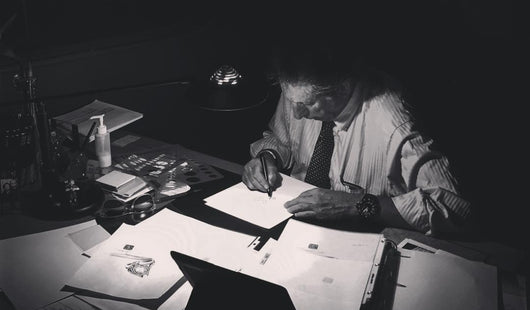
“Each facet is designed to catch the light and captivate the eye. It’s where a gemstone truly comes alive.”
— John Atencio
Defining a Facet
In jewelry, a facet is a flat, polished surface cut into a gemstone to guide light with intention.
Facets do not change a gemstone’s chemical makeup. Instead, they enhance its natural optical properties by shaping how light behaves within the stone.
The effectiveness of faceting depends on:
-
The number of facets
-
Their angles and placement
-
Symmetry and alignment
-
The quality of polish
When facets are precisely cut, light enters through the crown, reflects internally, and exits back toward the viewer. When facets are poorly proportioned or misaligned, light escapes through the sides or bottom, reducing brilliance and creating dark areas sometimes referred to as windowing.
Facets Within the Four Cs
Facets are not a separate grading category. They fall within cut, one of the Four Cs used to evaluate diamonds, alongside color, clarity, and carat weight.
-
Color describes a gemstone’s body tone
-
Clarity refers to internal and external characteristics
-
Carat weight measures size
-
Cut, including facet precision, determines light performance
A gemstone with excellent color and clarity can still appear dull if its facets are poorly executed. Conversely, a well-faceted stone can appear brighter and more dynamic than its specifications suggest.
For visual impact, cut quality and facet precision are often the most influential factors.
Facet Structures: Brilliant, Step, and Mixed Cuts
Facets are arranged in distinct structural patterns, known as cutting styles. Each produces a different visual effect.
Brilliant Faceting
Brilliant faceting uses numerous triangular and kite-shaped facets that radiate outward from the center of the stone. This structure is designed to maximize sparkle and dynamic light movement.
Common brilliant-cut shapes include round, oval, pear, cushion, and heart. These stones are valued for brightness, energy, and visual intensity.
Step Faceting
Step faceting features long, rectangular facets arranged in parallel rows. Rather than rapid sparkle, this structure produces broader flashes of light and emphasizes clarity and depth.
Emerald and Asscher cuts are classic examples. Their facet structure highlights symmetry and proportion, revealing the interior of the stone.
Mixed Faceting
Mixed faceting combines elements of brilliant and step faceting within a single stone. This structure balances lively light return with defined geometry and depth.
Radiant and princess cuts are common examples, valued for their brightness, strong visual presence, and architectural outlines.
How Facets Influence Brilliance, Fire, and Scintillation
Facets shape three primary optical effects.
Brilliance refers to the return of white light from the gemstone.
Fire describes the dispersion of light into spectral colors.
Scintillation is the pattern of light and dark flashes created as the stone moves.
The balance between these effects depends on facet angles, symmetry, and polish. When these elements are resolved correctly, the gemstone feels alive rather than flat.
Facet Count and Sparkle
More facets do not automatically result in more sparkle.
Sparkle depends on precision and proportion, not facet quantity alone. A gemstone with fewer, well-executed facets can outperform one with many poorly aligned surfaces.
Excessive or poorly planned faceting can scatter light unpredictably, reducing overall brilliance. Balance remains the guiding principle.
Why Faceting Developed
Faceting evolved to solve a practical problem: how to control light.
Early gemstones were often shaped as cabochons, smooth-domed forms that emphasized color but offered limited sparkle. As cutting tools improved, early faceted styles such as table cuts and rose cuts emerged, reflecting candlelight more effectively.
The modern round brilliant cut, introduced in 1919, applied mathematical precision to maximize light return under electric lighting. This marked a turning point in gemstone cutting.
Today’s faceting reflects centuries of refinement, guided by both technical knowledge and visual judgment.
Facet Quality and Gemstone Value
Facet quality plays a critical role in both beauty and value.
A well-faceted gemstone can appear brighter, more lively, and even larger than a poorly cut stone of the same weight. Poor faceting can diminish the appearance of even high-grade material.
When assessing facet quality, professionals consider:
-
Symmetry and alignment
-
Consistency of facet size
-
Quality of polish
-
Balanced light return
At John Atencio, gemstones are evaluated holistically, with light performance given particular emphasis.
Facets and Setting Design
Facet structure influences how a gemstone should be supported in jewelry.
Gemstones with higher crowns often benefit from more open or elevated settings, allowing light to move freely through the stone. When thoughtfully designed, the setting supports facet performance rather than interfering with it.
Step-cut stones often pair naturally with clean, architectural metalwork. Brilliant cuts frequently complement sculptural designs that enhance movement and light play.
“A well-faceted gemstone is alive with energy. My goal is to design pieces that celebrate that energy, not hide it.” — John Atencio
Faceting in Custom Jewelry
In custom jewelry design, facet structure is often part of the conversation.
Different facet arrangements evoke different visual effects and emotional responses. At John Atencio, facet style, gemstone shape, and setting design are considered together to ensure harmony, proportion, and long-term wear.
Caring for Faceted Jewelry
Facets rely on clean, polished surfaces to perform at their best.
Recommended care includes:
-
Cleaning with warm water, mild soap, and a soft brush
-
Storing pieces separately to prevent scratches
-
Avoiding harsh chemicals and strong impacts
Professional inspection and occasional re-polishing can restore brilliance over time.
The Enduring Role of the Facet
Facets define how a gemstone lives in light. They shape brilliance, character, and presence long before a stone is ever set.
In fine jewelry, faceting represents both technical precision and artistic intention. At John Atencio, facets are never treated as surface detail. They are foundational to a gemstone’s beauty.