

1 Ct Diamond Solitaire Necklace Shopping Guide: Settings, Shapes, and Metals

How to Compare a 1 Ct Diamond Solitaire Necklace
Start with the diamond, then compare the setting and chain. Lab-grown and natural diamonds can look alike, but their origin and cost differ. Look at cut, color, and clarity rather than carat weight alone. A four-prong setting shows more of the stone; a bezel wraps its edge for a smooth, secure look. For daily wear, check the chain's thickness and clasp, too.
I'm Lex Atencio, Executive Vice President at John Atencio Jewelry. My work in fine jewelry shapes how I compare a 1 ct diamond solitaire necklace for personal style and lasting wear.
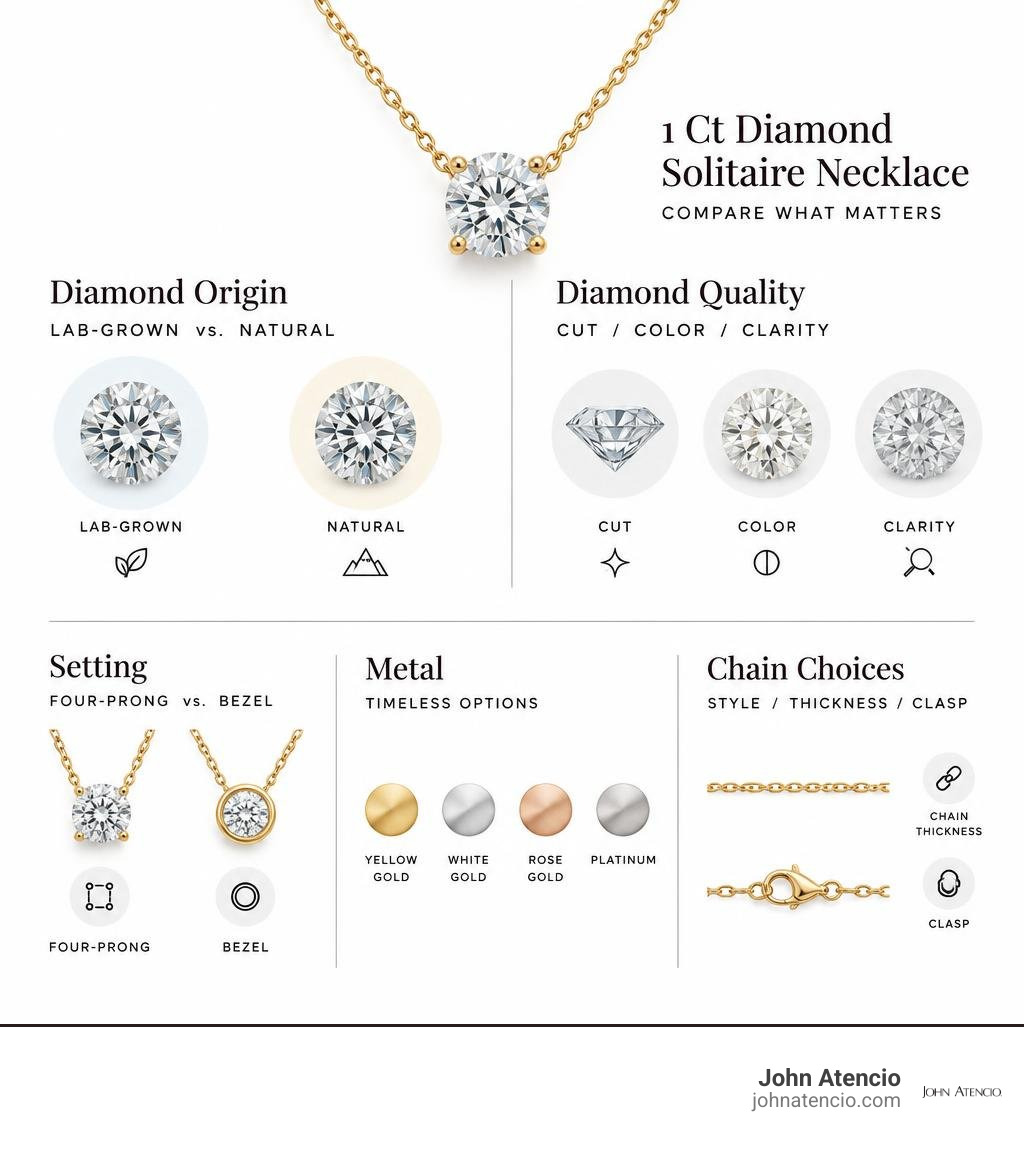
Comparing Lab-Grown vs. Natural 1 Ct Diamond Solitaire Necklace Options
Choosing a centerpiece diamond begins with understanding the fundamental differences between earth-mined gems and lab-created stones. Both options offer genuine crystal structures with identical optical, physical, and chemical properties, yet they appeal to different preferences and priorities.
| Feature | Lab-Grown Diamond | Natural Diamond |
|---|---|---|
| Origin | Advanced laboratory synthesis (weeks) | Formed under subterranean heat and pressure (billions of years) |
| Chemical Composition | Pure carbon ($sp^3$ diamond lattice) | Pure carbon ($sp^3$ diamond lattice) |
| Optical Performance | Identical fire, scintillation, and brilliance | Identical fire, scintillation, and brilliance |
| Sustainability & Traceability | Controlled footprint with transparent origin | Ethically sourced through strict global standards |
| Value Retention | Accessible luxury tier | Classic heirloom resale profile |
A fine natural diamond pendant with 1.00 carat weight embodies a rare geological journey that began deep within the earth billions of years ago. Natural diamonds carry an undeniable sense of timeless permanence, making them favored choices for milestone anniversary gifts and multi-generational heirlooms.
Conversely, lab-grown diamonds are created above ground using advanced technological processes that mimic subterranean heat and pressure. Because they can be produced in a matter of weeks, lab-grown diamonds allow you to maximize your visual impact while prioritizing contemporary, conflict-free sourcing. Both paths yield breathtaking sparkle when held to rigorous design and cutting standards.
Certification Standards and Grading Reports
A credible grading certificate is your assurance of authenticity and craftsmanship. Reputable independent laboratories evaluate a diamond's dimensions, color saturation, internal clarity characteristics, and cut precision.

When selecting your necklace, prioritize these trusted grading bodies:
- GIA (Gemological Institute of America): The global benchmark for grading natural diamonds, known for conservative, consistent standards.
- IGI (International Gemological Institute): A leading laboratory for grading lab-grown diamonds, offering detailed breakdowns of cut quality and growth methods.
- GDTO Standards: Specialized verification programs designed specifically to assess the optical purity and symmetry of modern lab-grown stones.
Beyond the certificate, a formal jewelry appraisal provides a comprehensive description of the mounted piece, noting the precious metal hallmark, gross weight, and individual stone attributes for personal insurance coverage.
Diamond Quality Specifications and Pricing Impact
Carat weight sets the overall scale, but cut, clarity, and color determine the true beauty of a solitaire. A well-proportioned diamond will project light across a room, whereas a poorly cut stone of identical weight will appear dull.
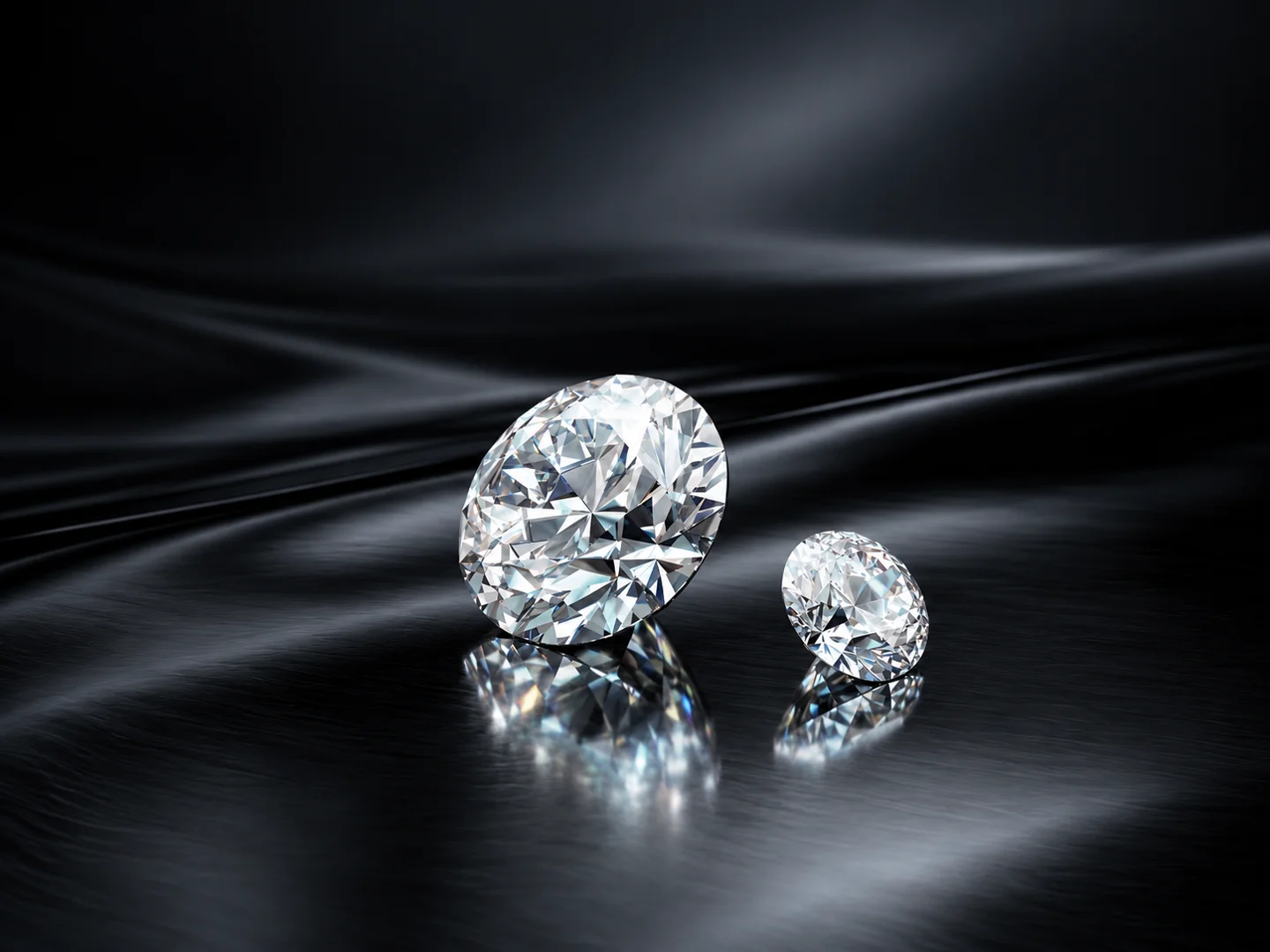
For a distinctive modern silhouette that showcases careful stone curation, designs like our contemporary diamond solitaire pendant illustrate how thoughtful proportions and creative metalwork elevate the center stone.
Evaluating Cut, Color, and Clarity for Necklaces
Because a necklace rests against the skin rather than on an expressive hand, its visual requirements differ slightly from those of a ring.
- Cut Precision: Cut quality is paramount. Precise table and depth percentages ensure maximum light return and edge-to-edge sparkle. Excellent or Ideal cut grades disguise minor natural inclusions and optimize visual presence.
- Color Grading: The near-colorless bracket (G through J) offers remarkable balance. Stones in the H-I range appear bright and white against the decolletage, especially when mounted in white gold or platinum. Warm J-tinted diamonds pair seamlessly with rich yellow gold mountings.
- Clarity Tiers: Eye-clean clarity grades (VS1 through SI2) ensure that internal characteristics remain invisible to the naked eye at normal conversational distances. Lower commercial grades, such as I2 or I3, contain visible clouds or crystals that interrupt light refraction, reducing overall fire.
Popular Diamond Shapes Beyond the Round Brilliant
While the round brilliant remains the undisputed standard for light return, fancy diamond shapes lend unique architectural character to a solitaire necklace:
- Round Brilliant: Features 57 or 58 facets engineered for maximum dispersion and white light return, as seen in classic round diamond pendant designs.
- Emerald Cut: Highlighted by clean step cuts and an open table that creates sophisticated, mirrored flashes of light.
- Oval Cut: Delivers brilliant sparkle with an elongated profile that flatters the neckline.
- Princess & Geometric Cuts: Sharp, contemporary corners that bring modern energy to fine jewelry, complemented by modern motifs like a geometric diamond circle pendant.
Settings and Metal Choices for Solitaire Pendants
The setting secures your diamond while defining the overall personality of the necklace. A minimalist mounting allows the gem to capture light from every angle, while a structured frame adds protective metalwork and bold presence.
Setting Styles for a 1 Ct Diamond Solitaire Necklace
Mounting styles balance light performance with everyday security:
- Four-Prong Basket: A classic architecture featuring four refined prongs that lift the stone, maximizing light entry from the sides and bottom.
- Three-Prong Martini Setting: A tapered, low-profile basket that sits flush against the skin, preventing the pendant from tipping forward.
- Full Bezel Mounting: A sleek rim of metal that completely encircles the diamond's girdle. Bezel settings offer maximum snag resistance against knitwear, making them ideal for active lifestyles.
Precious Metals: 14K, 18K Gold, and Platinum
The choice of metal influences durability, skin comfort, and maintenance schedules:
- 14K & 18K White Gold: Provides a luminous, silvery sheen. White gold alloys are plated with rhodium to achieve a bright mirror finish, which benefits from periodic professional re-plating over years of wear.
- 14K & 18K Yellow Gold: Offers rich warmth, creating an attractive contrast with bright, near-colorless diamonds.
- 14K & 18K Rose Gold: Infuses copper into the alloy for a romantic, vintage-inspired blush tone.
- Platinum: Naturally hypoallergenic, dense, and exceptionally durable. Platinum retains its pure white luster without the need for rhodium plating.
Chain Styles, Durability, and Investment Value
A diamond pendant is only as secure as the chain that supports it. Choosing the correct chain style, thickness, and clasp ensures your solitaire stays safe during daily wear.
- Cable Chains: Feature uniform oval links that drape fluidly and resist kinking.
- Rope & Box Chains: Provide structured strength and high tensile durability for heavier pendants.
- Length & Placement: An 18-inch length rests naturally just below the collarbone on most wearers, while 16-inch chains offer a modern choker placement. Adjustable slider chains offer the versatility to match varying necklines.
- Clasp Mechanisms: Sturdy lobster clasps offer superior durability compared to standard lightweight spring rings.
How Much Does a 1 Ct Diamond Solitaire Necklace Cost?
The value of a 1 ct solitaire necklace reflects diamond origin, certification rigor, cut quality, and metal refinement.
| Category | Lab-Grown Solitaire Tier | Natural Diamond Solitaire Tier |
|---|---|---|
| Entry / Commercial | Promotional lab-grown stones with baseline mountings | Commercial clarity grades (I2–I3) with lighter chains |
| Fine Quality | Hand-selected H-I color, eye-clean SI clarity, 14K gold | Eye-clean near-colorless diamonds, balanced cut, 14K gold |
| Heirloom Luxury | Ideal cuts, premium VS+ clarity, custom 18K or platinum | Exceptional color/clarity, artisan mountings, 18K gold or platinum |
Investment in artisanal craftsmanship guarantees structural integrity, refined prong placement, and premium metal weights that stand the test of time.
Frequently Asked Questions About Diamond Solitaire Pendants
What is the most secure setting for an everyday 1 ct diamond necklace?
A full bezel setting provides the greatest security for daily wear. By wrapping the entire perimeter of the diamond in solid gold or platinum, the bezel shields the stone's edges from accidental impacts and eliminates prongs that can snag on fine clothing.
Does rhodium plating on a white gold solitaire necklace wear off?
Yes. White gold pieces are electroplated with rhodium to produce a crisp, bright white exterior. Over time, friction against skin and clothing will gradually thin the rhodium layer, revealing the warm natural tone of the underlying gold. A jeweler can easily clean, polish, and re-rhodium plate your necklace to restore its original mirror shine.
How do I clean and care for a 1 ct diamond solitaire pendant at home?
Soak your necklace in a small bowl of warm water mixed with a few drops of mild dish soap for ten minutes. Gently clean behind the stone and around the prongs using a soft-bristle toothbrush. Rinse thoroughly under warm running water (ensuring the drain is covered) and pat dry with a lint-free microfiber cloth.
Conclusion
A 1 ct diamond solitaire necklace is a defining cornerstone of any fine jewelry collection, effortlessly bridging casual daytime wear and formal evening elegance. Choosing between natural and lab-grown stones, selecting a secure bezel or sparkling prong setting, and pairing the pendant with a durable chain guarantees decades of enjoyment.
At John Atencio, every piece is shaped by decades of passion, artistry, and meticulous craftsmanship. We invite you to explore our wider collections or read our comprehensive guide to diamond tennis necklaces to discover more ways to elevate your personal jewelry wardrobe.
