

Why 10 mm Pearls Make an Unforgettable Impression in Fine Jewelry

Why 10 mm Pearls Make a Statement in Fine Jewelry
10 mm pearls are a bold, versatile size for fine jewelry. They are large enough to stand out as a pendant, ring centerpiece, or drop earring, yet still refined enough for daily wear. Compared with smaller pearl sizes, a 10 mm pearl has more visual weight, richer light reflection, and a stronger presence against the skin or metal setting.
This size works especially well when you want jewelry to feel personal rather than predictable. Choose round pearls for a classic look, near-round pearls for a softer organic feel, or baroque pearls when one-of-a-kind shape is part of the story. Freshwater, Tahitian, and South Sea cultured pearls can all appear at or near 10 mm, but they differ in color, luster, shape, and rarity.
At John Atencio, handcrafted designer jewelry is carefully crafted for meaningful moments, with domestic orders typically sent via FedEx 2-day service for in stock styles; international customer shipping is only currently available to Canada.
I am Lex Atencio, Executive Vice President at John Atencio, and I help clients understand how 10 mm pearls can become distinctive focal points in fine jewelry.
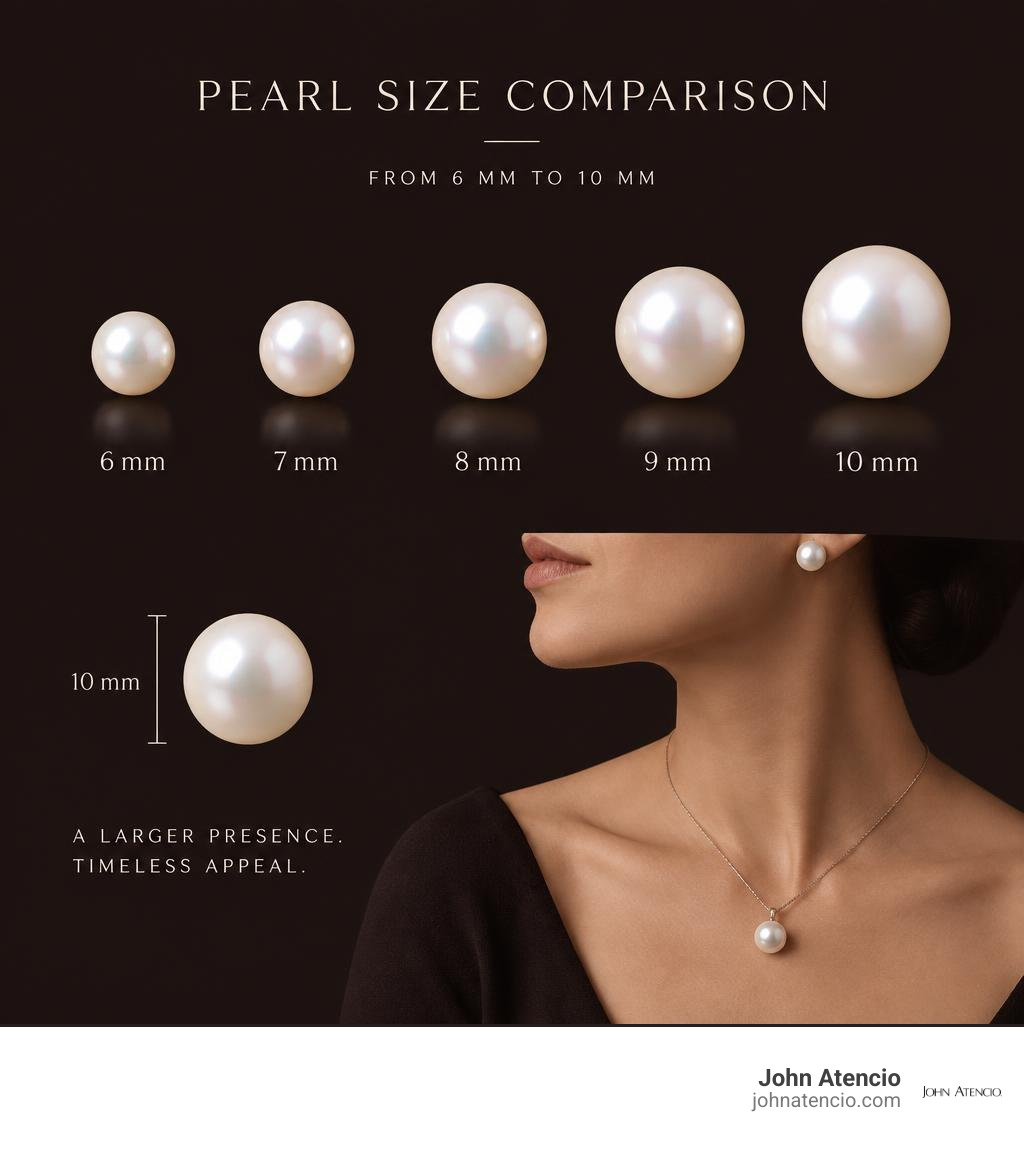
Understanding the Scale and Elegance of 10 mm Pearls
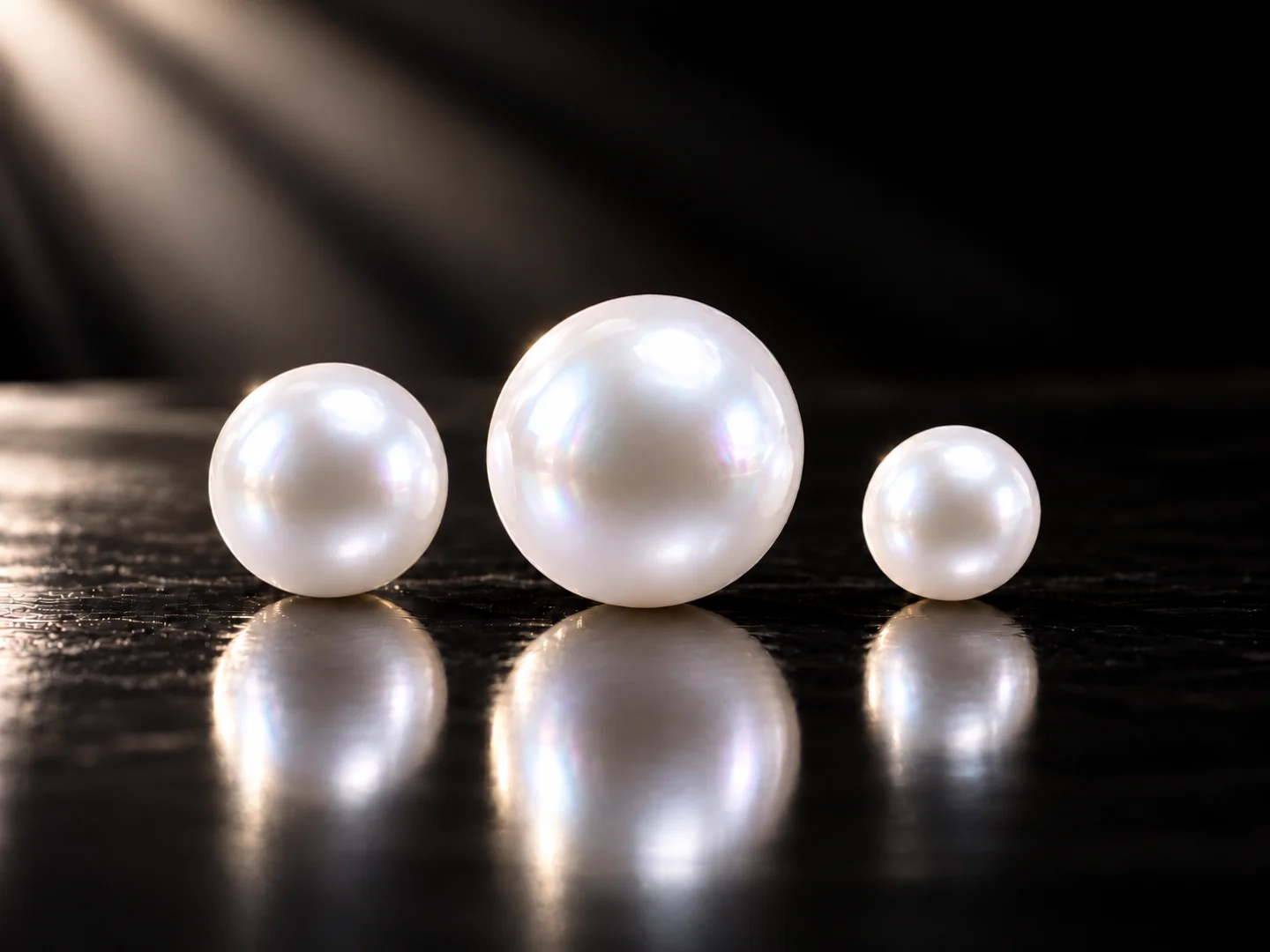
When selecting cultured pearls, millimeter size dictates everything from weight and visual balance to presence on the skin. While traditional vintage strands often measured between 6 mm and 7.5 mm, modern fine jewelry celebrates larger silhouettes that highlight the organic luster of the gem.
At 10 mm, a pearl crosses the threshold into statement territory. It provides enough surface area to showcase complex overtones, deep mirror-like reflections, and subtle textural nuances that are lost on smaller gems. Because organic gems are grown within living mollusks rather than cut from raw mineral crystal, achieving this scale requires exceptional nacre accumulation over an extended period.
| Pearl Variety | Typical Size Range | Primary Natural Colors | Luster Type | Nacre Composition |
|---|---|---|---|---|
| Freshwater | 4 mm – 11 mm | White, Pink, Peach, Lavender | Soft, satiny glow | Solid crystalline nacre |
| Tahitian | 8 mm – 14 mm+ | Peacock, Charcoal, Pistachio, Aubergine | Metallic, sharp reflection | Thick nacre around bead nucleus |
| South Sea (White/Golden) | 9 mm – 16 mm+ | Silver-White, Cream, Deep Champagne, Gold | Deep, velvety, satiny glow | Thick nacre around bead nucleus |
What Defines 10 mm Pearls Across Different Oyster Species
Achieving a 10 mm diameter depends heavily on the biological species of the mollusk and the culturing method employed. In saltwater environments, oysters such as the Pinctada margaritifera (black-lipped oyster) and Pinctada maxima (silver- or gold-lipped oyster) naturally accommodate larger bead nuclei. These oysters thrive in warm ocean currents, secreting layer upon layer of aragonite platelets around an implanted spherical shell bead over two to three years.
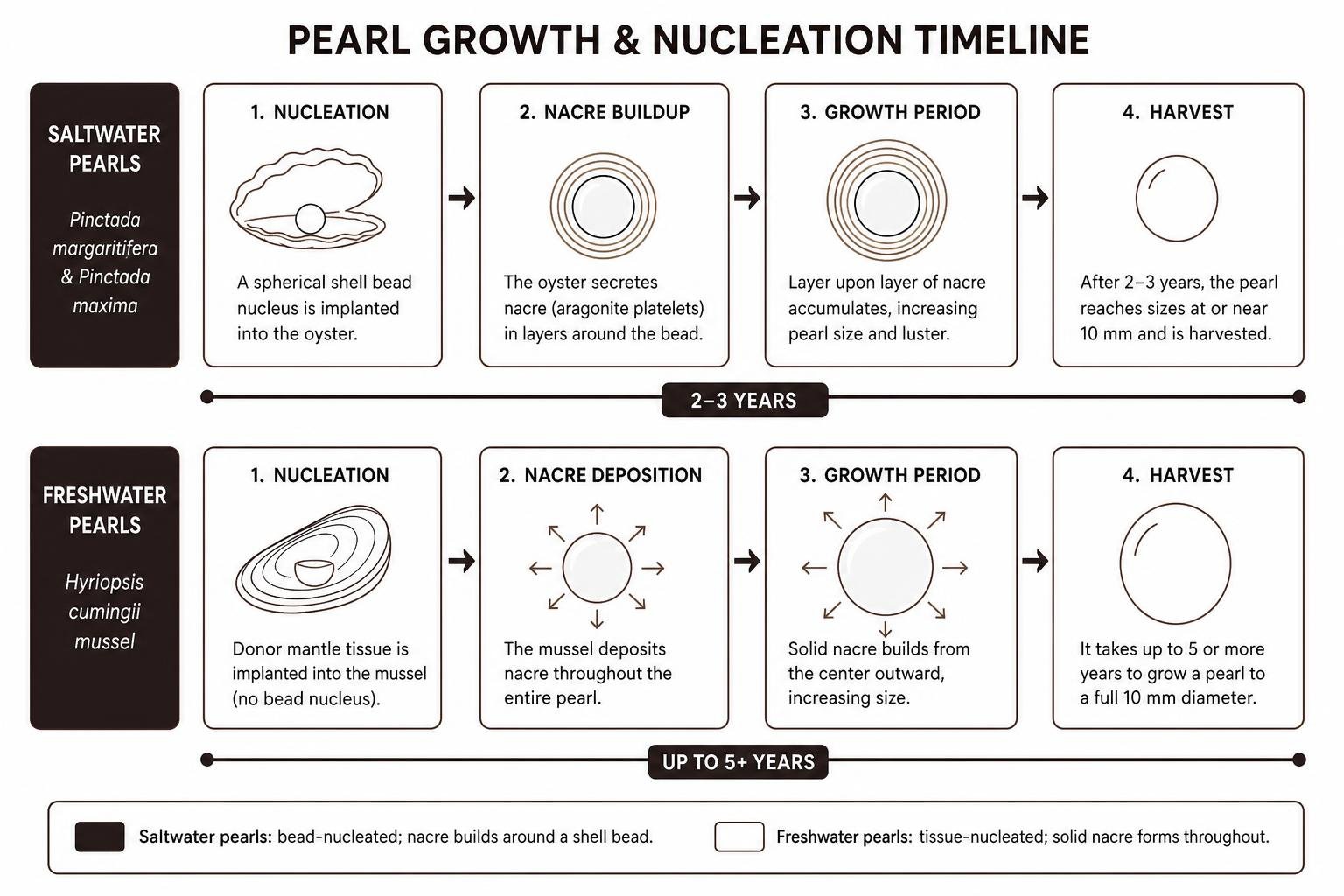
Conversely, freshwater pearls—primarily cultivated in Hyriopsis cumingii mussels—are traditionally nucleated with donor mantle tissue rather than a rigid central bead. Because the mussel deposits nacre throughout the entire volume of the pearl, growing a solid-nacre freshwater gem to a full 10 mm diameter requires up to five or more years of patient cultivation.
Sourcing and Quality Grading of 10 mm Pearls
The journey of fine pearls spans distinct marine and freshwater ecosystems around the globe:
- French Polynesia: Sourced from the lagoons of the Tuamotu and Gambier archipelagos, Tahitian pearls are renowned for their exotic, dark pigmentation and overtone complexity.
- Australian and Philippine Waters: Pristine marine environments produce world-class white and golden South Sea pearls, prized for their luxurious, satiny glow.
- Chinese Freshwater Lakes: Modern pearl farming techniques in these mineral-rich waterways yield an impressive spectrum of pastel hues as well as high-grade white pearls.
Quality grading systems assess five foundational pillars: luster, surface cleanliness, shape symmetry, color saturation, and nacre thickness. Whether inspecting near-round freshwater pearls for custom jewelry or an exquisite saltwater centerpiece, higher grades demand mirror-like light reflection and an exterior largely free of natural blemishes.
Comparing Cultured Pearl Varieties: Freshwater, Tahitian, and South Sea
Choosing the right 10 mm pearl involves balancing color palette, luster profile, and stylistic personality.
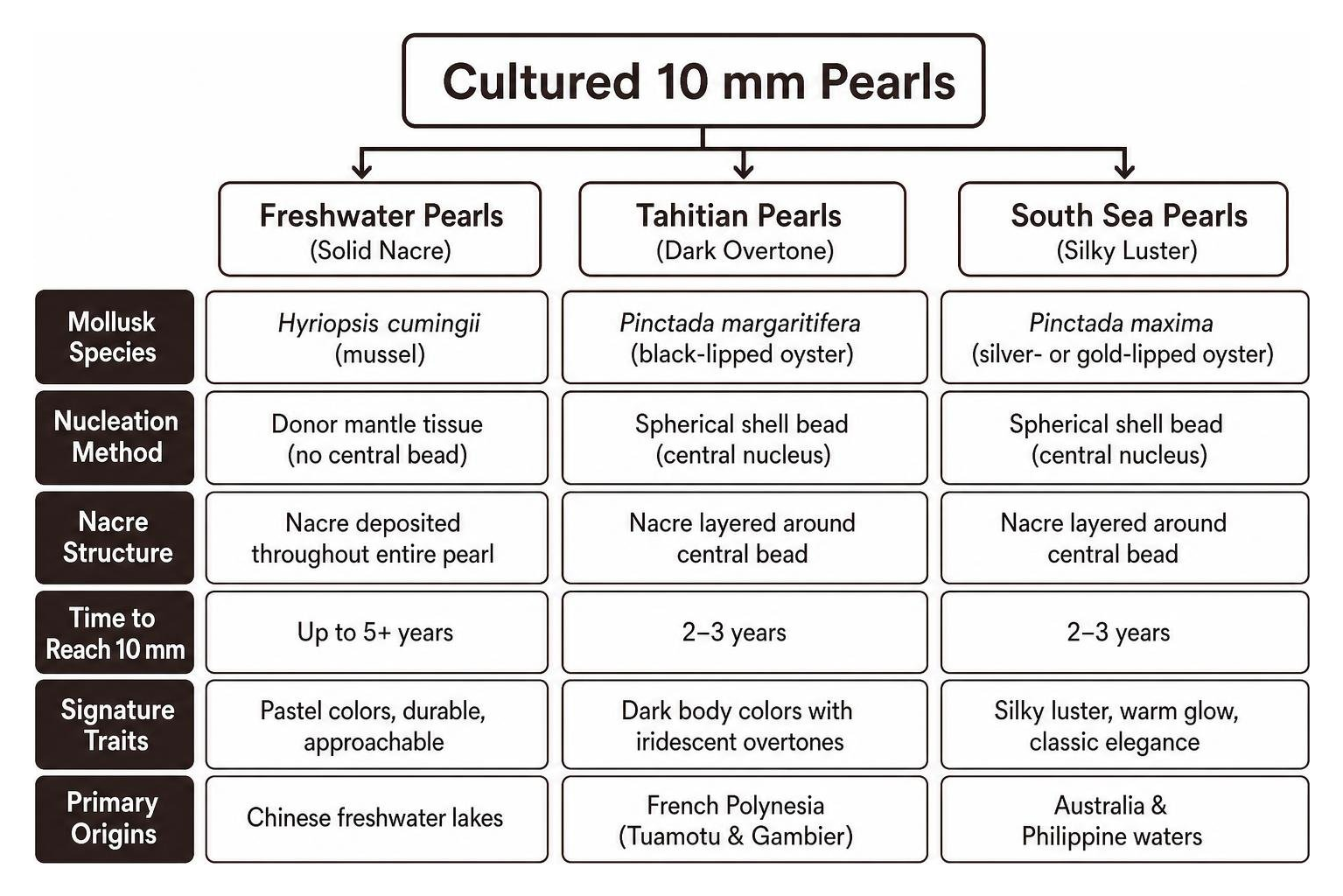
Freshwater varieties offer a delightful, approachable spectrum of pastel tones ranging from delicate rose-pink to soft lavender and classic ivory. Because they consist almost entirely of solid nacre, they display remarkable durability for daily accessories.
Tahitian pearls introduce a moody, contemporary aesthetic. Often called "black pearls," their body colors actually range from deep slate to shimmering graphite, illuminated by iridescent overtones of peacock green, eggplant purple, and copper bronze.
South Sea pearls represent the pinnacle of classical grandeur. Produced by the largest pearl-producing oysters, their thick nacre creates a gentle, deep luster that seems to glow from within rather than reflecting light sharply off the surface. A pair of 12mm South Sea pearl earrings exemplifies this warm, aristocratic glow, making them exceptional companions to 10 mm neckwear or solitaire rings.
When exploring shape, round pearls represent traditional symmetry, but baroque freshwater pearls offer an artisanal, organic silhouette where no two gems are identical. The distinct asymmetry of baroque pearls captures light across diverse surface angles, lending modern edge to custom fine jewelry settings.
Styling Statement Pearl Jewelry for Everyday and Formal Wear
A 10 mm pearl possesses sufficient visual presence to command attention without overwhelming an outfit. In modern fine jewelry design, we pair these substantial gems with architectural lines and rich 18-karat gold to create wearable art that transitions effortlessly from morning meetings to evening galas.
- Earrings: Choosing big round pearl earrings in a 10 mm diameter creates balanced earlobe coverage. The gem anchors the face with a luminous halo, pairing beautifully with tailored blazers or sweeping updos.
- Solitaire Pendants: Set on a delicate or sculptural chain, a 10 mm pearl sits gracefully against the collarbone, drawing the eye without requiring complicated accent stones.
- Statement Rings: Nestling a large cultured pearl within a bezel or tension setting creates a striking tactile experience, combining smooth, organic contours with geometric precious metalwork.
- Modern Bridal: Contemporary brides increasingly select 10 mm pearls to complement clean, architectural bridal gowns, replacing traditional small strands with dramatic drop earrings or a sculptural pendant.
Essential Care and Maintenance for Cultured Pearls
Cultured pearls are organic creations formed of calcium carbonate and organic conchiolin. Unlike crystalline gemstones like sapphires or diamonds, pearls are sensitive to acids, dryness, and abrasive surfaces.
- "Last On, First Off": Always apply cosmetics, perfumes, hairsprays, and body lotions before putting on your pearl jewelry. The chemicals in beauty products can erode delicate nacre over time, dulling the pearl's reflective luster.
- Gentle Cleaning: After each wear, wipe your pearls with a clean, damp microfiber cloth to remove skin oils and environmental residues. Never use steam cleaners, ultrasonic machines, or harsh detergents.
- Dedicated Storage: Store pearl jewelry flat inside a soft velvet-lined pouch or dedicated jewelry box compartment. Keeping them separate from harder gemstones prevents unwanted surface scratching.
- Periodic Restringing: If your 10 mm pearls are strung on silk thread, inspect the knots annually. Silk stretches over time; professional restringing ensures your treasured strand remains secure and perfectly spaced.
Frequently Asked Questions About Cultured Pearls
Are 10 mm pearls too large for daily wear?
Not at all. A 10 mm pearl strikes an ideal balance between subtle grace and modern visual impact. When paired with low-profile studs, drop settings, or minimalist pendant bails, the weight remains comfortable and well-distributed for all-day wear.
What makes a 10 mm pearl more valuable than smaller pearls?
Value increases non-linearly with pearl diameter. Because an oyster must remain healthy in ocean or freshwater beds for years to yield a 10 mm gem, mortality risks and natural environmental shifts make high-quality, large harvests far rarer than standard 6 mm to 7 mm yields.
How does shape affect the value of large pearls?
Perfectly spherical pearls command the highest market premiums due to the difficulty of achieving uniform nacre distribution during growth. However, symmetrical teardrop pearls and artistically irregular baroque pearls are celebrated for their sculptural character, offering distinct visual appeal in bespoke jewelry designs.
Conclusion
A 10 mm pearl is an extraordinary expression of nature's artistry and architectural beauty. Whether adorning a bold solitaire ring, framing the face in handcrafted earrings, or resting as a pendant, these gems offer an enduring blend of sophistication and tactile luxury.
At John Atencio, every piece of fine jewelry is meticulously sketched and hand-crafted with exceptional attention to balance, structural integrity, and sustainable sourcing. We invite you to discover how bold silhouettes and organic gems harmonize by exploring contemporary pearl jewelry trends across our latest designer collections. All domestic orders are delivered securely via complimentary FedEx 2-day shipping; please note that we only ship internationally to Canadian customers.