

Understanding 18 Karat Yellow Gold vs 14K Gold

What Is 18 Karat Yellow Gold — and How Does It Compare to 14K?
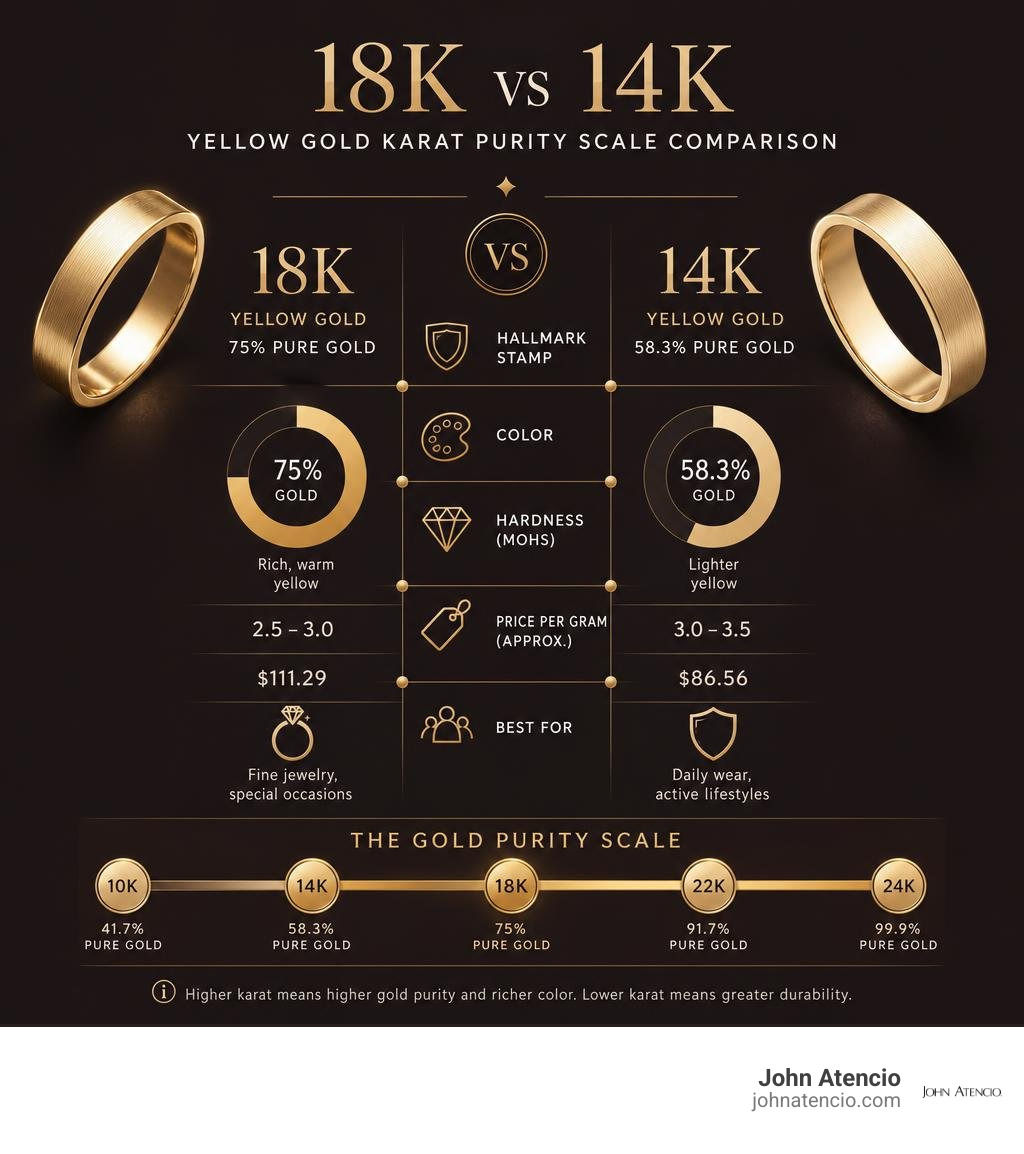
18 karat yellow gold is a gold alloy made of 75% pure gold and 25% other metals — the standard used by luxury jewelry houses, and the dominant choice for fine jewelry across Europe, Japan, and the Middle East.
Here's a quick breakdown of what sets it apart:
| Feature | 18K Yellow Gold | 14K Yellow Gold |
|---|---|---|
| Gold purity | 75% | 58.3% |
| Hallmark stamp | 750 | 585 |
| Color | Rich, warm yellow | Lighter yellow |
| Hardness (Mohs) | 2.5–3.0 | 3.0–3.5 |
| Price per gram (approx.) | $111.29 | $86.56 |
| Best for | Fine jewelry, special occasions | Daily wear, active lifestyles |
If you want the richest yellow color and the highest gold purity available in wearable fine jewelry, 18K is the standard to look for. If scratch resistance and everyday durability matter more, 14K is worth considering.
But the choice isn't always that simple — and the details matter, especially when you're investing in a piece that tells your story.
I'm Lex Atencio, Executive Vice President at John Atencio, and with over 17 years in fine jewelry design and retail experience, I've worked closely with the materials, craftsmanship, and ethical sourcing decisions that go into every 14 karat and 18 karat yellow gold piece we create. In this guide, I'll walk you through everything you need to know to make a confident, informed choice.
Composition and Purity of 18 Karat Yellow Gold
When you hold a piece of 18 karat yellow gold jewelry, you hold a tradition of refined metalworking that spans centuries. In its natural form, 24 karat gold is 99.9% pure. However, pure 24K gold is exceptionally soft—so soft, in fact, that a ring made of pure gold could easily dent or warp under everyday pressure. To make gold durable enough for sculptural jewelry, master goldsmiths melt pure gold down and alloy it with complementary base metals.
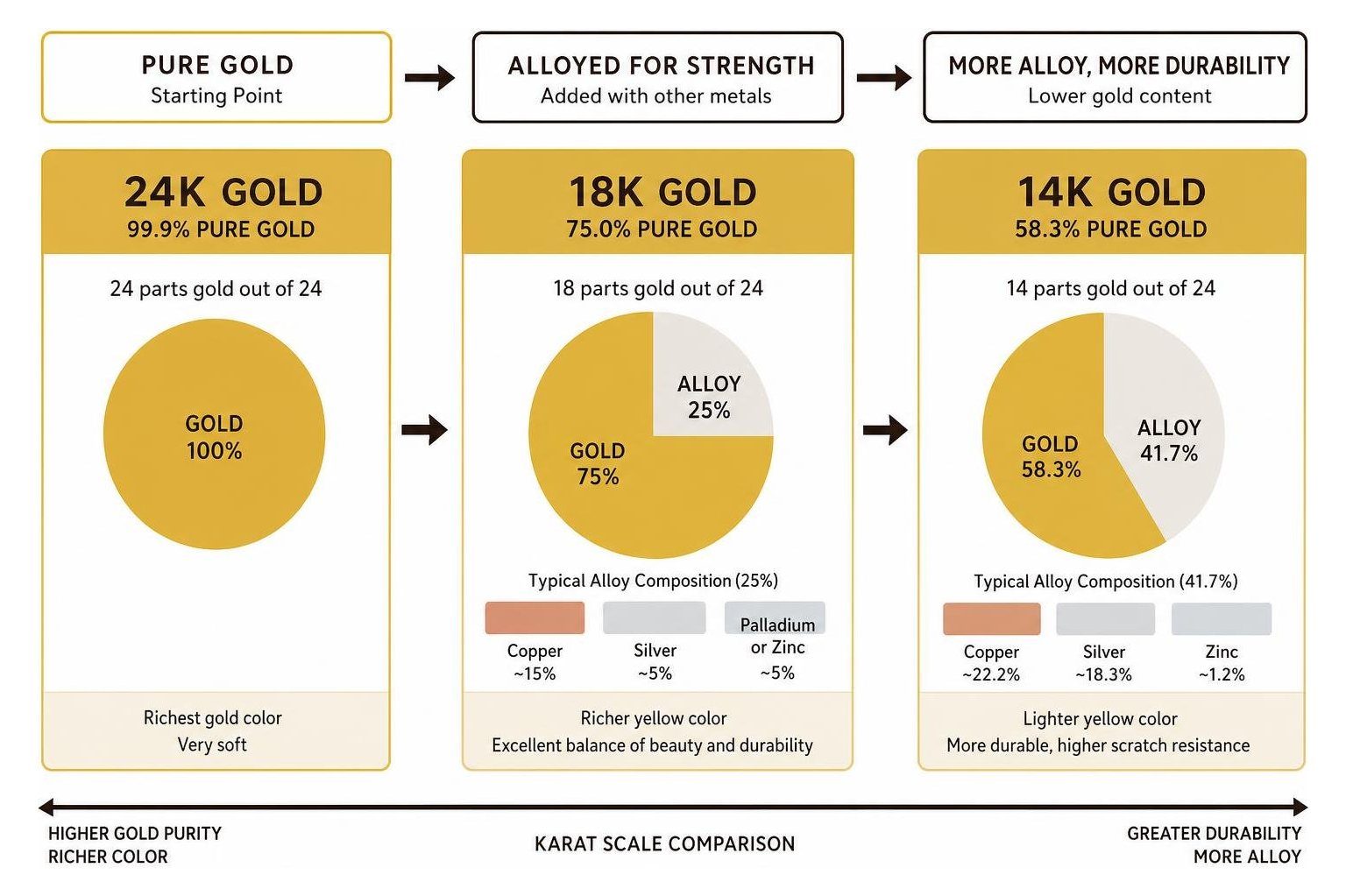
An 18 karat gold alloy consists of exactly 18 parts pure gold out of 24 total parts, which translates precisely to 75% gold purity. The remaining 25% consists of non-gold metals meticulously selected to enhance strength, structural stability, and hue.
In fine 18K yellow gold, this 25% alloy matrix typically features:
- Copper (~15%): Adds vital tensile strength and structural integrity while introducing a hint of warm warmth.
- Silver (~5%): Softens the reddish tones of copper, keeping the metal's radiance bright and classically yellow.
- Palladium or Zinc (~5%): Acts as a stabilizing agent, preventing tarnish and refining the overall alloy finish.
Understanding these ratios is essential when exploring our comprehensive precious metal guide. The exact blend of copper and silver ensures that 18K yellow gold maintains its natural golden brilliance while acquiring the rigidity necessary to hold complex gemstone settings.
In international trade and European markets, you will often see 18K gold stamped with the hallmark 750. This number represents millesimal fineness, indicating 750 parts per thousand (75.0% pure gold). Understanding these purity marks—whether "18K," "18KT," "18CT," or "750"—gives you peace of mind that your jewelry meets strict international fine metal standards.
Comparing 24K, 18K, and 14K Gold Standards
To appreciate where 18K yellow gold sits on the purity spectrum, it helps to review the broader karat scale established across global jewelry markets:
- 24K Gold (99.9% Pure): The ultimate standard of gold purity. Because it lacks added alloys, 24K gold features an intense orange-yellow tone but remains far too malleable for everyday gemstone rings or intricate bands.
- 18K Gold (75.0% Pure): The fine jewelry standard throughout Europe, the Middle East, and high-end atelier design. It offers maximum rich golden tone while remaining durable enough for wearable art.
- 14K Gold (58.3% Pure): The most common gold alloy in the North American market. Composed of 58.3% pure gold and 41.7% alloy metals (often 22.2% copper, 18.3% silver, and 1.2% zinc), 14K offers increased scratch resistance at a slightly lighter, paler color.
- 10K Gold (41.7% Pure): The legal minimum purity threshold to be sold as solid gold in the United States. It is extremely durable but contains more non-gold alloys than pure gold.
While 14K gold remains popular for budget-conscious buyers, 18K yellow gold is prized by connoisseurs who prioritize richer color saturation, higher precious metal content, and superior long-term prestige.
Visual Appearance: Comparing 18 Karat Yellow Gold to 14K
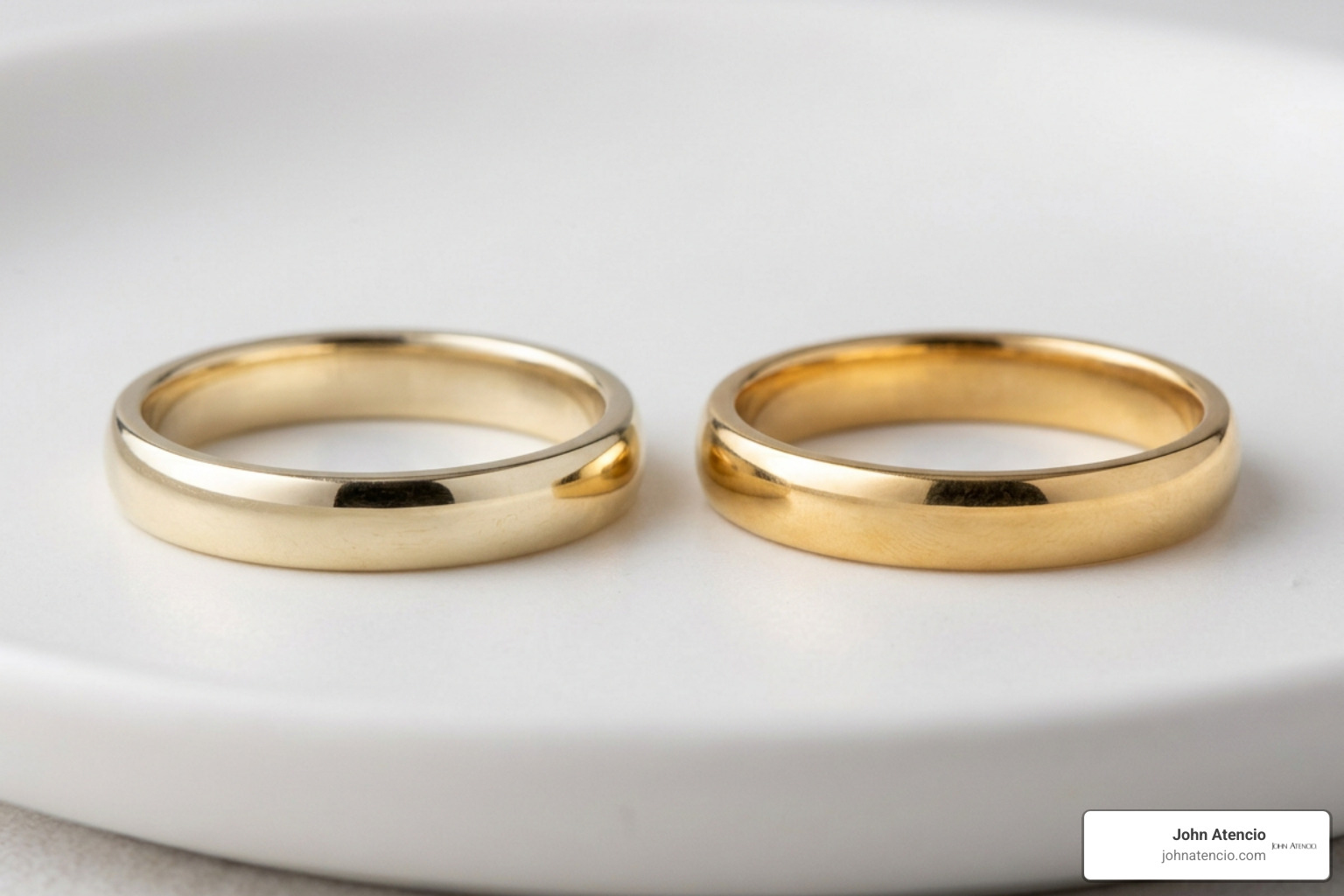
One of the most immediate differences between 14K and 18K yellow gold is visual saturation. Because 18K gold contains a full 75% pure gold content compared to 14K’s 58.3%, it possesses a noticeably deeper, buttery golden hue.
While 14K yellow gold displays a paler, slightly straw-like or "lemon" yellow appearance due to its 41.7% silver and copper alloy content, 18 karat yellow gold radiates a warm undertone often described as "rich honey" or "sunlit gold." This difference in color intensity becomes especially striking when set alongside high-grade white diamonds or vivid colored gemstones, where the deep warm backdrop of 18K gold makes brilliant gems pop with remarkable vibrancy. For a deeper look at color dynamics, check out 14k vs 18k Yellow Gold: Key Differences Explained.
Durability, Value, and Solid Gold Comparison
When choosing between metal karats, balancing aesthetic brilliance against practical everyday performance is key.
| Metal Property | 18K Yellow Gold | 14K Yellow Gold |
|---|---|---|
| Pure Gold Percentage | 75.0% | 58.3% |
| European Hallmark | 750 | 585 |
| Mohs Hardness Rating | 2.5 – 3.0 | 3.0 – 3.5 |
| Scratch Resistance | Moderate | High |
| Raw Gold Value (per gram, 2026 spot $4,615/oz) | ~$111.29 | ~$86.56 |
| Hypoallergenic Profile | Excellent (Low allergy risk) | Good (Slightly higher alloy exposure) |
| Color Depth | Deep, warm golden yellow | Paler, soft yellow |
Daily Wear and Durability of 18 Karat Yellow Gold
A common question buyers ask is whether 18 karat yellow gold is tough enough for everyday life. On the Mohs scale of mineral hardness, 18K gold rates between 2.5 and 3.0, whereas 14K gold rates slightly higher at 3.0 to 3.5. This difference means 18K gold is softer and more prone to minor surface scratches or micro-dings when struck against hard surfaces like steel or granite counters.
However, "softer" does not mean delicate or fragile. Solid 18K gold does not chip or break easily; rather, as it is worn over years, it develops a soft, refined patina that many fine jewelry lovers actually prefer.
For high-impact pieces like daily wedding bands or everyday rings, simple protective habits—like removing your rings during heavy lifting, weight training, or gardening—will keep your metal looking flawless. For low-impact pieces like earrings, pendants, and brooches, 18K yellow gold offers all the durability you will ever need with no compromise on luster.
Cost, Spot Price, and Resale Value
Because 18 karat yellow gold contains roughly 29% more pure gold per gram than 14K gold, it carries a higher base material cost.
At a market spot price of approximately $4,615.40 per troy ounce, the raw intrinsic gold value breaks down as follows:
- 18K Solid Gold: Worth approximately $111.29 per gram in raw gold melt value.
- 14K Solid Gold: Worth approximately $86.56 per gram in raw gold melt value.
When purchasing finished designer jewelry, retail prices reflect fine craftsmanship, custom finishes, hand-setting, and proprietary design alongside raw metal values. However, when evaluating long-term financial backing and trade-in value, 18K gold consistently retains higher melt and scrap resale value over time due to its higher absolute gold density. For detailed market calculations, see 14K vs 18K Gold: Which Is Worth More When You Sell?.
18K vs 14K Solid Gold Differences
It is crucial to clarify what "solid gold" actually means in fine jewelry. Solid gold does not mean 24K pure gold; rather, it indicates that the item is crafted from a continuous, uniform gold alloy throughout its entire structure, containing no hollow centers, base metal cores, or surface coatings.
By contrast, non-solid gold items rely on thin layers of gold placed over inexpensive base metals like brass, copper, or nickel:
- Gold Plated (18KGP): A microscopic electroplated layer of 18K gold (0.5 to 2.5 microns thick) applied over brass or silver. Plating wears off after 1 to 3 years of regular wear.
- Gold Filled (18KGF): A thicker sheet of 18K gold mechanically bonded under heat and pressure to a brass core, requiring at least 5% gold by total weight.
To understand these structural differences thoroughly, review our detailed Gold vs Gold Filled comparison. Solid 18K yellow gold will never peel, rub off, or expose base metal beneath, making it an heirloom metal capable of lasting generations.
Hypoallergenic Qualities, Testing, and Care Tips
Skin sensitivities and metal allergies are a major concern for modern jewelry buyers. Because 18 karat yellow gold consists of 75% pure gold, it contains a significantly lower percentage of non-precious base metals than 10K or 14K gold.
Pure gold is entirely inert and hypoallergenic. Allergies to gold jewelry are almost always triggered by nickel or excessive copper in the lower-karat alloy mix. Because high-end 18K yellow gold replaces harsh alloys with silver and palladium, it is exceptionally gentle on sensitive skin, making it an ideal choice for anyone prone to contact dermatitis or skin discoloration.
How to Verify Solid Gold Authenticity
With secondary markets and online sales expanding, knowing how to verify authentic 18K gold is vital.
Here are key methods to confirm your piece is real solid 18K gold:
- Hallmark Inspection: Look inside ring bands, earring posts, or necklace clasps using a 10x jeweler's loupe. Authentic pieces carry clear stamps such as 18K, 18KT, 18CT, or 750. Be wary of stamps with extra letters like "GP" (Gold Plated), "GF" (Gold Filled), or "HGE" (Heavy Gold Electroplate).
- The Magnet Test: Pure gold and fine silver are non-magnetic. If your gold piece snaps strongly toward a high-powered magnet, it contains a ferrous iron base metal core and is not solid gold.
- Professional XRF Testing: The gold standard for non-destructive verification. Fine jewelers use X-Ray Fluorescence (XRF) analyzers to instantly read the exact percentage of gold, silver, copper, and palladium inside your piece without damaging the metal.
Care and Maintenance Guidelines
Keeping your 18K yellow gold glowing requires simple routine maintenance. Follow these practical steps to care for your fine pieces:
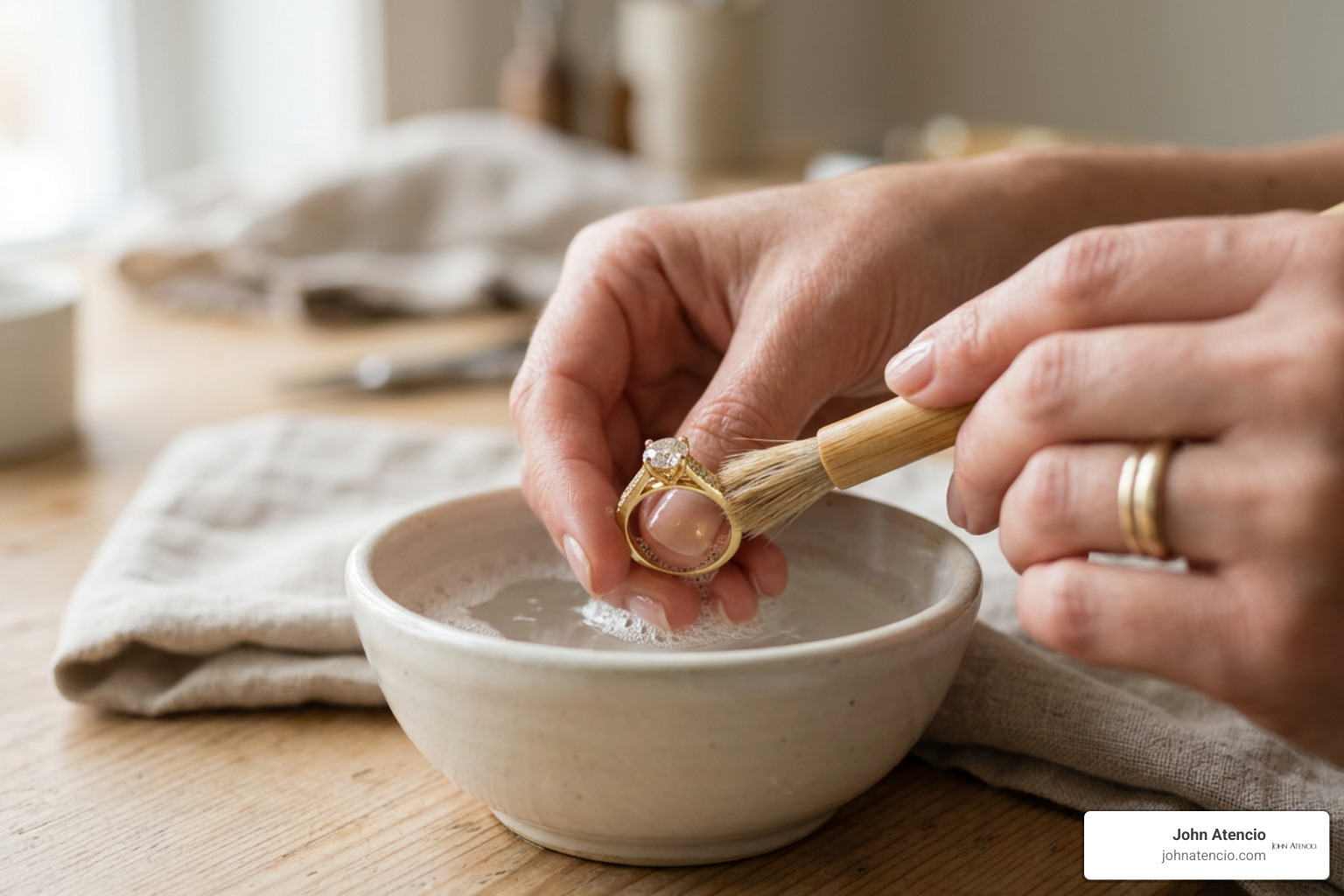
- Clean gently at home: Soak your gold pieces in warm water mixed with a few drops of mild, phosphate-free dish soap for 10–15 minutes. Gently scrub away oils using a soft-bristled toothbrush, rinse in clean water, and dry thoroughly with a soft lint-free cloth.
- Avoid aggressive chemicals: Always remove yellow gold rings before entering chlorinated swimming pools, hot tubs, or handling harsh household cleaning products like bleach or ammonia, which can weaken alloy matrices over time.
- Store pieces individually: Because 18K gold can be scratched by harder gemstones like diamonds or sapphires, store each item in its own soft fabric pouch or padded jewelry box compartment.
- Schedule annual inspections: Visit your jeweler once a year to inspect gemstone prongs, clasps, and structural joints to keep your settings secure for a lifetime.
To learn more about general gold care traditions across global styles, consult Your gold karat guide: 14K vs 18K vs 22K, solid gold vs plated jewellery - CNA Lifestyle.
Choosing 18K Yellow Gold for Engagement Rings
Yellow gold engagement rings have experienced an extraordinary resurgence. Today's brides and grooms increasingly seek warm, distinctive metal settings that celebrate individuality and timeless elegance.
Selecting 18 karat yellow gold for an engagement ring offers unequaled richness. The deep golden background creates a majestic contrast against natural or lab-grown diamonds, casting a warm glow through the stone's pavilion and crown facets.
When weighing metal choices for your forever ring, compare options carefully:
- 18K Yellow Gold vs 14K Yellow Gold: 18K provides maximum prestige and rich golden color. 14K offers slightly higher scratch resistance for individuals with highly physical hands-on careers.
- 18K Yellow Gold vs Platinum: Platinum is a naturally white, dense, heavy metal that requires minimal maintenance to stay white. However, 18K yellow gold brings an unmatched organic warmth and classic luxury aesthetic that platinum cannot replicate. Explore our detailed guide on Platinum vs 18K gold choices to see which metal aligns best with your design vision.
At John Atencio, our sculptural ring designs are engineered with solid structural geometry, ensuring that 18K gold prongs provide maximum holding security for your center diamond while celebrating bold artistic lines.
Frequently Asked Questions About Gold Karats
Is 18K yellow gold real gold?
Yes, absolutely. 18 karat yellow gold is genuine solid gold containing 75% pure natural gold mixed with 25% fine alloy metals. It is recognized worldwide as an international fine jewelry standard.
Does 18K yellow gold tarnish or fade?
Solid 18K gold does not tarnish, rust, or corrode under normal conditions. Because pure gold is chemically non-reactive, it will never fade or change color. Minor surface dullness caused by skin oils or lotions can easily be wiped clean with a soft microfiber polishing cloth.
Is 18K yellow gold safe for sensitive skin?
Yes. Thanks to its high 75% pure gold ratio and low percentage of base metal alloys, 18K yellow gold is considered highly hypoallergenic and safe for individuals with nickel allergies or sensitive skin.
Conclusion
Choosing fine jewelry is an intimate journey—one where art, personal story, and material purity meet. 18 karat yellow gold stands out as a premier metal choice, offering rich warmth, high purity, and enduring prestige that transcends passing trends.
At John Atencio, every piece of yellow gold jewelry is thoughtfully designed as wearable art. From over 50 years of master design experience, John Atencio crafts iconic engagement rings, wedding bands, and fine jewelry using ethically sourced metals and conflict-free diamonds. Whether you are exploring modern bridal style or custom statement pieces, discover the warmth of our collections and explore Gen Z Engagement Ring Trends Yellow Gold to find the design that speaks to your personal style.