

1 Stone Diamond Earrings: Simple Elegance That Speaks Volumes

Why 1 Stone Diamond Earrings Make a Lasting Statement
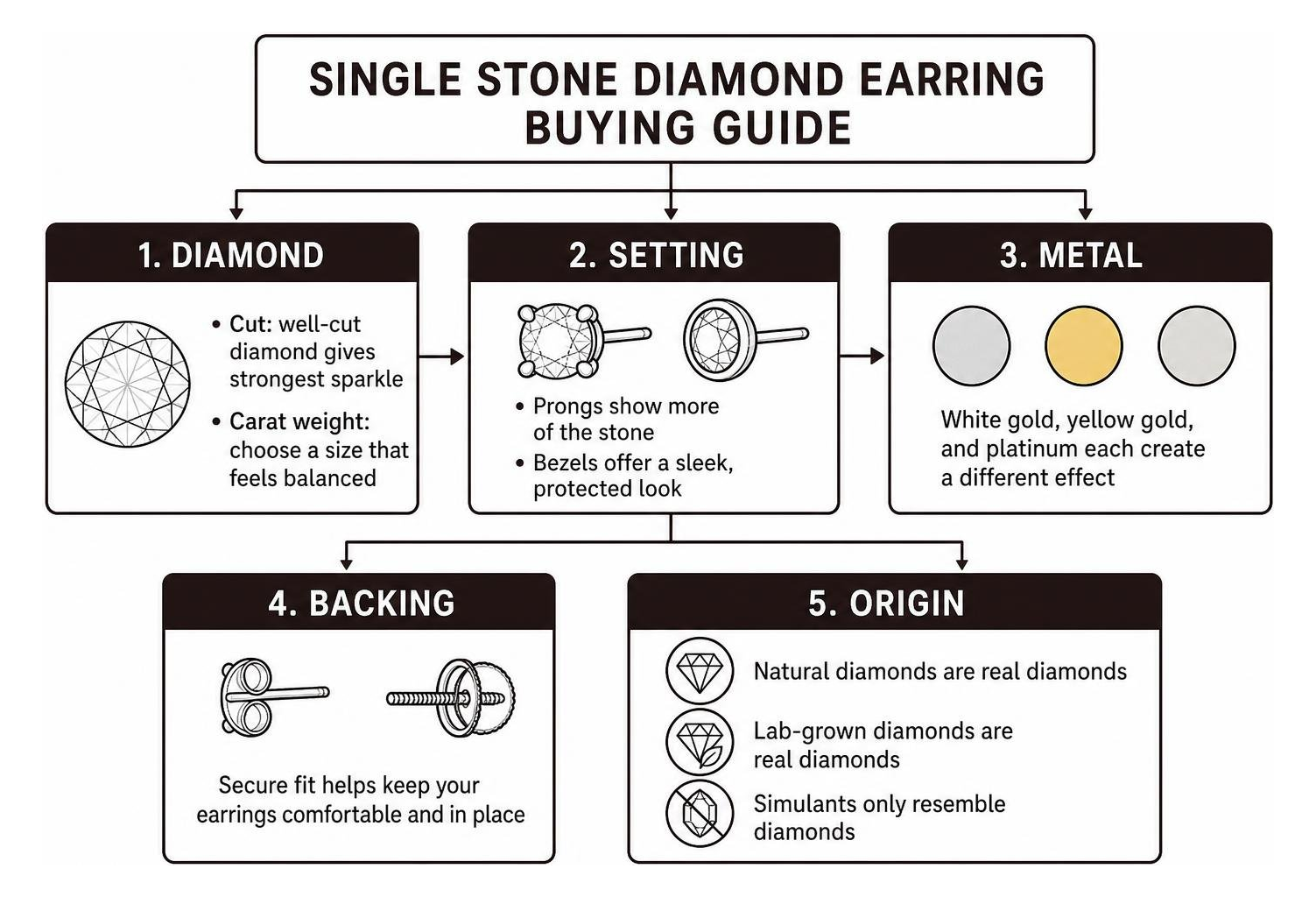
1 stone diamond earrings place one diamond at the center of each ear, creating a clean, bright look that works with almost any wardrobe. Unlike halo, cluster, or other multi-stone styles, they let the cut and sparkle of one carefully chosen diamond stand on its own.
For a smart first choice, focus on:
- Cut: A well-cut diamond gives the strongest sparkle. Round brilliant remains the most popular shape for diamond earrings.
- Carat weight: Choose a size that feels balanced on your ear and fits your daily style.
- Setting and metal: Prongs show more of the stone, while bezels offer a sleek, protected look. White gold, yellow gold, and platinum each create a different effect.
- Diamond origin: Natural and lab-grown diamonds are real diamonds; simulants only resemble them.
A solitaire stud can be quiet or bold, classic or sculptural. It is an easy everyday piece, a meaningful milestone gift, and a personal alternative to jewelry that feels overly matched or generic.
I am Lex Atencio, Executive Vice President at John Atencio, with more than 17 years of jewelry and design experience. My work with handcrafted fine jewelry, including natural and lab-grown 1 stone diamond earrings, helps clients find pieces with clear provenance and a story worth wearing.
What Defines 1 Stone Diamond Earrings vs. Multi-Stone Styles
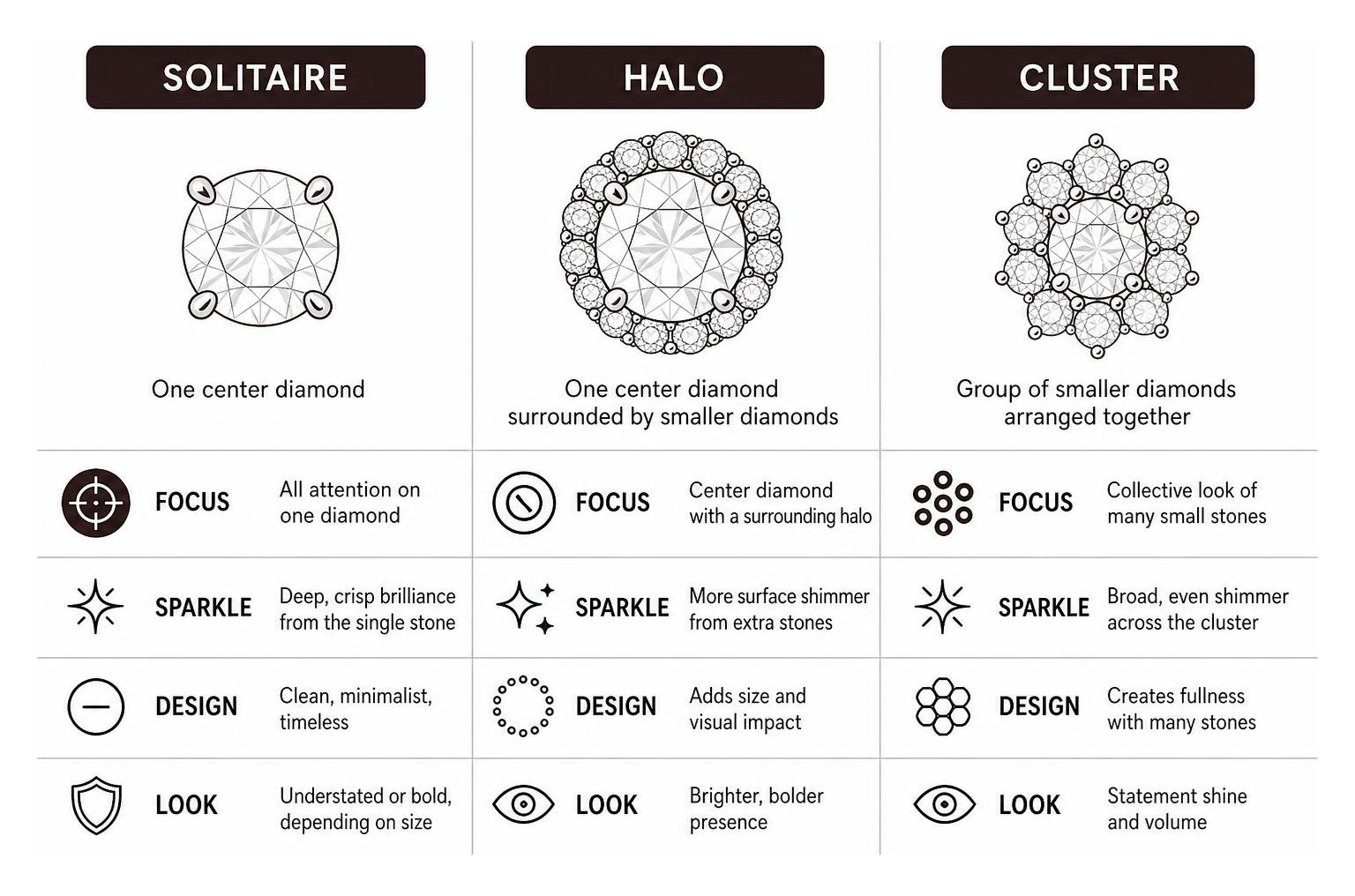
When we talk about solitaire designs, we are celebrating the purity of an unbroken focal point. A single stone earring features one individual diamond mounted seamlessly on a precious metal post or drop. There are no secondary accent gems, no surrounding halos, and no pave clusters competing for attention.
In contrast, multi-stone earrings—such as cluster or halo earrings—rely on an arrangement of smaller diamonds set close together. While multi-stone jewelry creates broad surface shimmer, it lacks the depth, crisp optical symmetry, and singular brilliance of an exceptional standalone gem. Solitaire studs highlight the raw beauty, geometric precision, and inner fire of the diamond itself.
Our broader Women's Earrings Collection showcases how versatile fine ear adornments can be. Still, the minimalist aesthetic of single-stone earrings holds a unique place in fine jewelry. Diamond earrings are the second most popular diamond jewelry purchase after engagement rings, accounting for approximately 20% of all diamond jewelry sales. Furthermore, in consumer surveys, 78% of women stated that diamond earrings are their favorite type of diamond jewelry to receive as a gift.
Key Factors to Evaluate: The 4Cs and Metal Settings
Evaluating a solitaire diamond earring requires a slightly different eye than inspecting an engagement ring. Because earrings are viewed from a slight conversational distance and catch light dynamically as you move, balance and light dispersion take center stage.
Selecting the Ideal Cut and Carat Weight for 1 Stone Diamond Earrings
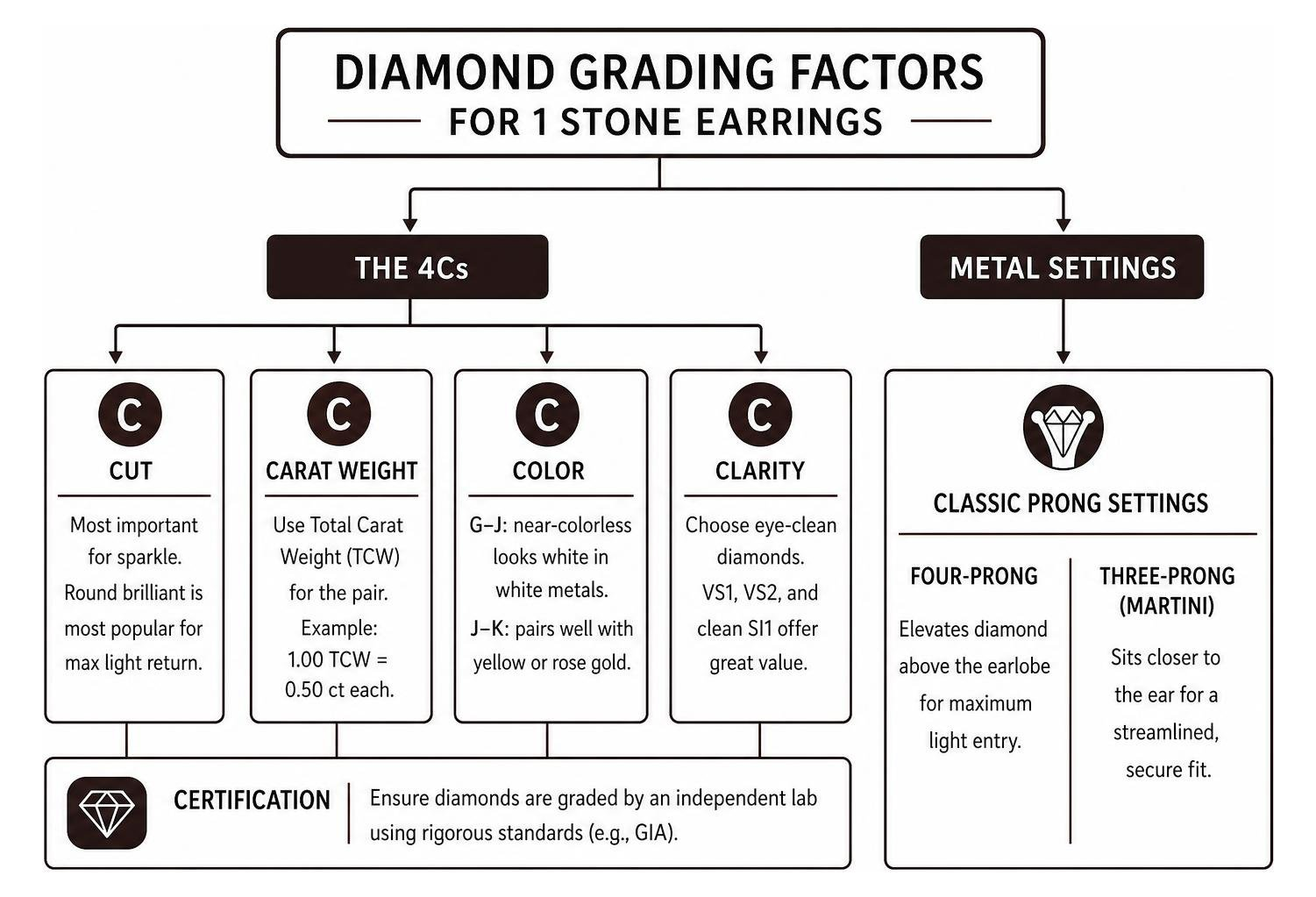
The cut grade is the single most important attribute determining your earring’s sparkle. A masterfully cut diamond reflects incoming light through its facets and returns it through the crown in a burst of brightness and rainbow-colored fire. The round brilliant cut is the most popular shape for diamond earrings, chosen by over 60% of buyers due to its unmatched light return and universal appeal. Fancy shapes like princess, emerald, and oval cuts offer striking, sculptural alternatives for those wanting an architectural silhouette.
When selecting size, diamond weights for earrings are conventionally listed as Total Carat Weight (TCW), which represents the combined weight of both earrings in the pair. For example, a 1.00 TCW pair features a 0.50-carat diamond in each ear. If you are debating between subtle everyday wear and an eye-catching statement, our guide on Diamond Studs: How to Choose the Best Carat Weight for You walks you through personal proportions and earlobe scale.
| Total Carat Weight (TCW) | Weight Per Earring | Approximate Diameter (Round) | Visual Presence & Proportion |
|---|---|---|---|
| 0.50 ctw | 0.25 ct | ~4.1 mm | Dainty, subtle, perfect for second piercings or understated daily style |
| 1.00 ctw | 0.50 ct | ~5.1 mm | The classic standard; balanced presence that suits all earlobe sizes |
| 1.50 ctw | 0.75 ct | ~5.8 mm | Noticeable brilliance, elegant transition from day to evening |
| 2.00 ctw | 1.00 ct | ~6.5 mm | Bold, luxurious statement with prominent earlobe coverage |
| 3.00 ctw+ | 1.50 ct+ | ~7.4 mm+ | High-impact luxury, dramatic light dispersion and red-carpet scale |
Color, Clarity, and Certification
Earrings give you room to optimize your investment intelligently. Because diamonds worn on the ears are not scrutinized under a magnifying glass during daily life, you do not need an internally flawless or colorless diamond to achieve breathtaking brilliance.
- Color: Diamonds in the near-colorless range (G to J) face up bright white when set in white gold or platinum. If you prefer rich 18k yellow gold or rose gold, you can comfortably choose diamonds in the J to K range, as the warm metal complements faint undertones seamlessly.
- Clarity: Look for diamonds that are "eye-clean," meaning they have no inclusions visible to the naked eye at conversational distance. Clarity grades such as VS1, VS2, and clean SI1 offer exceptional value while looking visually pristine.
- Certification: Independent laboratory grading provides definitive authenticity and confidence. Always verify that your diamonds are backed by rigorous international criteria, such as GIA Diamond Grading Standards, ensuring your stone’s cut, color, clarity, and carat weight are verified by unbiased gemologists.
Popular Settings and Precious Metals
The setting shapes both the aesthetic profile and the security of your diamond.
- Classic Prong Settings: Four-prong and three-prong (martini) settings elevate the diamond above the earlobe, allowing maximum light to enter through the sides and bottom facets. Martini settings sit closer to the ear, reducing sagging.
- Bezel Mounts: A sleek rim of metal encircles the perimeter of the diamond. Bezel settings provide superior security and a bold, modern edge while protecting the diamond's girdle against accidental bumps.
- Precious Metals: 14k or 18k white gold and platinum offer cool, mirror-like reflectivity that enhances diamond whiteness. 18k yellow gold and rose gold provide warm, artistic contrast that frames the stone as wearable art.
- Backing Mechanisms: Standard friction push-backs work well for lightweight studs, but valuable single-stone earrings benefit from threaded screw posts or positive-locking La Poussette backs to prevent accidental loss.
Natural vs. Lab-Grown Diamonds in Solitaire Earrings
Modern jewelry collectors now have two paths to genuine diamond brilliance: mined natural diamonds and lab-grown diamonds. It is important to distinguish both from diamond simulants like cubic zirconia or moissanite, which are entirely different materials with different physical and optical properties.
Natural diamonds formed billions of years ago under intense heat and pressure deep within the Earth. They remain rare heirlooms that carry enduring historical value. Diamond earrings are considered a timeless investment, with prices having increased by an average of 3-5% per year over the past decade.
Value and Sustainability in 1 Stone Diamond Earrings
Lab-grown diamonds are real diamonds in every sense. They possess identical chemical, physical, and optical properties to mined diamonds, sharing the exact same crystalline carbon lattice, refractive index, and Mohs hardness of 10. They are grown in high-tech laboratories utilizing advanced processes that replicate natural geological forces.
Because their supply chain is streamlined, lab-grown diamonds provide substantial price efficiency, allowing you to maximize carat weight and cut quality within your desired budget. For example, you can select our Lab-Grown Diamond Studs 1.00 Total Carat Weight for a classic daily signature, or elevate to a breathtaking statement with our Lab-Grown Diamond Studs 2.00 Total Carat Weight without compromising on color or clarity grades.
Styling, Occasions, and Care for Daily Wear
A single stone earring moves effortlessly across every area of life. In professional settings, a tailored pair of studs provides polished refinement without overwhelming tailored suits or blouses. On casual weekends, they elevate simple knitwear or denim. When worn as bridal jewelry or for black-tie galas, larger carat solitaires deliver striking radiance that complements evening wear.
To preserve their shine, keep in mind that diamonds attract natural skin oils, lotions, and hair products that coat the facets and dull their light return over time.
- Regular Home Cleaning: Soak your earrings weekly in warm water mixed with a few drops of mild, degreasing dish soap. Gently brush around and underneath the prongs with an ultra-soft toothbrush, rinse with clean warm water, and dry with a lint-free microfiber cloth.
- Ultrasonic Cleaners: Periodic deep cleaning in an ultrasonic bath removes stubborn residue from beneath the setting. Ensure prongs are tight before placing earrings in vibration tanks.
- Professional Inspections: Visit your jeweler annually to inspect the integrity of the metal prongs, posts, and tension backs. This routine check ensures your investment stays safe on your ear for a lifetime of daily wear. Explore our dedicated curation of Diamond Studs to discover how architectural design and quality craft keep fine jewelry secure.
Frequently Asked Questions About Solitaire Earrings
How much do single stone diamond earrings typically cost?
The average cost of a pair of 1 carat diamond earrings ranges from $2,000 to $8,000 depending on cut, color, clarity, and carat weight. Natural diamonds sit at the higher end of the spectrum based on their geological rarity, while lab-grown diamond studs allow buyers to acquire premium 1.00 to 2.00 TCW pairs at accessible price points.
Which diamond cut sparkles the most in a single stone earring?
The round brilliant cut delivers the highest level of sparkle, brilliance, and fire. Engineered with 57 or 58 mathematically aligned facets, it reflects light better than any other gem shape. Princess cuts and cushion cuts follow closely behind, offering sharp geometric lines and distinct flashes of light.
How do you secure single stone diamond earrings to avoid loss?
To prevent loss, pair your earrings with secure earring backs designed for valuable gemstones:
- Threaded Screw Backs: The earring post is threaded like a screw, requiring the back to be twisted on manually so it cannot slip off.
- La Poussette / Locking Backs: These feature a spring-loaded squeeze mechanism that grips internal grooves along the post, unlocking only when you depress the side tabs.
- Guardian Clutches: Wide disc backings with internal silicone or mechanical grips that support the earlobe and keep heavier studs upright.
Conclusion
A single stone diamond earring is an essential foundation in any fine jewelry collection. Combining clean design with bright fire, these earrings honor life's milestones and bring an easy touch of elegance to every day.
Whether you are celebrating a personal achievement, marking an anniversary, or choosing an unforgettable holiday surprise, our handcrafted designs bring artistic intention to every setting. Discover the magic of wearable art in our holiday tribute, Diamond Stud Earrings for Women: The Perfect Holiday Gift, and find the pair that tells your story.

