
Find Your Perfect Everyday Sparkle with 14K Diamond Earrings

Find the Best 14K Diamond Earrings for Everyday Sparkle
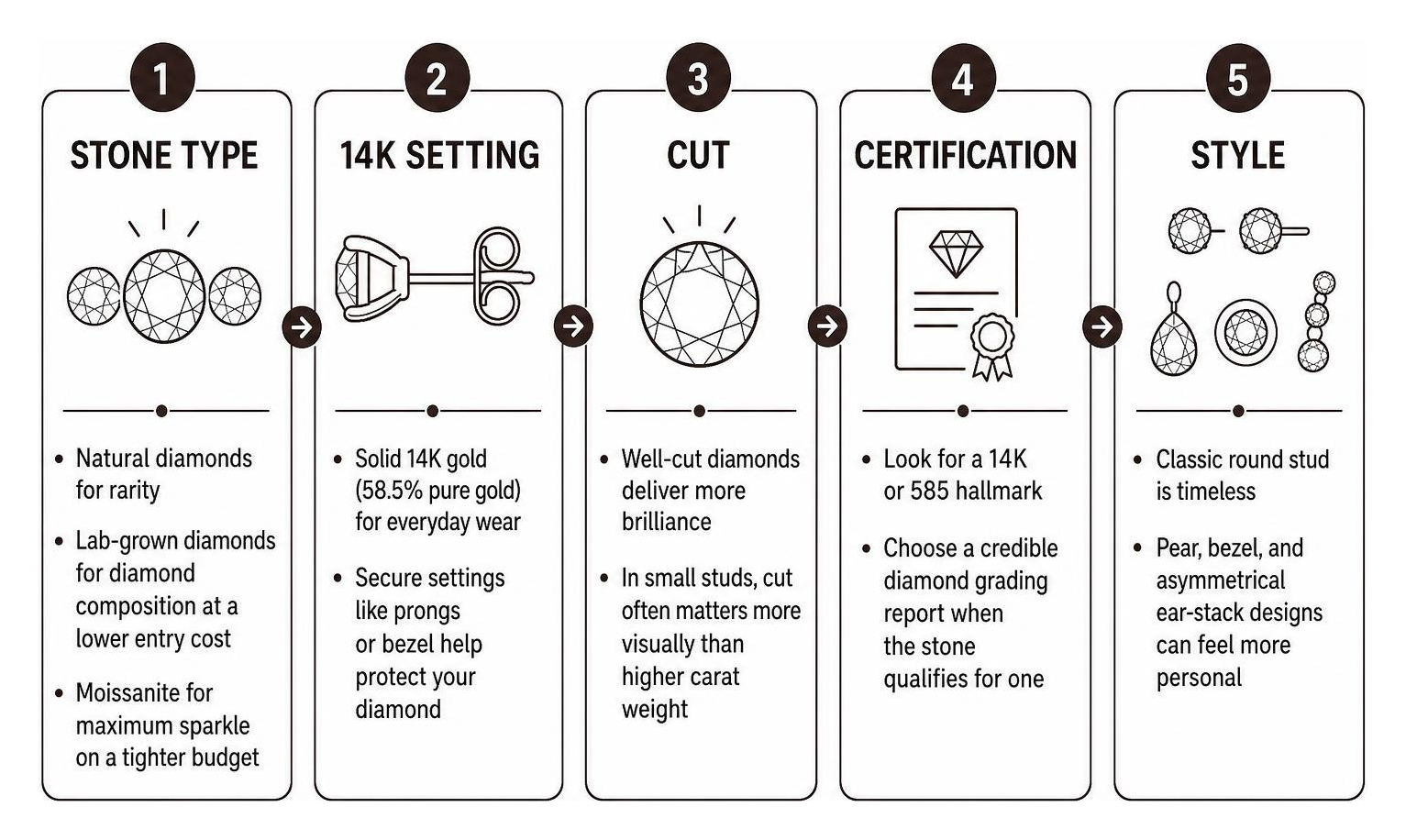
The best 14K diamond earrings pair solid 14K gold with a well-cut diamond, a secure setting, and a style you will want to wear every day. For most buyers, 14K gold is the practical choice: it contains 58.5% pure gold and added alloys that help the setting stand up to daily wear better than softer, higher-karat gold.
When comparing options, start with these essentials:
- Stone type: Choose natural diamonds for rarity, lab-grown diamonds for diamond composition at a lower entry cost, or moissanite for maximum sparkle on a tighter budget.
- Cut and setting: In small studs, cut and secure prongs or bezel work often matter more visually than chasing high carat weight.
- Authenticity: Look for a 14K or 585 hallmark and a credible diamond grading report when the stone qualifies for one.
- Personal style: A classic round stud is timeless, while pear, bezel, and asymmetrical ear-stack designs can feel more personal.
A 14K diamond earring can be a subtle daily staple or the first piece in a curated ear story. This roundup will help you compare metal, stones, settings, certification, and buying options so you can choose a pair with real sparkle and lasting meaning.
I am Lex Atencio, Executive Vice President at John Atencio Jewelry, where I work with fine-jewelry clients seeking handcrafted pieces that fit their lives and personal style. In the sections ahead, I will break down what to look for in a 14K diamond earring before you choose your everyday pair.
How to Choose the Best 14K Diamond Earring for Everyday Wear
Selecting fine jewelry for everyday life requires balancing beauty, longevity, and your personal routine. A diamond stud earring is not a piece meant to hide away in a velvet box for rare galas. It should be comfortable enough for daily commutes, resilient enough for weekend outings, and striking enough to elevate an evening dinner.
Finding the ideal pair involves looking closely at the metallurgy, the structural integrity of the mountings, and the quality of the center stones. When these elements align seamlessly, your earrings become an effortless extension of your signature look.
Evaluating Metal Durability: 14K Gold vs. 18K Gold for a 14k Diamond Earring Setting
The purity of gold defines both its visual richness and its physical resilience. Solid 14K gold is composed of 58.5% pure elemental gold, with the remaining 41.5% comprising carefully selected alloy metals such as copper, silver, zinc, or nickel (or palladium in nickel-free white gold alloys). In contrast, 18K gold consists of 75% pure gold and 25% alloy metals.
While 18K gold boasts a slightly warmer, deeper yellow glow due to its higher gold content, pure gold is inherently soft and malleable. For stud earrings—especially the delicate prongs holding your precious gems—tensile strength and scratch resistance are critical.
- 14K Gold: Delivers superior hardness and structural rigidity. The alloy mixture reinforces the prongs against bending, snagging on knit sweaters, or loosening over years of active wear. It offers the ideal balance of rich precious metal appeal and daily durability.
- 18K Gold: Offers a richer tone and higher metal purity, but its softer nature makes it slightly more prone to surface scuffs and requires more frequent prong checks when worn continuously.
For active lifestyles and worry-free daily wear, a 14K gold mounting provides the peace of mind you want from luxury jewelry.
Prioritizing Cut, Color, and Clarity in Solitaire Studs
When evaluating diamonds for stud earrings—particularly petite stones ranging from 0.06ct to 0.07ct per ear, as well as larger solitaires—the way you prioritize the classic "4Cs" shifts compared to shopping for an engagement ring.
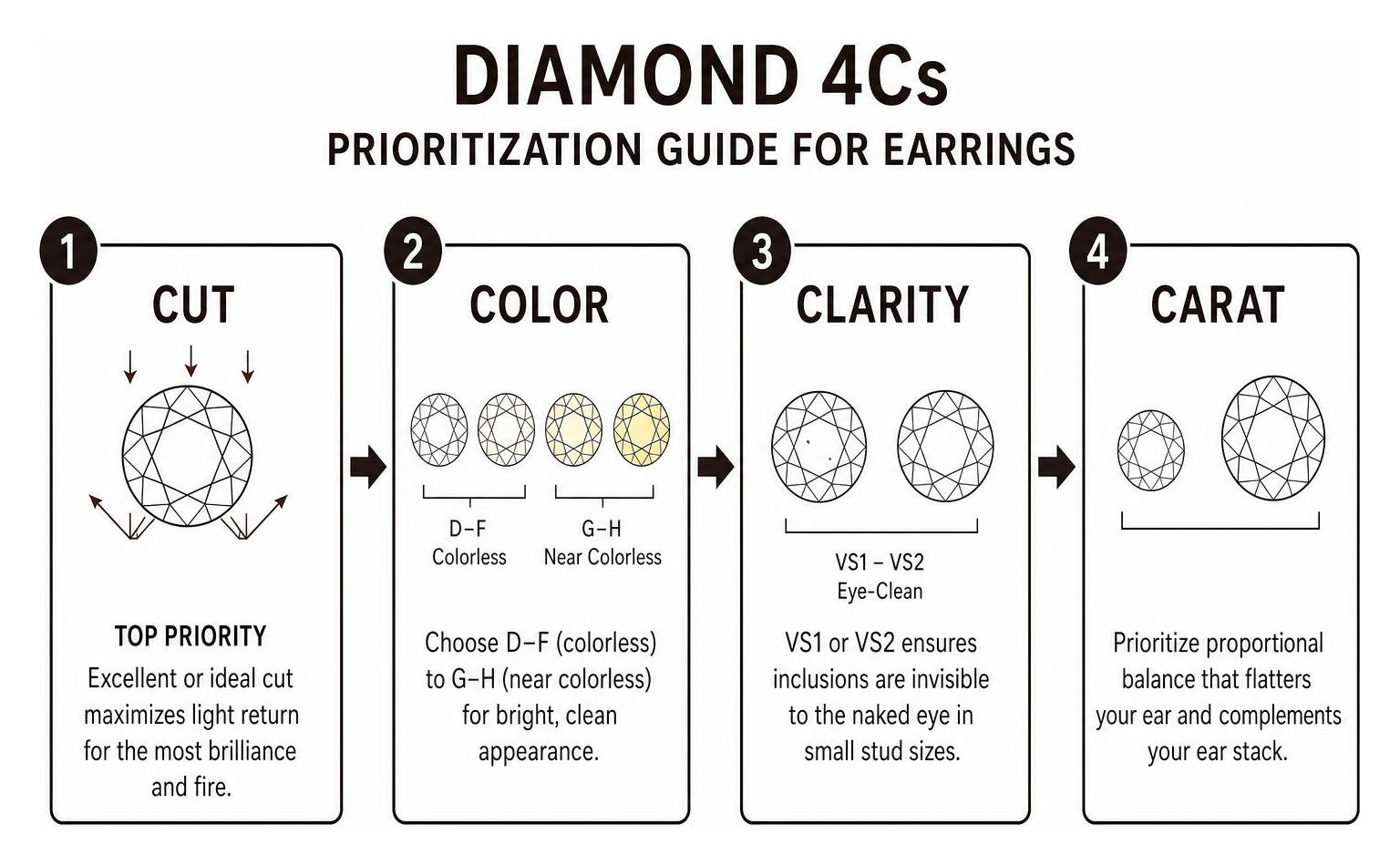
- Cut Precision (The Top Priority): Cut determines how light enters, reflects within, and exits the diamond. Even a diamond with flawless clarity will appear lifeless if poorly cut. An excellent or ideal cut maximizes internal reflection, producing dynamic fire and brilliance that draws the eye across a room.
- Color Grade: Because earrings sit against the earlobe and interact with surrounding skin tones and hair, diamonds in the colorless (D–F) to near-colorless (G–H) range appear bright and pristine. Premium solitaires graded in the high-tier E color range display crisp, icy brilliance in both white and yellow gold settings.
- Clarity Grade: In smaller carat solitaires (such as 0.06–0.07ct gems measuring roughly 2.5mm), microscopic inclusions are entirely invisible to the naked eye. Selecting a clarity grade like VS1 or VS2 ensures the stone is completely eye-clean, allowing unobstructed light refraction without requiring the premium of internally flawless grades.
- Carat Weight: Rather than chasing pure weight, seek proportional balance that complements your ear anatomy and works harmoniously with any other piercings you wear.
Comparing Stone Types: Natural Diamonds and Lab-Grown Diamonds
Choosing the centerpiece of your earrings comes down to personal values, aesthetics, and long-term intentions. Both natural and lab-grown diamonds offer authentic optical brilliance and physical permanence, while alternatives like moissanite offer distinct characteristics.
| Feature | Natural Diamonds | Lab-Grown Diamonds | Moissanite |
|---|---|---|---|
| Chemical Composition | Pure crystallized carbon ($C$) | Pure crystallized carbon ($C$) | Silicon carbide ($SiC$) |
| Mohs Hardness | 10 (Maximum hardness) | 10 (Maximum hardness) | 9.25 |
| Optical Character | Natural fire and scintillation | Identical fire and scintillation | High dispersion (rainbow flashes) |
| Origin | Formed deep within the Earth | Grown in controlled laboratory environments | Lab-synthesized gemstone |
| Rarity & Value | Finite natural resource; retains heirloom value | Accessible luxury; modern tech-driven value | Highly accessible alternative |
Natural vs. Lab-Grown Diamonds: Value, Resale, and Longevity
Both natural and lab-grown diamonds share an identical carbon crystal lattice, ranking at a perfect 10 on the Mohs hardness scale. This makes both impervious to surface scratching from everyday elements, ensuring a lifetime of enduring luster.
- Natural Diamonds: Formed under extreme heat and pressure over billions of years, mined diamonds carry an inherent geological rarity and history. For collectors and fine jewelry enthusiasts who prioritize tradition, heirloom significance, and long-term intrinsic value retention, natural diamonds remain the definitive classic.
- Lab-Grown Diamonds: Created using advanced High Pressure High Temperature (HPHT) or Chemical Vapor Deposition (CVD) methods, lab diamonds replicate natural growth conditions. They provide identical optical brilliance, chemical composition, and physical strength at an accessible entry tier.
At John Atencio, we embrace both natural and lab-grown stones, ensuring each diamond is ethically sourced, meticulously selected, and set within our handcrafted designs that celebrate wearable art. For a broader look at how diamond quality is assessed, the Gemological Institute of America provides an independent framework for evaluating cut, color, clarity, and carat weight.
Top Setting Styles and Placements for Modern Ear Stacks
Ear styling has evolved beyond a solitary pair of lobe studs into curated, artistic ear stacks that showcase individual expression.
Styling Your 14k Diamond Earring Across Lobes, Tragus, and Helix Piercings
A petite solitaire stud—especially one featuring a distinctive shape like a pear cut or classic brilliant round—serves as a versatile building block for modular ear curation:
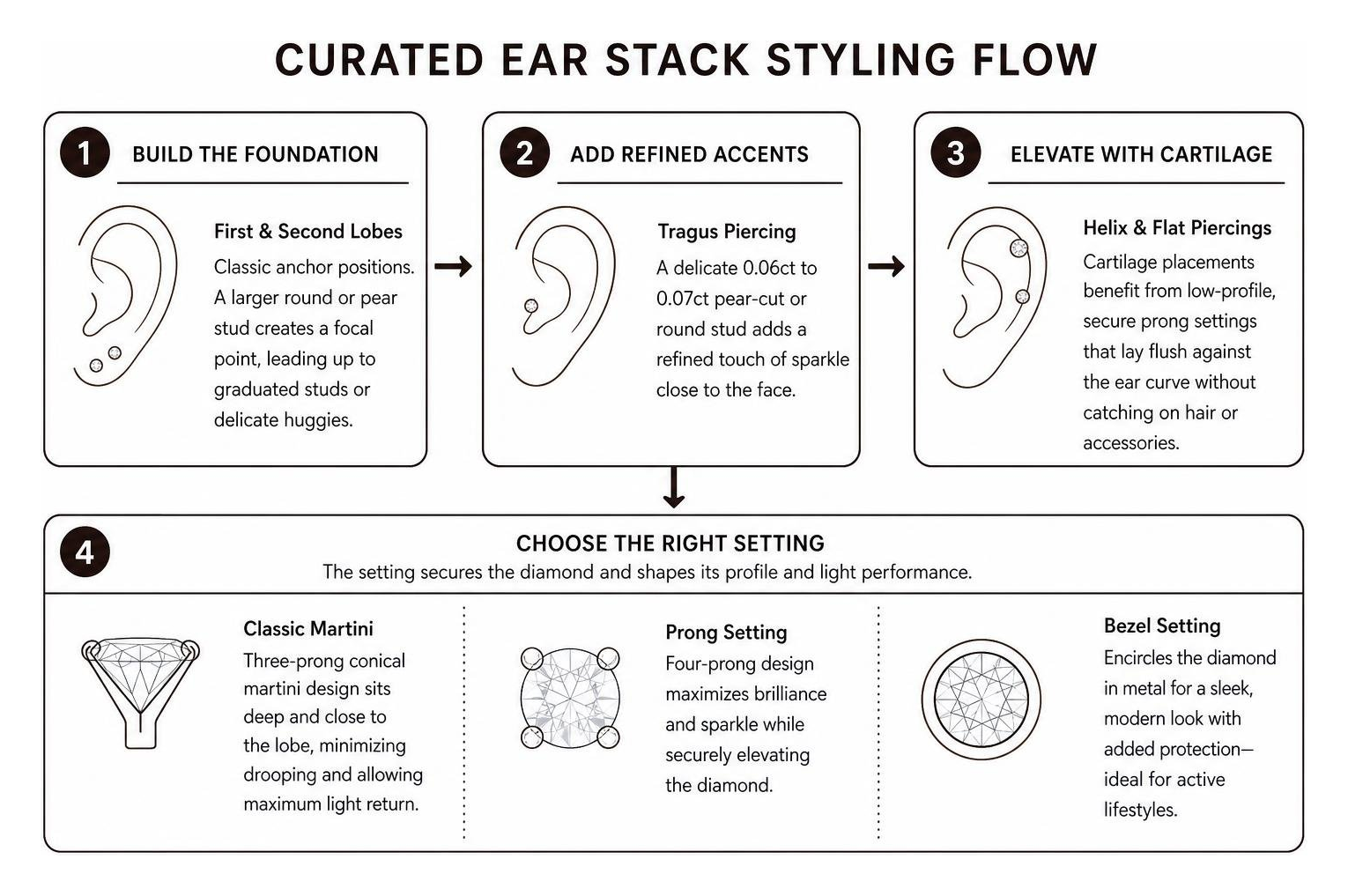
- First & Second Lobes: Classic anchor positions. A larger round or pear stud creates a striking focal point, leading up to graduated studs or delicate huggies.
- Tragus Piercing: A delicate 0.06ct to 0.07ct pear-cut or round stud adds a refined touch of sparkle close to the face, catching the light with subtle head movements.
- Helix & Flat Piercings: Cartilage placements benefit from low-profile, secure prong settings that lay flush against the ear curve without catching on hair or accessories.
Setting Types: Classic Martini, Prong, and Bezel Mountings
The mounting not only secures the gemstone but also shapes the earring's profile and light performance:
- Classic Martini Setting: Shaped like a conical martini glass, this three-prong design allows the diamond to sit deeply and comfortably close to the earlobe, minimizing drooping. Its minimal metal footprint allows light to enter the stone from every angle.
- Traditional 4-Prong Setting: A balanced, symmetrical framework that provides excellent security while squaring off the appearance of round stones slightly.
- Bezel Setting: A sleek, modern collar of solid 14K gold wraps completely around the diamond's perimeter. Bezel settings protect the diamond's girdle against accidental impact, prevent snags, and offer a bold, contemporary aesthetic.
Essential Buyer Guide: Certification, Authenticity, and Purchasing Channels
Investing in fine jewelry requires absolute trust, rigorous verification, and clear customer safeguards.
GIA and IGI Grading Certifications and 14K Gold Hallmarks
Authenticity begins with standardized testing and hallmarking:
- Gold Hallmarking: Look for an authentic stamp on the earring post, friction back, or bezel rim—typically engraved as 14K or 585 (indicating 585 parts per thousand, or 58.5% gold purity).
- Diamond Certification: Reputable independent grading laboratories provide objective assessments of your stone's quality. The Gemological Institute of America (GIA) is widely recognized for natural diamond grading, while the International Gemological Institute (IGI) evaluates both natural and lab-grown diamonds. A certification report confirms the exact carat weight, color grade, clarity, and cut proportions.
- Precious Metal Value: High-quality solid gold holds intrinsic melt value over decades, distinguishing solid gold from gold-plated or gold-filled fashion alternatives that wear away over time.
Online vs. In-Store Buying: Policies, Shipping, and Warranties
Whether purchasing through an online boutique or an in-person fine jewelry showroom, look for clear service policies:
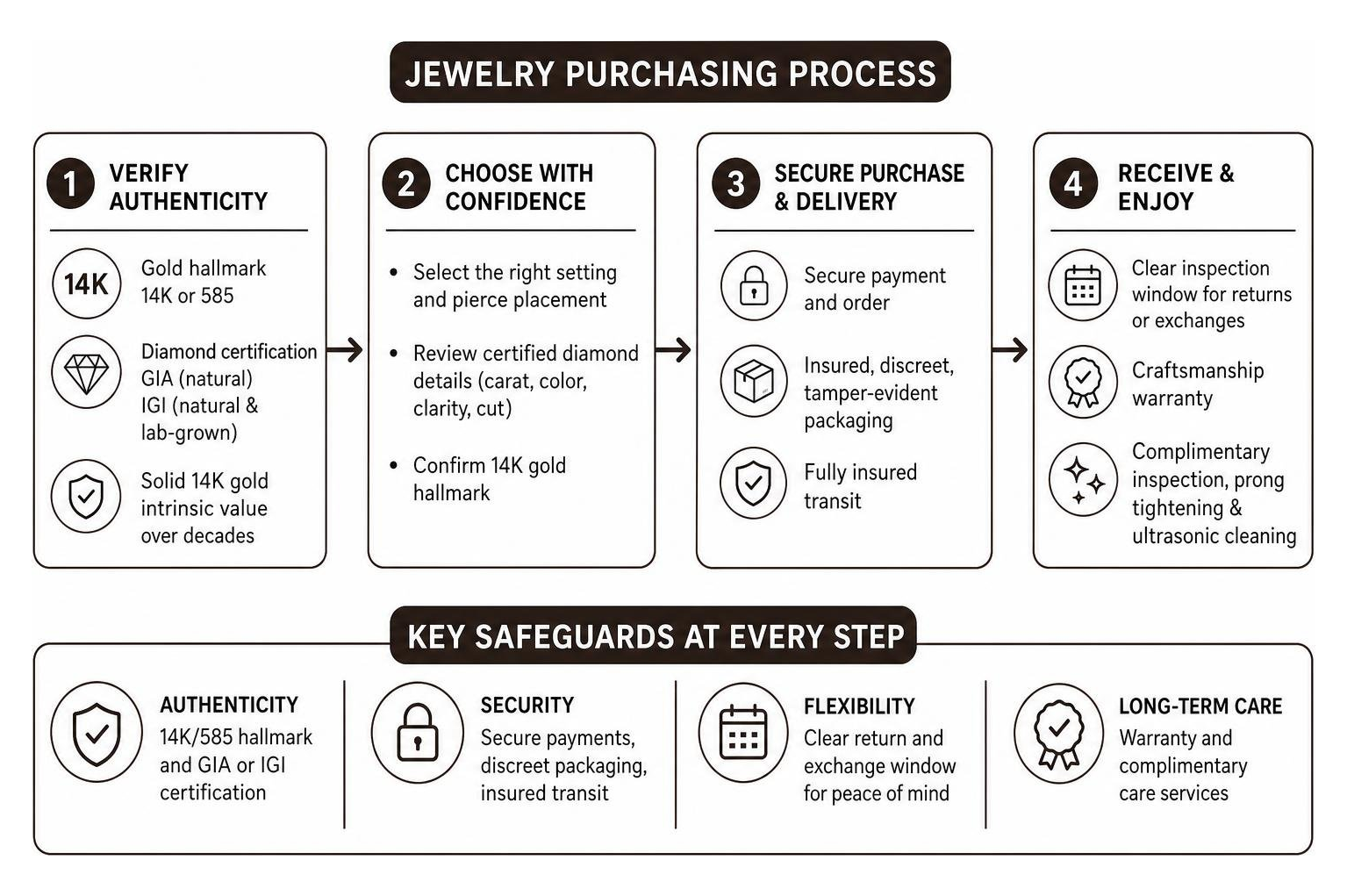
- Secure, Insured Transit: Reputable jewelers ship via fully insured carriers in discreet, tamper-evident packaging to protect your investment from dispatch to doorstep.
- Clear Inspection Windows: Look for flexible return and exchange periods that allow you to examine the craftsmanship and proportions in natural lighting.
- Warranties & Care Services: Dedicated jewelers provide comprehensive craftsmanship warranties, offering complimentary inspection, prong tightening, and professional ultrasonic cleaning to maintain the life of your piece.
Caring for Your 14K Diamond Studs to Maintain Lasting Brilliance
Daily exposure to cosmetics, hairsprays, body lotions, and natural skin oils gradually forms a thin film over diamonds and gold, muting their natural sparkle. Fortunately, restoring their original fire is straightforward:
- Prepare a Gentle Bath: Mix warm water with a few drops of mild, phosphate-free dish soap in a small bowl.
- Soak: Submerge your 14K diamond earrings for 10 to 15 minutes to loosen accumulated oils and residue.
- Brush Gently: Use an extra-soft baby toothbrush to gently clean around the diamond facets, underneath the open gallery, and along the prongs. Avoid aggressive scrubbing.
- Rinse & Dry: Rinse thoroughly under clean, lukewarm running water (always ensure the sink drain is covered) and pat dry with a clean, lint-free microfiber cloth.
- Safe Storage: Store your diamond studs individually in soft cloth pouches or lined jewelry compartments. Because diamonds rank as the hardest mineral on Earth, they can easily scratch other gemstones and gold jewelry if stored loose together.
- Routine Inspections: Periodically check your earring settings. If you notice a loose prong or feel the diamond shift slightly, bring it to a professional jeweler for maintenance before continued wear.
Frequently Asked Questions About 14K Diamond Earrings
Is 14K gold good quality for diamond earrings?
Yes, 14K solid gold is widely considered the ideal metal quality for diamond stud earrings. Composed of 58.5% pure gold combined with strengthening alloy metals, 14K gold offers exceptional resistance to scratching, bending, and everyday wear while retaining the rich beauty of fine gold.
How much should you spend on everyday 14K diamond studs?
Your budget depends entirely on your preferences regarding carat size, diamond origin (natural versus lab-grown), and cut quality. Petite solitaires designed for ear curation provide accessible luxury, while larger carat heirloom studs represent a more substantial fine jewelry investment. Prioritizing cut quality ensures your chosen pair delivers vibrant sparkle at every level.
Can you wear 14K diamond earrings in the shower or during workouts?
While solid 14K gold and diamonds will not corrode in plain water, it is best practice to remove your earrings before showering or exercising. Body washes, shampoos, and conditioners leave residues that quickly dull diamond brilliance. Furthermore, chlorine in swimming pools can weaken gold alloys over time, and intense workouts increase the risk of snagging or loss.
Conclusion
A pair of 14K diamond earrings is more than an accessory—it is an enduring signature piece that brings effortless refinement to your daily life. Whether you select an ethereal pear cut to personalize a cartilage piercing or a pair of classic round solitaires for everyday elegance, choosing solid 14K gold and thoughtfully cut diamonds guarantees beauty that spans generations.
At John Atencio, every design is approached as a piece of wearable art, hand-crafted with exceptional attention to detail, sustainable sourcing, and sculptural distinction. Explore our curated selection of diamond stud earrings for women to discover the design that reflects your story.