
Why You Pay Less per Visible Surface for 1 Carat Marquise Diamonds

Why a 1 Carat Marquise Diamond Looks Larger for Its Weight
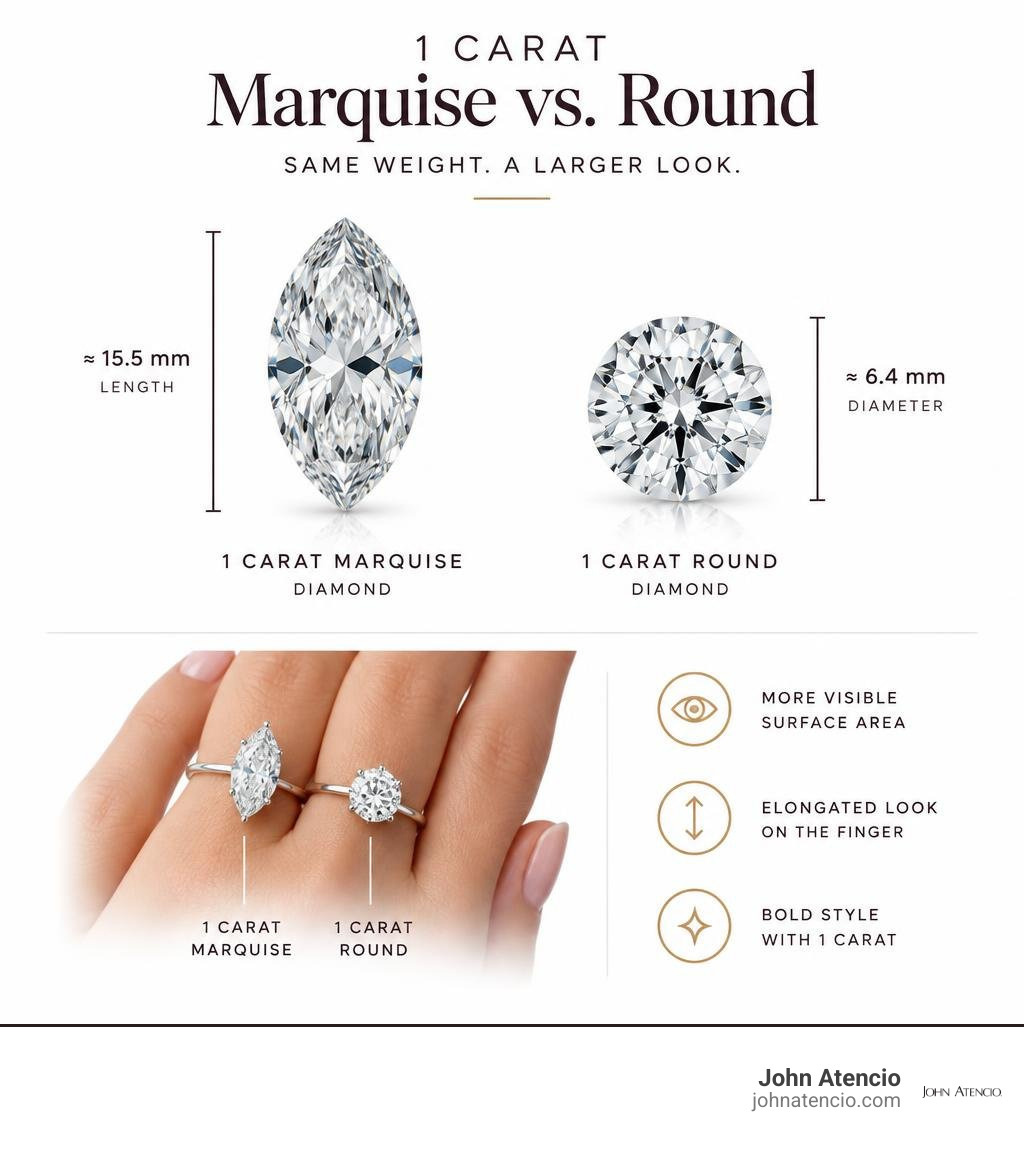
A 1 carat marquise diamond price is often lower per unit of visible size than a round diamond because its long, pointed shape spreads its weight across more of the finger. That means you can get a bold, elongated look without moving up to a heavier carat weight. The slender outline also creates a flattering line along the hand, making the center stone feel more substantial than its carat weight suggests.
For the best value, focus first on a well-proportioned cut with strong symmetry and minimal bow-tie shadow. Then choose an eye-clean clarity and a color grade that looks bright in the setting you love. Natural and lab-grown marquise diamonds have very different market pricing, but both can offer exceptional visual presence when the cut is right. A carefully chosen marquise can deliver the drama of a larger stone while keeping the overall design refined and wearable.
Marquise is not the best choice for every buyer. Its distinctive silhouette is made for someone who wants a ring with movement, character, and less of the familiar round-diamond look. The pointed ends reward careful setting and protection, and the elongated profile pairs beautifully with both minimalist and sculptural band designs.
I am Lex Atencio, Executive Vice President at John Atencio Jewelry, and I help clients understand how cut, craftsmanship, and diamond quality shape the 1 carat marquise diamond price. Next, we will look at the current market benchmarks and what separates a fair offer from a truly strong value.
Current 1 Carat Marquise Diamond Price and Market Benchmarks
When evaluating the market for fancy cut stones, the marquise cut offers a distinct optical advantage. Because of its elongated boat-shaped silhouette—originally commissioned by King Louis XV to resemble the smile of the Marquise de Pompadour—the stone distributes its carat weight across an expansive surface area rather than hiding it deep in the pavilion. This efficient spread of weight is one reason the shape remains a compelling choice for buyers who want a larger visual footprint without a larger carat weight.
When analyzing current market distributions, benchmarks are influenced heavily by quality tiers, origin, and facet execution. Rather than looking only at broad averages, industry analysts evaluate the spread between median market benchmarks and upper-tier collection pieces. For buyers seeking extensive baseline statistics, reviewing a detailed 1 carat marquise diamond market index provides a comprehensive picture of how listings fluctuate across the wider jewelry sector.
Understanding the 1 Carat Marquise Diamond Price for Natural Stones
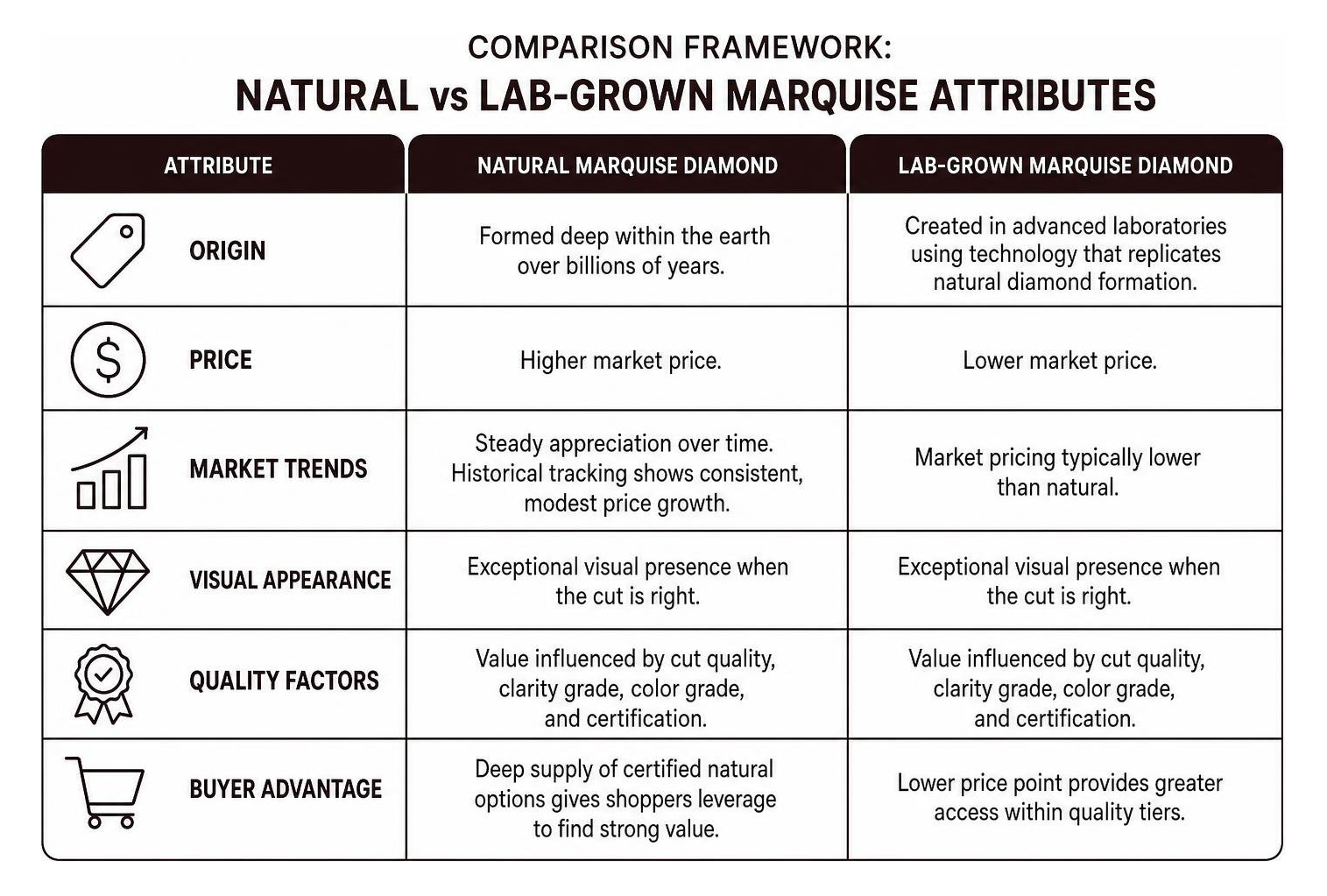
Natural marquise diamonds reflect the timeless allure of mined gems formed deep within the earth over billions of years. In the natural market, market valuations demonstrate steady appreciation over time. Historical tracking shows consistent, modest price growth across comparable stones over recent multi-month cycles, demonstrating the enduring demand for elegant fancy shapes. This stability gives buyers a useful frame of reference when comparing stones across different quality tiers and certification standards.
Because the market holds a deep supply of certified natural options, discerning shoppers have significant leverage to select stones that balance cut brilliance with attractive value. When selecting a stone, understanding how clarity grades, color scales, and laboratory grading interact is essential; our comprehensive diamond pricing guide breaks down these valuation metrics in detail.
Lab-Grown vs Natural: How Origin Shifts the 1 Carat Marquise Diamond Price
The emergence of lab-created diamonds has created an accessible alternative for buyers seeking maximum scale within a designated budget. Lab-grown diamonds possess the exact chemical, physical, and optical properties of mined diamonds, yet their pricing dynamics reflect advanced laboratory production rather than geological rarity. This distinction allows shoppers to consider a wider range of sizes and design possibilities while staying within a comfortable budget.
Over recent market cycles, lab-grown inventory has shifted noticeably due to increased supply efficiencies, making them an appealing option for couples who prioritize visual impact and contemporary styling. Whether you are designing a sleek solitaire or an intricate pave band, exploring lab-grown diamond engagement rings allows you to balance modern luxury with personal values.
Key Factors Influencing Marquise Diamond Valuation
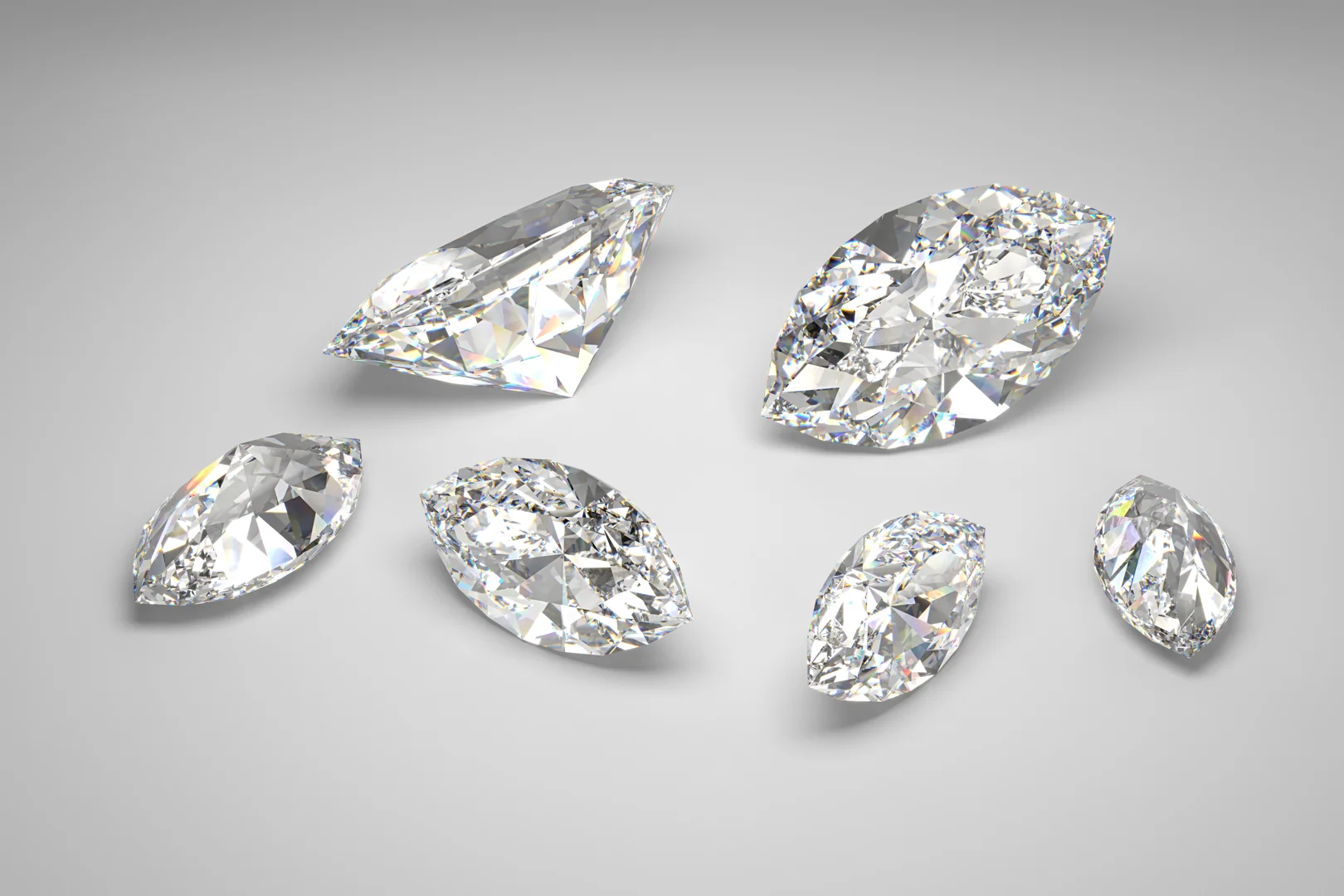
A marquise diamond’s price is not determined by carat weight alone. Proportions, optical performance, and grading integrity all play vital roles in assessing true worth. To understand how these elements come together, it helps to review the 4Cs of diamond quality and how they specifically apply to elongated fancy cuts.
Evaluating the 4Cs and Bow-Tie Effect
The cut of a marquise diamond is its single most critical feature. Unlike round brilliants, fancy cuts do not receive a standardized cut grade on traditional grading reports, making expert visual evaluation paramount:
- Length-to-Width Ratio: A classic marquise generally falls between a 1.75:1 and 2.15:1 ratio. A ratio near 2.0:1 provides an elegant, slender look, while lower ratios create a wider, softer appearance.
- The Bow-Tie Effect: Due to the facet arrangement of elongated brilliant cuts, almost all marquise diamonds display some degree of shadow across their center, known as a bow-tie. While a subtle bow-tie adds contrast and life, an overly dark shadow detracts from brilliance and lowers value.
- Symmetry and Point Protection: Perfect symmetry between the opposing points, often called the French tips, is essential. Misaligned facets or uneven wings compromise light reflection and aesthetic harmony.
- Color and Clarity: Color can concentrate at the tips of a marquise. Choosing an eye-clean clarity and a near-colorless grade offers the ideal balance of beauty and value.
For an in-depth look at selecting the ideal stone for your lifestyle, read our expert advice on how to pick a diamond.
Retailer Price Spreads and Certification Discrepancies
Significant price variations exist across the jewelry market for diamonds of ostensibly identical carat weight and grading. A large portion of this spread stems from differing business models, retail overhead, and the certification laboratory chosen. These differences can make two stones with similar paperwork appear very different in value, which is why careful comparison matters.
Always look for reputable independent certifications, such as GIA, which adhere to strict grading standards. When comparing options, verify the certificate number directly to ensure you are assessing genuine, apples-to-apples quality rather than relying on loose retail descriptions.
Value Comparison: Marquise Cut vs Other Diamond Shapes
One of the greatest advantages of the marquise shape is surface efficiency. Because a marquise is cut shallow to moderate depth with an elongated crown, a 1 carat stone appears substantially larger from above than a classic round brilliant of identical carat weight. This visual advantage is especially noticeable when the stone is set in a simple solitaire or a low-profile band that allows the full outline to remain visible.
While round brilliant diamonds carry a market premium due to higher rough diamond loss during cutting, fancy shapes make efficient use of rough crystal. Comparing the marquise to other elongated gems like ovals and pears reveals that it provides some of the highest millimeters-of-finger-coverage per carat available. For broader perspective on higher carat tiers, examining natural 1.5 carat marquise price data illustrates how this surface-area advantage becomes even more dramatic as carat size increases. You can also explore our curated selection of unique fancy cut diamond engagement rings to see how various silhouettes complement distinct jewelry aesthetics.
Frequently Asked Questions About 1 Carat Marquise Diamonds
Is 1 Carat a Good Size for a Marquise Engagement Ring?
Yes, 1 carat is an exceptional size for a marquise diamond. Because of its elongated geometry, a 1 carat marquise can provide up to 15% more visible surface area than a traditional round brilliant of the same weight. It creates a flattering, finger-slimming effect and commands impressive presence on the hand without feeling overwhelming for daily wear. The shape also offers excellent finger coverage, making it a popular choice for those who want a noticeable center stone with a refined profile.
Why Do Marquise Diamond Prices Fluctuate?
Marquise diamond pricing fluctuates in response to broader gemstone market dynamics, including rough diamond yield, global currency movements, manufacturing efficiencies, and seasonal bridal demand. Furthermore, the depth of available inventory across global trading hubs influences the bargaining leverage available to jewelers and consumers alike. These shifts are normal in the diamond market and can affect both natural and lab-grown stones in different ways.
Is Now a Good Time to Buy a 1 Carat Marquise Diamond?
The current market environment offers stable conditions for buyers. With healthy supply levels across key quality tiers and consistent long-term price stability in natural stones, clients have ample opportunity to select well-proportioned gems with minimal bow-tie effects at fair market values. A stable market also gives buyers more time to compare options carefully and choose a stone that aligns with their design goals.
Conclusion
Choosing a 1 carat marquise diamond allows you to maximize visual impact, embrace architectural elegance, and invest in a shape steeped in royal heritage. By prioritizing superior cut symmetry and eye-clean clarity over arbitrary perfection on paper, you can secure an exquisite center stone that delivers timeless brilliance. The elongated profile offers a distinctive alternative to more common shapes while remaining versatile enough for a wide range of engagement ring styles.
At John Atencio, every engagement ring is conceived as wearable art, meticulously hand-crafted to celebrate the distinctive contours of your chosen diamond. If you are weighing different elongated shapes for your custom piece, explore our comparison of pear cut vs marquise cut diamonds to find the perfect silhouette for your personal style.