

A Buyer's Guide to 1ct Diamond Solitaire Platinum Rings

Why a 1ct Diamond Solitaire Platinum Ring Remains a Classic Choice
A 1ct diamond solitaire platinum ring pairs a single, meaningful center diamond with a strong, naturally white metal that keeps the design focused on the stone. For a smart starting point, choose the diamond shape that fits your style, prioritize cut quality for sparkle, then select a setting that balances security and the look you want.
Platinum is a natural fit for this classic design. Fine platinum jewelry is commonly PL 950, meaning it is 95% pure platinum. It is also durable, hypoallergenic, and naturally white, so it complements both natural and lab-grown diamonds without relying on a plated finish. A round brilliant is the traditional choice, but oval, emerald, princess, radiant, pear, and other shapes can make the same one-carat solitaire feel distinctly personal.
The setting matters as much as the center stone. Four- and six-prong settings create an open, light-forward look, while a bezel offers a sleek outline and added protection around the diamond. Details such as band width, profile, engraving, and diamond origin let a simple solitaire tell a less generic story. For broader context on this enduring style, the engagement ring tradition has long favored single-stone designs as symbols of commitment.
At John Atencio, domestic orders typically ship via FedEx 2-day service; we do not ship internationally to customers.
I am Lex Atencio, Executive Vice President at John Atencio. My experience in fine jewelry helps couples evaluate every element of a 1ct diamond solitaire platinum ring, from diamond character to the handcrafted setting that will carry it every day.
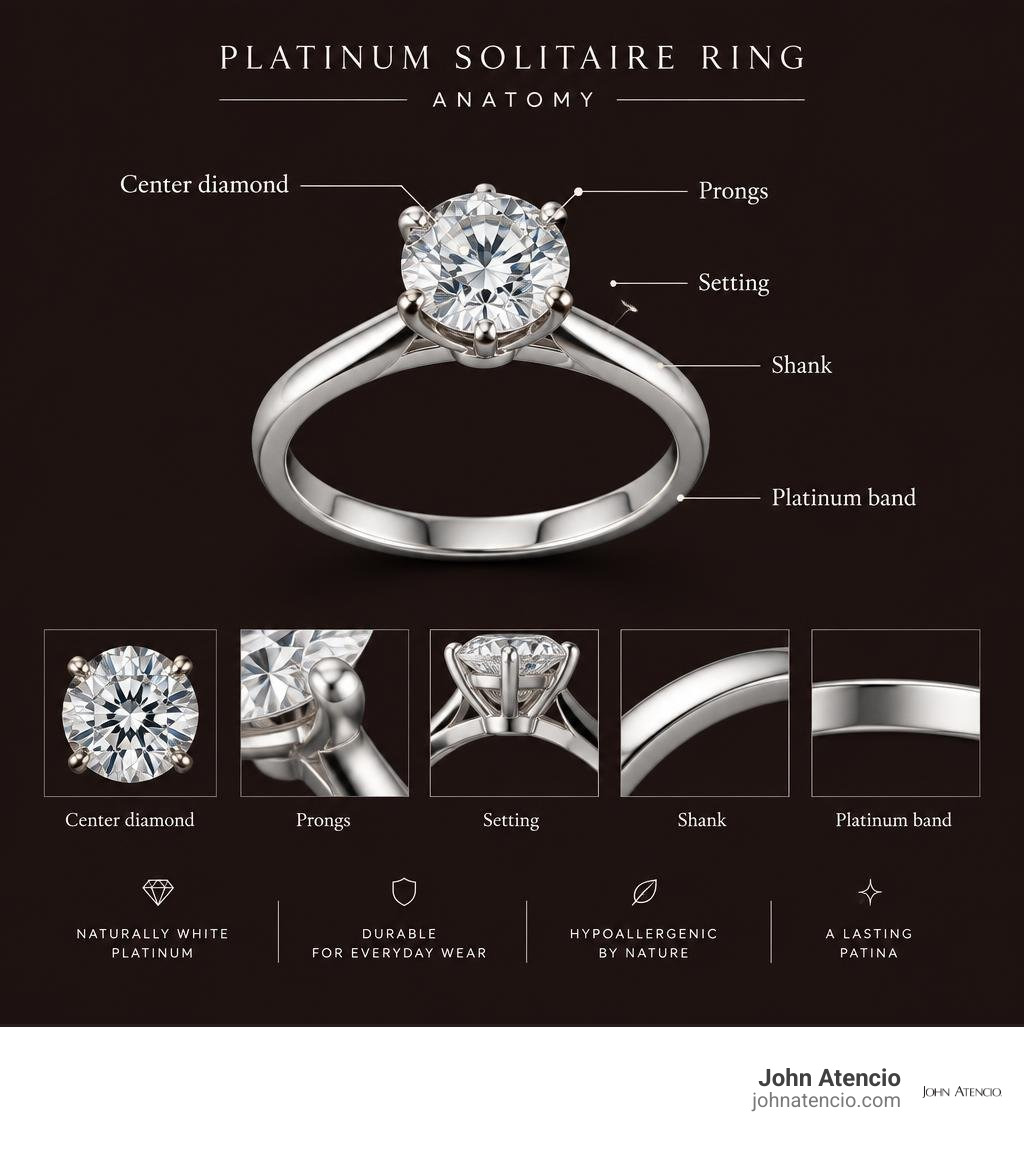
The Enduring Appeal of a 1ct Diamond Solitaire Platinum Ring
When investing in a bridal piece designed to endure across generations, material purity and engineering matter as much as aesthetics. In our Platinum Jewelry Guide, we highlight that platinum used in fine jewelry is almost always alloyed at PL 950. This means the metal composition is 95% pure platinum, compared to standard 18-karat gold, which contains 75% pure gold alloyed with other metals.
Platinum is naturally dense and substantial on the finger. When wearing a one-carat diamond on a platinum band, you immediately notice a reassuring weight that feels luxurious and grounded. Because it is naturally hypoallergenic, platinum eliminates concerns about nickel sensitivities, making it ideal for daily wear. Unlike other metals that can wear down over time, platinum displaces rather than loses mass when scratched. This develops a rich, velvety satin finish known as a patina—a hallmark of true heirloom durability.
For couples seeking solitaire engagement rings, platinum provides a cool, mirror-like canvas that prevents any unwanted yellow or warm reflections from bleeding into the center diamond, allowing the stone's genuine color and internal fire to shine uninhibited.
Platinum vs. White Gold, Yellow Gold, and Rose Gold
Choosing the right precious metal requires balancing color preference, maintenance, and structural behavior. While white gold shares a similar silvery hue with platinum, it achieves that icy brightness through a rhodium plating over a naturally pale-yellow alloy. Over time, that plating gently wears away and requires routine re-plating. Platinum, by contrast, is white to its core.
Yellow gold and rose gold offer distinct warmth, vintage romanticism, and striking contrast against white diamonds. However, platinum remains uniquely capable of holding delicate prongs firm over decades of wear without thinning.
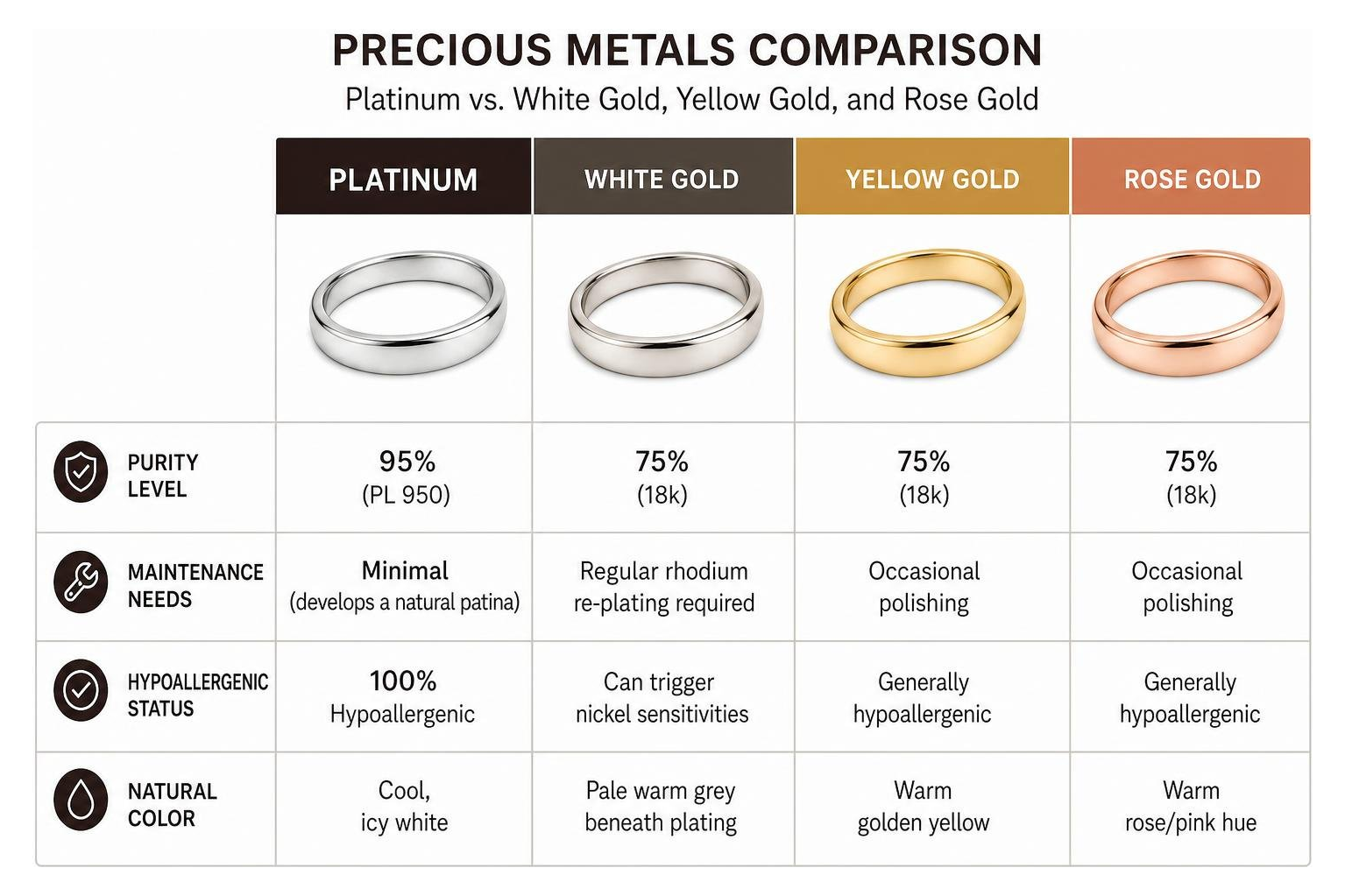
| Metal Type | Purity Level | Maintenance Needs | Hypoallergenic Status | Natural Color |
|---|---|---|---|---|
| Platinum | 95% (PL 950) | Minimal (develops a natural patina) | 100% Hypoallergenic | Cool, icy white |
| White Gold | 75% (18k) | Regular rhodium re-plating required | Can trigger nickel sensitivities | Pale warm grey beneath plating |
| Yellow Gold | 75% (18k) | Occasional polishing | Generally hypoallergenic | Warm golden yellow |
| Rose Gold | 75% (18k) | Occasional polishing | Contains copper alloys | Warm coppery pink |
Selecting Your Center Stone: Cut, Origin, and Diamond Quality
The center stone defines the spirit of a solitaire. When exploring how to pick a diamond, understanding the 4Cs—Cut, Color, Clarity, and Carat weight—ensures you maximize beauty and value.
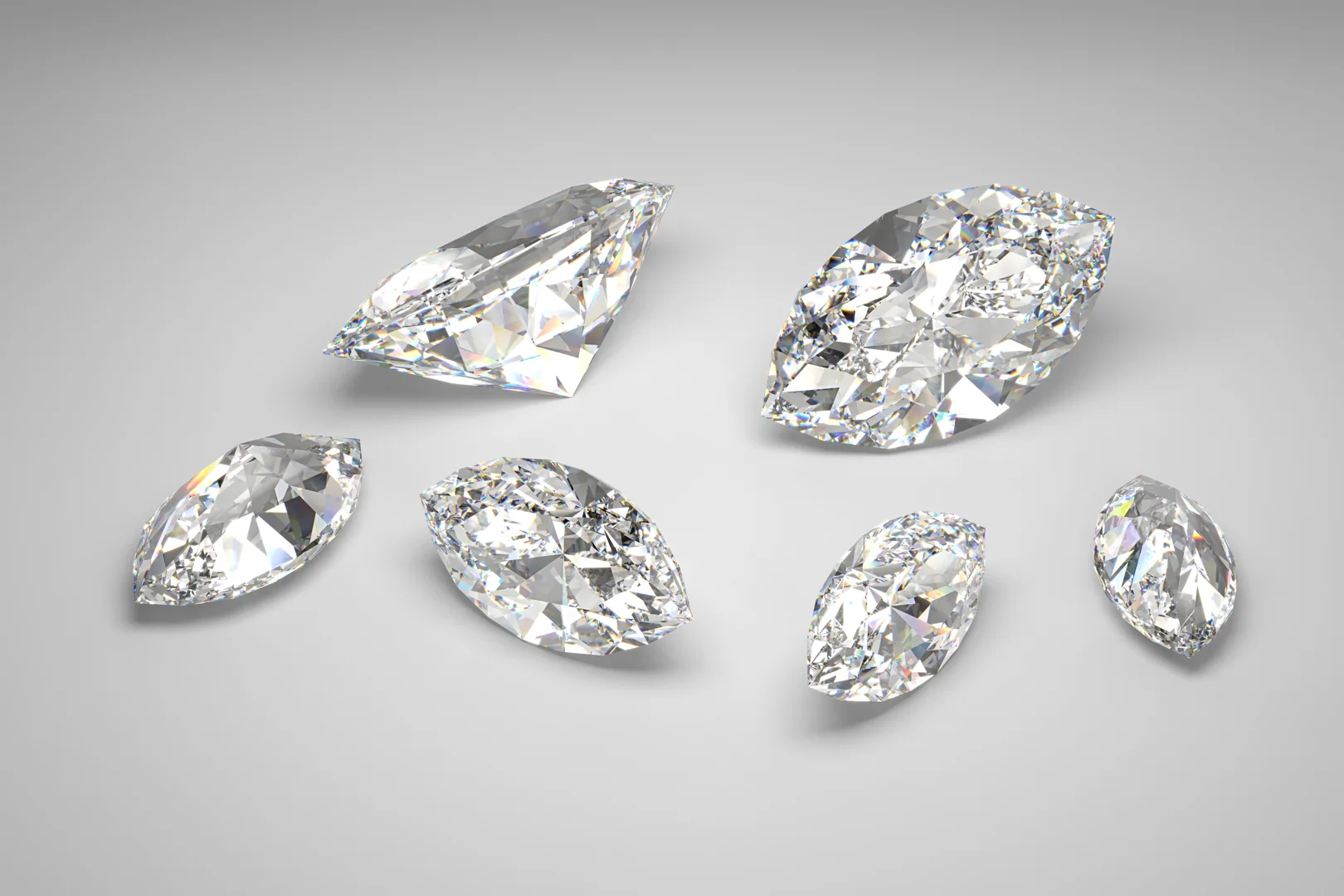
Among these factors, diamond cut quality holds the greatest influence over visual performance. A masterfully cut 1-carat diamond will refract light efficiently through its crown facets, masking minor natural inclusions and appearing larger and brighter than a poorly cut stone of heavier carat weight.
Selecting the Right Diamond Shape for Your 1ct Diamond Solitaire Platinum Ring
Every diamond silhouette creates a unique mood on the hand:
- Round Brilliant: The undisputed classic featuring 57 or 58 precisely angled facets engineered for maximum brilliance, scintillation, and fire.
- Princess Cut: Clean, contemporary 90-degree corners that combine the brilliant facet arrangement of a round stone with sharp modern lines.
- Emerald Cut: An understated step-cut stone that uses elongated rectangular facets to create an architectural "hall of mirrors" effect.
- Oval Cut: A flattering shape that lengthens the finger while offering a larger surface area (spread) per carat than a round diamond.
- Radiant Cut: Vibrant faceting combined with trimmed corners for exceptional sparkle, beautifully showcased in designs like our Duchess Solitaire Radiant Engagement Ring.
Natural vs. Lab-Grown Center Diamonds
Today's fine jewelry landscape offers two distinct pathways for sourcing your center stone: natural earth-created diamonds and laboratory-grown diamonds. In our review of our diamonds, we maintain identical quality standards regardless of origin.
Natural diamonds represent billions of years of geological history, mined responsibly through verified ethical supply chains. Lab-grown diamonds share the identical chemical, optical, and physical properties of mined diamonds, grading along the same 4Cs scales established by the Gemological Institute of America and other leading independent gemological laboratories.
Choosing between the two comes down to your personal philosophy: a natural diamond represents rare geological history, while a lab-grown diamond allows you to optimize clarity, color, and size within your preferred budget.
Choosing the Perfect Setting Style and Custom Details
A solitaire ring is defined by its clean simplicity, which makes the craftsmanship and architectural balance of the mounting paramount. In our guide on how to choose an engagement ring setting, we emphasize that the setting does not simply secure the diamond—it shapes the personality of the ring.
Explore our dedicated curation of platinum engagement rings to see how varying prong placements, low or high cathedral shoulders, and distinct band profiles completely transform a single stone.
Classic Prongs, Modern Bezels, and Band Profiles
- Four-Prong Mountings: Maximizes light entry from all sides, giving round and fancy shapes a square-aligned or orientation-forward visual impact while keeping metal coverage to a minimum.
- Six-Prong Mountings: Enhances security around the diamond's perimeter and emphasizes the round silhouette of a classic brilliant cut.
- Bezel Settings: Encircles the diamond with a sleek, continuous rim of platinum. This offers unbeatable snag-free protection for active lifestyles while delivering a bold, contemporary profile.
- Band Architectures: From knife-edge shanks that draw the eye up toward the center stone to comfort-fit rounded bands and cathedral shoulders that gracefully elevate the diamond, the band's profile establishes the foundational style of the piece.
Pricing and Budget Factors for a 1ct Diamond Solitaire Platinum Ring
The investment in an engagement ring varies based on diamond origin, 4Cs specifications, and the metal craftsmanship of the mounting. Across all engagement rings, selecting a higher cut grade consistently delivers superior light performance and perceived size over pure clarity or color gains. Balancing these elements allows you to design a showstopping solitaire tailored perfectly to your individual preferences.
Frequently Asked Questions About Platinum Solitaire Rings
What makes platinum superior to white gold for a solitaire ring?
Platinum offers natural whiteness that never fades or yellows, completely eliminating the need for periodic rhodium re-plating. Because platinum is 95% pure, it is hypoallergenic, dense, and exceptionally secure for gripping the girdle and corners of precious center diamonds.
Does a 1-carat diamond look larger in a platinum setting?
Yes. Platinum's cool, naturally white sheen acts like a pristine mirror against the pavilion facets of the diamond. When paired with a tapered band and discreetly engineered prongs, the optical boundary between the metal and diamond blurs, enhancing the stone's apparent spread.
How should I care for and maintain a platinum solitaire ring?
Clean your platinum solitaire at home using warm water, mild dish soap, and a soft-bristle toothbrush to remove everyday lotions and oils from beneath the diamond. Visit a master jeweler annually for professional ultrasonic cleaning and comprehensive prong integrity inspections.
Conclusion
A 1-carat solitaire set in platinum remains one of the most enduring symbols of love and personal expression. By thoughtfully pairing high-performance diamond cuts with sculptural, handcrafted metalwork, your ring becomes a wearable piece of art built to last for generations.
At John Atencio, every bridal design begins as a hand-sketched original and is brought to life through exacting craftsmanship and attention to detail. Our custom engagement rings are hand-crafted and may require approximately six weeks to complete. Once finished, domestic orders are shipped via FedEx 2-Day service, with international shipping available to Canada only. Start your journey by exploring designer solitaire diamond engagement rings to find the perfect expression of your unique story.

