

A Diamond Lover's Guide to 3 Prong Stud Earrings and Martini Settings

Why 3 Prong Stud Earrings Shine So Brightly
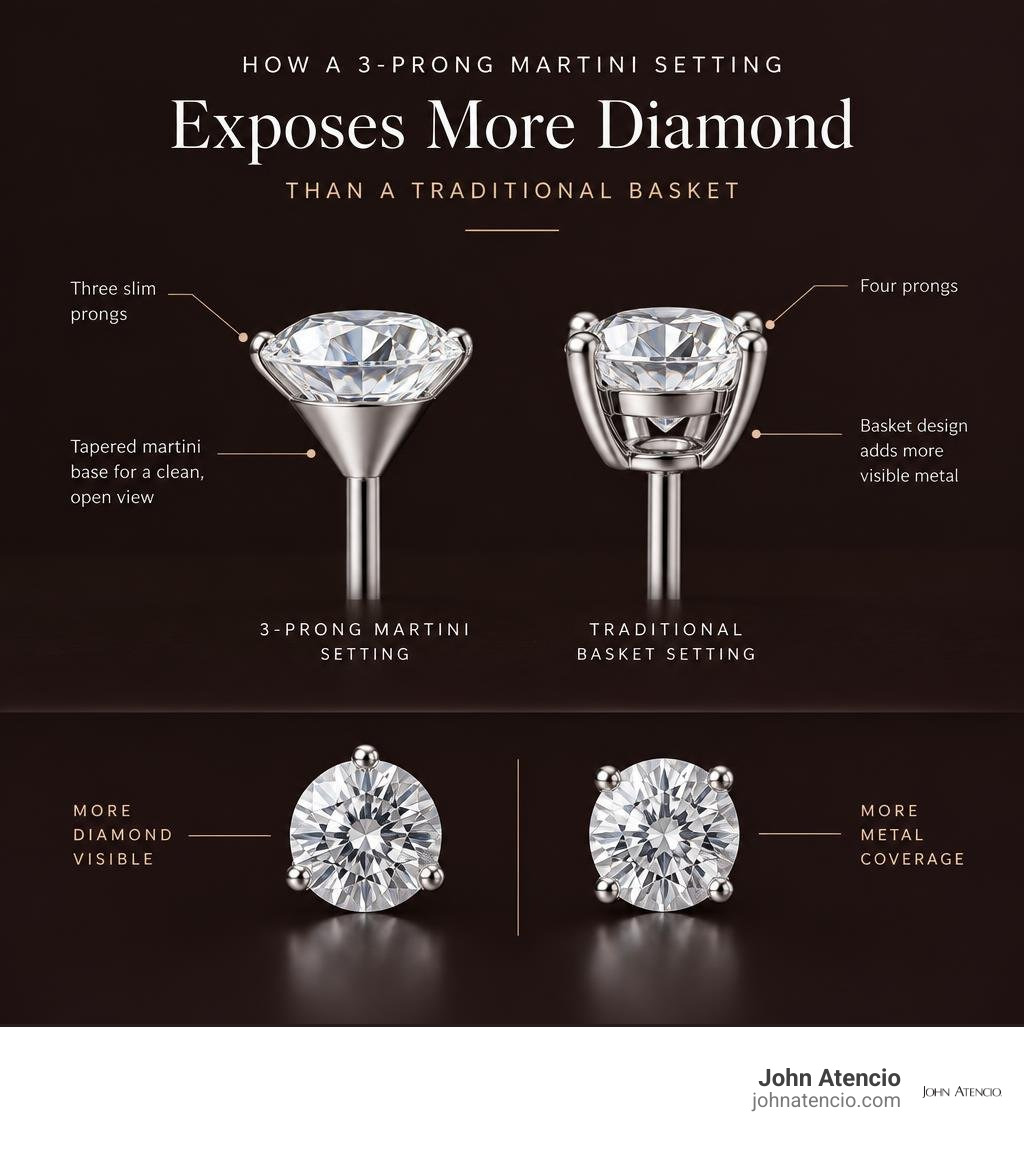
3 prong stud earrings hold a round diamond with three slim prongs instead of four. In a martini setting, those prongs rise from a tapered, cone-like base that resembles a martini glass. The result is less visible metal, more diamond on display, and a bright, floating look that sits close to the earlobe.
They are an excellent choice if you want a classic diamond stud with a lighter, more sculptural profile. Choose a three-prong martini setting for maximum stone visibility; choose secure screw backs if loss prevention matters most, or easy push backs if you prefer quick daily wear.
Compared with a traditional four-prong basket, the martini silhouette can create a cleaner view of the center stone and help center its weight nearer the ear. That makes it a natural fit for an everyday pair, a meaningful milestone gift, or an elevated second-piercing stack.
I am Lex Atencio, Executive Vice President at John Atencio, where I work with fine jewelry that balances handcrafted design, diamond beauty, and everyday wearability, including 3 prong stud earrings. In the sections ahead, we will compare settings, diamond types, metals, sizing, and backs so you can choose with confidence; John Atencio typically ships via FedEx 2-day service and does not ship internationally to customers.
The Anatomy and Appeal of 3 Prong Stud Earrings
The beauty of a three-prong architecture lies in its elegant economy. When crafting fine jewelry, our philosophy centers on striking harmony between bold, sculptural form and effortless wearability. Traditional stud designs often surround a stone with heavy metal rims or bulky four-post frameworks. While those designs have their own classic appeal, the three-prong configuration reduces metal coverage by twenty-five percent or more compared to four-prong alternatives.
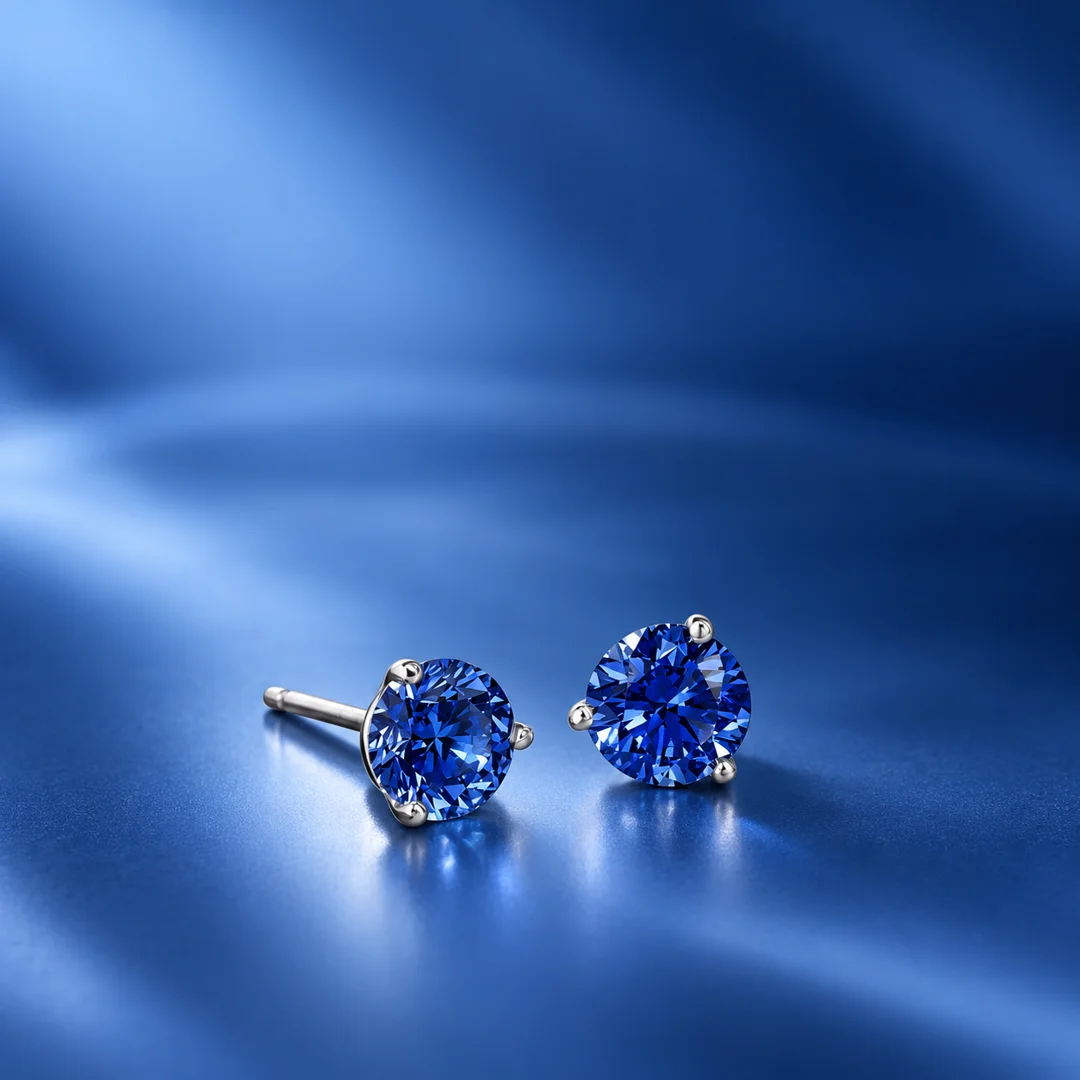
By positioning three delicate metal posts symmetrically at 120-degree intervals around a round brilliant gemstone, the setting forms an equilateral triangle. This geometry anchors the stone securely while leaving the perimeter open. More ambient light enters the diamond through its crown and pavilion facets, bouncing internally before returning to your eye as fiery scintillation. The diamond appears to float effortlessly against the earlobe rather than sitting enclosed in heavy hardware.
The Martini Setting: Why Conical Design Matters
The martini setting takes its name from its distinctive V-shaped silhouette, mimicking the steep, tapered bowl of a classic cocktail glass. Unlike flat-bottomed crown baskets or square settings, a martini base narrows progressively from the diamond girdle down to the ear post.
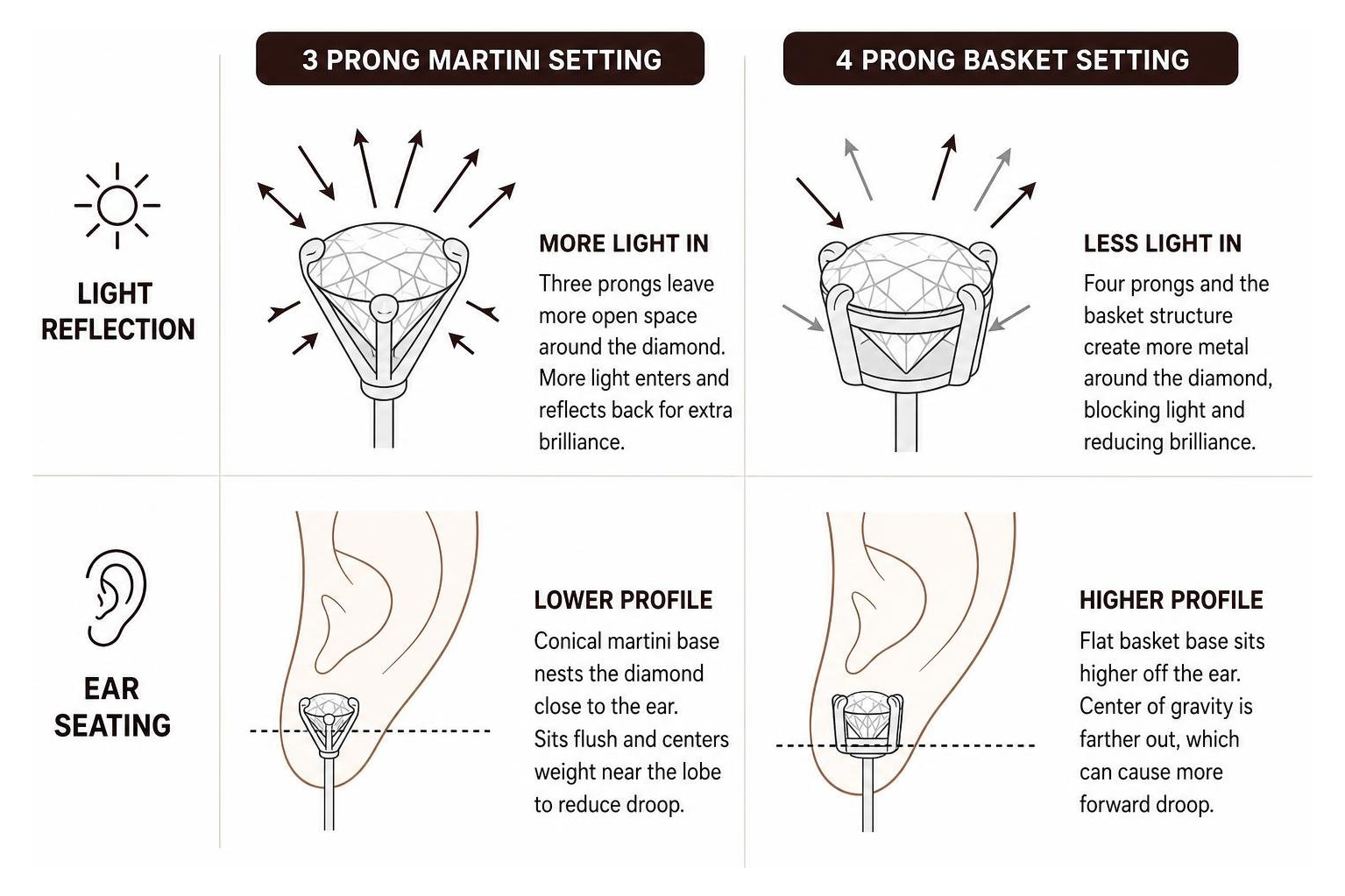
This conical profile creates two major functional benefits:
- Lower Profile Seating: Because the base narrows to a point, the culet (bottom point) of the diamond nestles directly into the natural indentation of your ear piercing. The stone rests flush against your skin rather than perching high on top of a flat metal platform.
- Balanced Center of Gravity: Higher-profile settings often pull downward because their center of mass sits away from the ear. A martini setting hugs the lobe tightly, drastically reducing that frustrating forward drooping effect.
When paired with a 58-facet round brilliant cut—the most celebrated diamond cut for balanced fire and brilliance—the martini architecture lets the stone perform at its absolute best.
3-Prong Martini vs. 4-Prong, Bezel, and Basket Settings
Selecting the perfect earring setting involves balancing optical brilliance, everyday security, and personal aesthetics. Here is how the most popular stud settings compare:
| Setting Style | Profile Height | Sparkle & Light Exposure | Security Level | Best For |
|---|---|---|---|---|
| 3-Prong Martini | Ultra-Low (Flush to lobe) | Maximum (Minimal metal coverage) | Very High (Secured at 3 points) | Clean lines, maximum brilliance, non-drooping wear |
| 4-Prong Basket | Medium to High | High (Slightly more metal) | High (Redundant post support) | Classic square silhouette, traditional look |
| Full Bezel | Low to Medium | Moderate (Enclosed edges) | Maximum (Protects diamond girdle) | Active lifestyles, modern protective design |
| Crown / Flat Basket | High (Sits off the ear) | High (Open sides) | High (Wide baseline) | Larger stones that need broad structural support |
A four-prong basket creates a slightly squarer appearance on the ear, whereas a three-prong setting maintains the organic, round contour of the stone. Bezel settings provide a striking, modern rim of precious metal that shields every edge, though they cover more diamond surface. For those who want uninterrupted sparkle and a seamless, flat fit, the three-prong martini remains an exceptional choice.
Comparing Diamond and Metal Options for 3-Prong Studs
Every fine piece of jewelry begins with exceptional raw materials. Because earrings undergo daily contact with skin, moisture, hair products, and movement, selecting the right combination of center stones and precious metals ensures your investment retains its beauty for a lifetime.
Stone Types: Natural and Lab-Grown Diamonds
When curating your perfect pair of studs, you can choose between natural earth-mined diamonds and lab-grown diamonds. Both options share the exact same physical, chemical, and optical properties:
- Natural Diamonds: Formed over billions of years beneath the Earth's crust, natural diamonds offer unmatched geological history and enduring rarity. Each natural stone possesses an individual journey, making it a treasured legacy piece.
- Lab-Grown Diamonds: Created using advanced technological methods that replicate the high-heat, high-pressure conditions of the Earth's mantle, lab-grown diamonds are 100% genuine diamonds. They share the top rating of 10 on the Mohs hardness scale, giving you incredible brilliance and high color and clarity grades with modern accessibility.
While fashion jewelry often uses diamond simulants like cubic zirconia, fine jewelry relies on genuine diamonds. Simulants are softer over time and can cloud or scratch, whereas natural and lab-grown diamonds maintain their fire and hardness forever.
Precious Metals: 14k/18k Gold and Platinum
The choice of setting metal affects both the visual personality of your earrings and their structural performance:
- 14k Gold (White, Yellow, Rose): Containing 58.3% pure gold alloyed with durable metals, 14k gold provides superb resistance to daily scratches and bends. It is an ideal choice for prong structures that need firm, reliable rigidity.
- 18k Gold (White, Yellow, Rose): With 75% pure gold content, 18k gold delivers a richer, warmer glow. It offers a luxurious weight and feel against the skin, blending fine craftsmanship with radiant color.
- Platinum: Platinum is naturally hypoallergenic, exceptionally dense, and develops a rich patina over time. It holds gemstones with extraordinary grip, making it a premier option for sensitive skin and heirloom-quality fine jewelry.
Sizing, Security, and Fit for Everyday Wear
Finding the ideal pair of studs involves choosing the right total carat weight (CTW) and selecting earring backs that match your lifestyle.
Choosing the Right Carat Weight for 3 Prong Stud Earrings
Carat weight in stud earrings is almost universally listed as Total Carat Weight (CTW), representing the combined weight of both earrings. For instance, a 1.00 CTW pair contains two 0.50-carat diamonds (approximately 5.0mm in diameter each).
- 0.50 to 0.75 CTW (approx. 4.0mm – 4.5mm each): Subtle, comfortable, and understated. This size range is ideal for business wear, subtle everyday refinement, or wearing in second and third ear piercings.
- 1.00 to 1.50 CTW (approx. 5.0mm – 5.7mm each): The gold standard for a classic solitaire look. It delivers noticeable presence and remarkable brilliance without overwhelming the lobe.
- 2.00 to 3.00+ CTW (approx. 6.5mm each and above): Bold, dramatic, and captivating. A 2.00 CTW pair offers a 6.5mm diamond per ear, making a striking statement for evening wear and special celebrations.
Securing Your 3-Prong Stud Earrings: Push Backs vs. Screw Backs
The mechanism that keeps your earrings in place should match how you wear them:
- Friction Push Backs: The standard butterfly back slides easily along smooth posts. They are quick to put on and take off, making them perfect for those who change their jewelry daily.
- Threaded Screw Backs: Featuring threaded posts, these backs must be rotated into place. They provide superior security against accidental snags from clothing, scarves, or active routines, giving you added peace of mind.
Sensitive Ears and Second Piercing Styling
If you experience skin sensitivity, opt for nickel-free 14k or 18k yellow gold, palladium-alloyed white gold, or pure platinum.
The low-profile, triangular footprint of a three-prong martini stud also makes it exceptionally versatile for curated ear stacks. Because the cone-shaped basket takes up minimal surface area, it pairs seamlessly next to delicate gold hoops, diamond huggies, or cartilage piercings without crowding adjacent jewelry.
Frequently Asked Questions About 3-Prong Diamond Studs
Why do 3-prong martini settings tilt less than traditional baskets?
Martini settings feature a tapered, conical basket that rests snugly inside the ear piercing itself. By drawing the diamond's mass closer to the earlobe, the earring shifts its center of gravity flush against your skin. Traditional flat baskets sit entirely atop the lobe, creating a forward lever effect that makes the earring tip downward.
How do prices vary across diamond types and metal settings?
Pricing for fine stud earrings is determined by the gemstone choice (natural versus lab-grown diamonds), the 4Cs (cut, color, clarity, and total carat weight), and the precious metal alloy used (14k gold, 18k gold, or platinum). Larger stones with superior clarity and cut grades reflect higher market value.
What should you expect for shipping and warranties when buying fine studs?
When ordering fine diamond jewelry, pieces are either curated from current stock or handcrafted to order by skilled artisans. John Atencio typically ships via FedEx 2-day service to ensure your order arrives safely and promptly. Please note that John Atencio does not ship internationally to customers. Fine jewelry pieces are backed by comprehensive craftsmanship guarantees to ensure your settings remain sound over a lifetime of wear.
Conclusion
A pair of three-prong martini stud earrings is a masterful study in minimalist luxury. By pairing the structural stability of a three-point hold with the light-maximizing contours of a conical basket, this setting celebrates the diamond above all else. Whether crafted in glowing 18-karat gold or cool platinum, it offers a versatile balance of modern design and everyday comfort.
If you are looking to elevate your jewelry collection or celebrate a special occasion, explore our curated selection of diamond stud earrings for women to discover the artistry and distinctive design that define John Atencio.