
Timeless Romance with an Antique Marquise Engagement Ring

How to Choose an Antique Marquise Engagement Ring
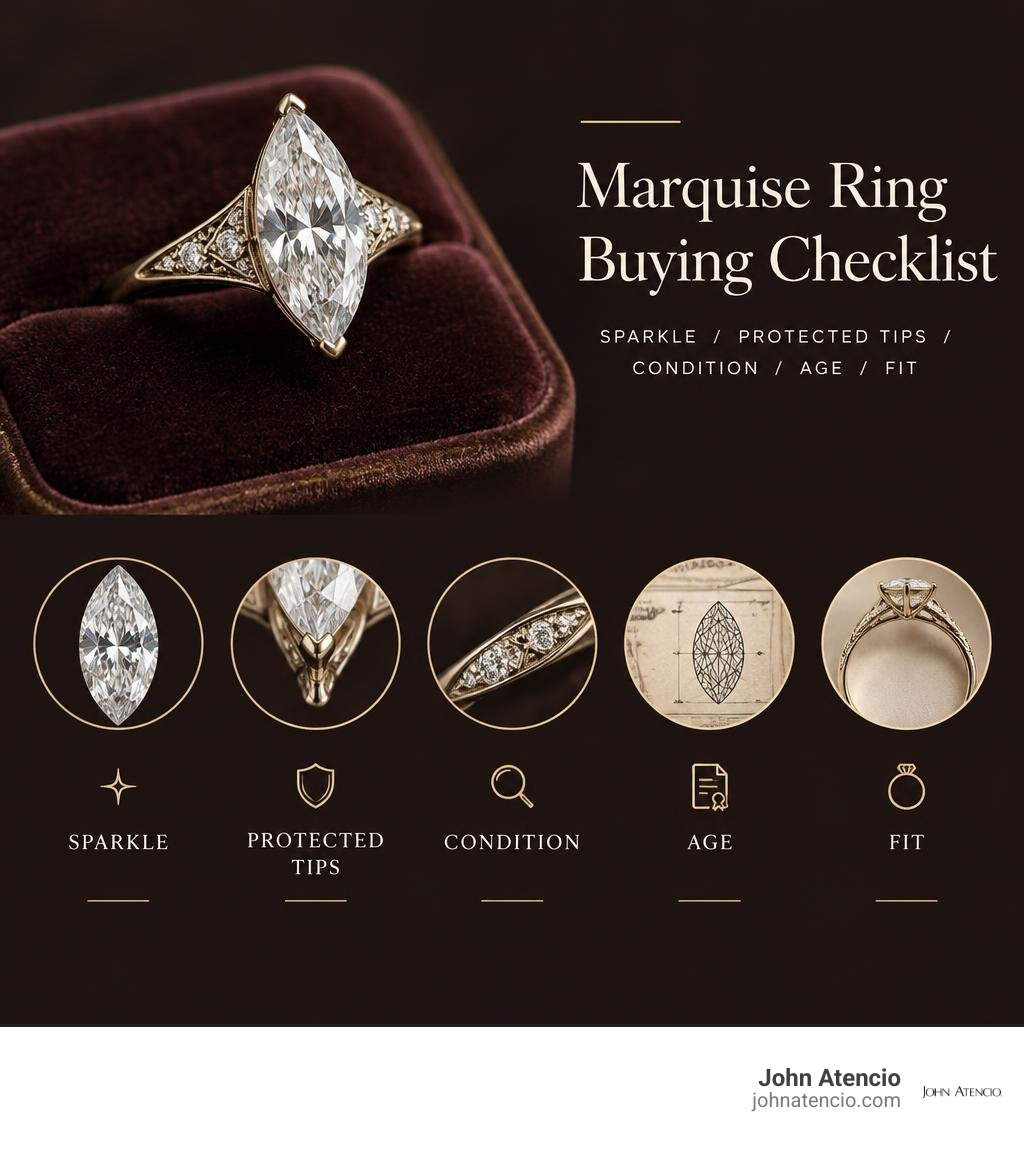
Start with the diamond and its setting. Look for a marquise stone that sparkles across its center, without a dark shadow that draws your eye. Check that both pointed tips are protected, then ask for a condition report, any diamond grading report, and evidence of the ring's age. Confirm the size before buying; an ornate antique band may be hard to resize.
The marquise shape has a long, pointed outline that can make the diamond look larger on the finger. Antique settings add details you may not find in a new ring, but their age makes a close inspection especially important. For broader context on evaluating estate pieces, the Gemological Institute of America offers guidance on antique and estate jewelry.
John Atencio typically ships via FedEx 2-day service, and in-stock styles ship this way. Custom engagement rings and special orders typically take 6-8 weeks to hand-craft; online orders can also be shipped to Canada.
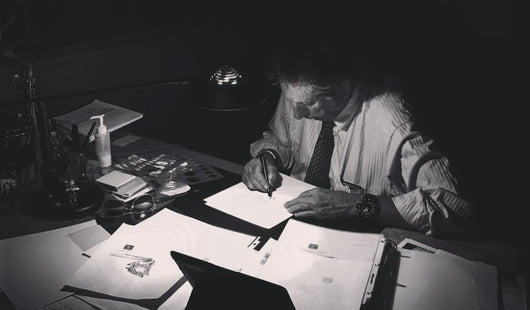
I'm Lex Atencio, executive vice president at John Atencio Jewelry. I'll bring that jewelry-industry perspective to this guide to choosing an antique marquise engagement ring, from the diamond's shape to the setting that will protect it.
History and Evolution of the Antique Marquise Engagement Ring
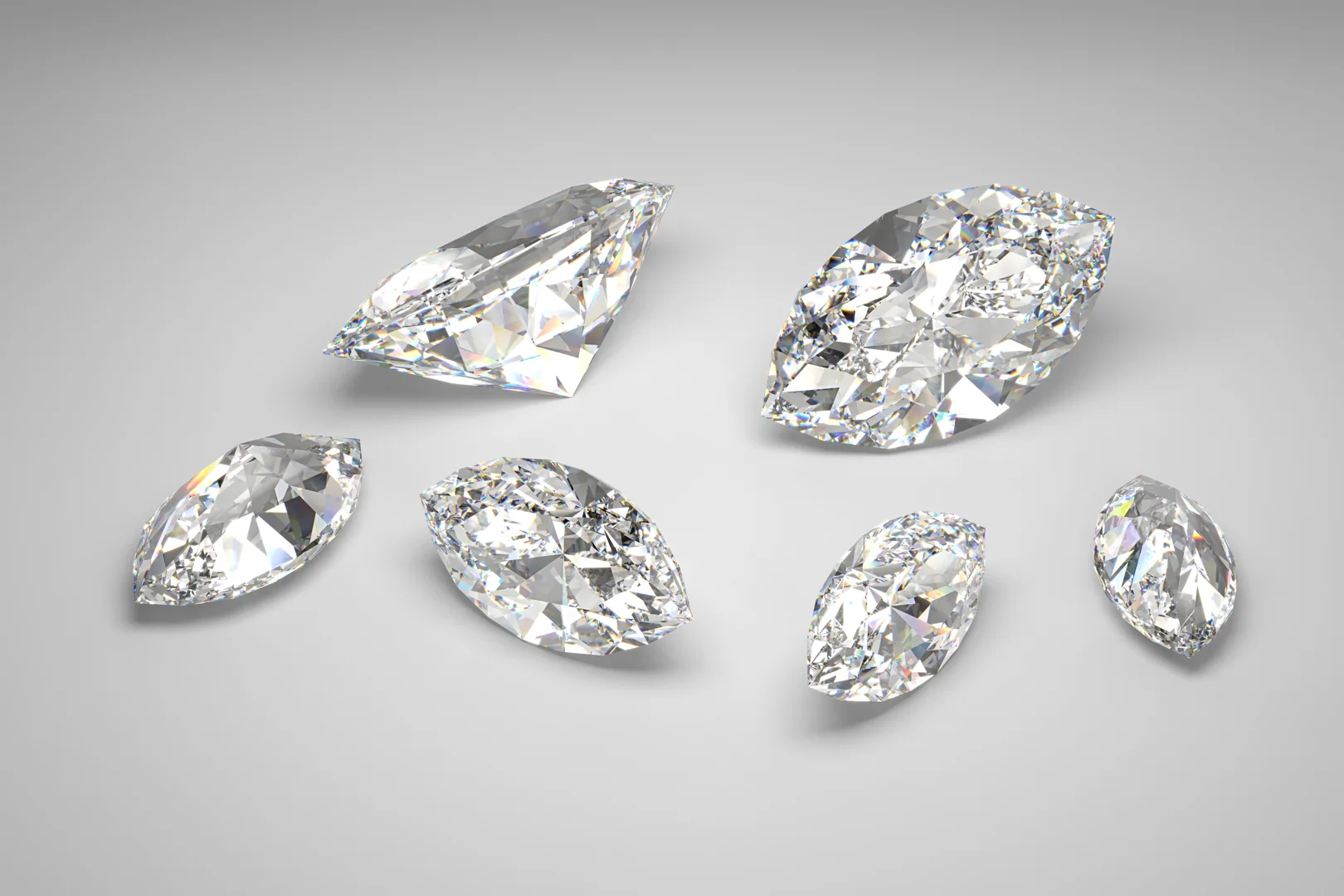
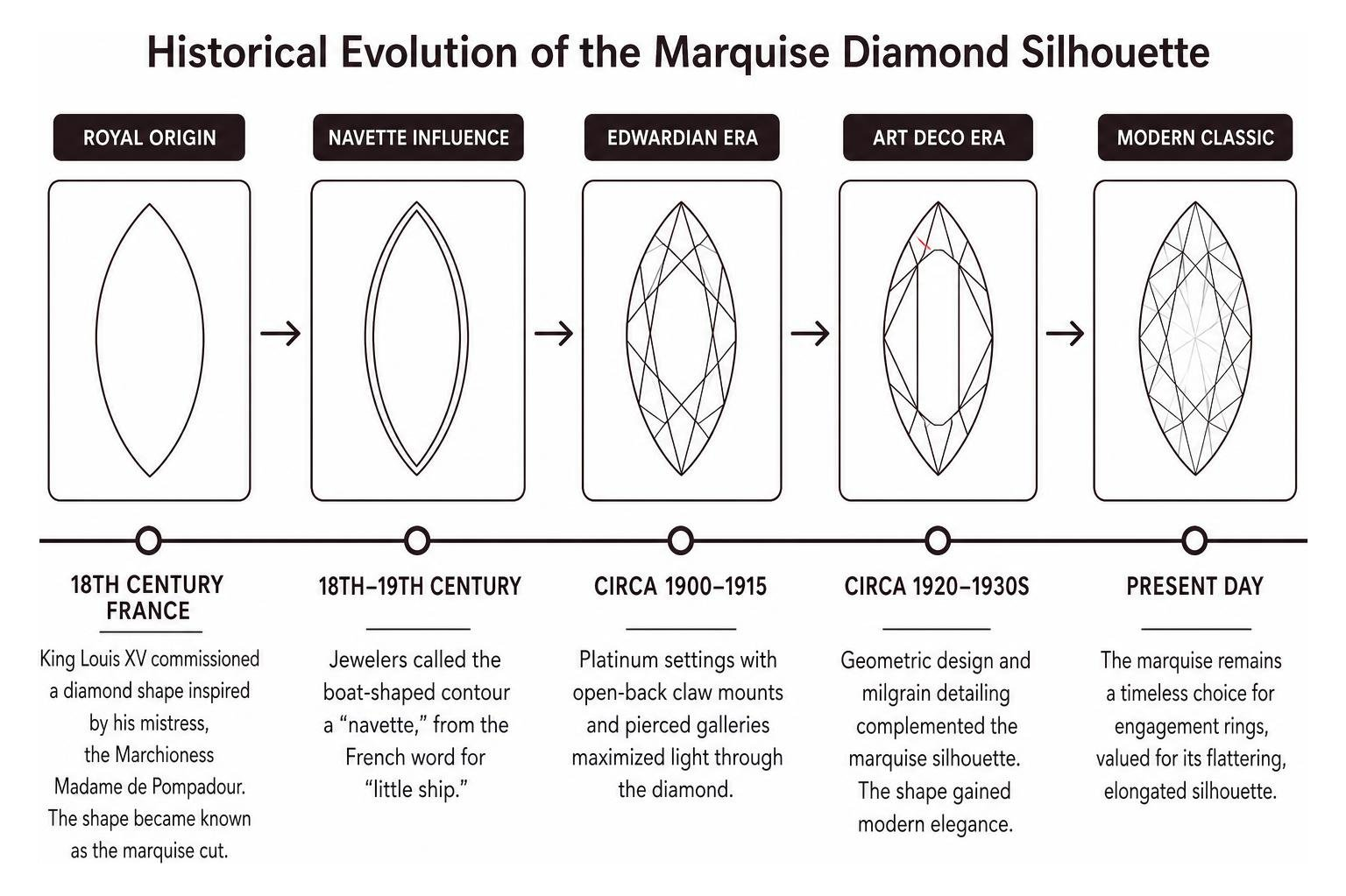
The marquise cut boasts one of the most romantic origin stories in fine jewelry. In 18th-century France, King Louis XV commissioned his court jewelers to fashion a diamond shape resembling the lips of his beloved mistress, Jean-Antoinette Poisson, the Marchioness Madame de Pompadour. This regal silhouette became known as the marquise cut, referencing the aristocratic rank granted to courtiers who wore it.
Jewelers also referred to this boat-shaped contour as a navette, derived from the French word for "little ship." Over the centuries, this silhouette evolved from royal court regalia into a coveted choice for bridal jewelry. Its elongated design naturally flatters the hand by creating a slimming, lengthening visual effect across the finger.
Edwardian and Victorian Era Origins
During the late Victorian and Edwardian eras, jewelry craftsmanship reached extraordinary heights of delicacy and refinement. Edwardian artisans embraced platinum for its high tensile strength, creating lace-like openwork and pierced galleries beneath central gemstones.
In this period (circa 1900–1915), an antique marquise engagement ring often showcased open-back claw settings that maximized natural light reflection through the diamond. Jewelers accentuated these center stones with delicate ribbed shanks, hand-engraved scrollwork, and milgrain borders. These heirloom designs inspired generations of classic solitaire engagement rings, combining clean focal points with intricate under-galleries.
Art Deco and Mid-Century Navette Transformations
As the 1920s arrived, the Art Deco movement reimagined the navette profile through bold geometric lines and stark contrast. Jewelers paired elongated center stones with step-cut baguettes, eight-cut accent diamonds, and calibrated colored gemstones such as sapphires, emeralds, and rubies.
By the mid-20th century, the cut remained a cornerstone of romantic bridal style. Jewelers mounted stones in rich yellow gold and rose gold alloys, celebrating the stone's regal curvature. These distinctive vintage creations established the foundation for modern fancy engagement rings that honor distinctive, non-round center diamonds.
Notable Styles and Market Highlights in Antique Marquise Rings
When exploring the antique and estate market, several distinct archetypes illustrate the diversity of vintage marquise mountings. The value of these historic rings relies on the rarity of the period, the quality of the center stone, and the preservation of original hand-fabricated metalwork.
The Platinum Solitaire Antique Marquise Engagement Ring
One of the most sought-after vintage styles is the Edwardian platinum solitaire. A classic example from circa 1910 features a prominent 2.25-carat old cut marquise diamond boasting G color and VS2 clarity. Artisans flanked the center stone with six small eight-cut accent diamonds (0.06 carats total) integrated into a finely pierced gallery and ribbed platinum band weighing under three grams.
This style prioritizes light return, architectural balance, and featherlight comfort on the hand. It remains an enduring reference point for collectors seeking unique engagement ring styles with genuine Edwardian heritage.
The Warm Gold and Gemstone Antique Marquise Engagement Ring
Antique and vintage rings also showcase expressive combinations of warm gold alloys and vibrant colored gems. A vintage 14k yellow gold solitaire featuring a 0.25-carat marquise center stone (VS clarity, H color) illustrates the minimalist, warm-toned aesthetic popular in mid-century settings.
For those seeking contrasting color, vintage rose gold rings frequently paired marquise diamonds with complementary gemstones. A classic estate configuration features a 0.65-carat natural marquise center stone accented by 0.55 carats of natural rubies, creating a striking floral or halo motif. These historic combinations inspire modern brides looking for heirloom-inspired gold engagement rings for women.
| Ring Style & Era | Primary Metal | Typical Center Stone Specs | Distinctive Design Elements |
|---|---|---|---|
| Edwardian Solitaire (Circa 1910) | Platinum | 2.00+ ct Old Marquise Cut (G / VS2) | Pierced gallery, ribbed shank, 8-cut accent diamonds |
| Mid-Century Minimalist (Circa 1950s) | 14k / 18k Yellow Gold | 0.25–1.00 ct Marquise Cut (H / VS–SI) | Sleek band, tailored 6-prong head, open profile |
| Vintage Multi-Stone (Circa 1940s–1970s) | 14k / 18k Rose or Two-Tone Gold | 0.50–1.25 ct Marquise Cut with Gemstone Accents | Ruby or sapphire halos, milgrain trim, sculptural shoulders |
Evaluating Cut, Quality, and Craftsmanship in Vintage Marquise Diamonds
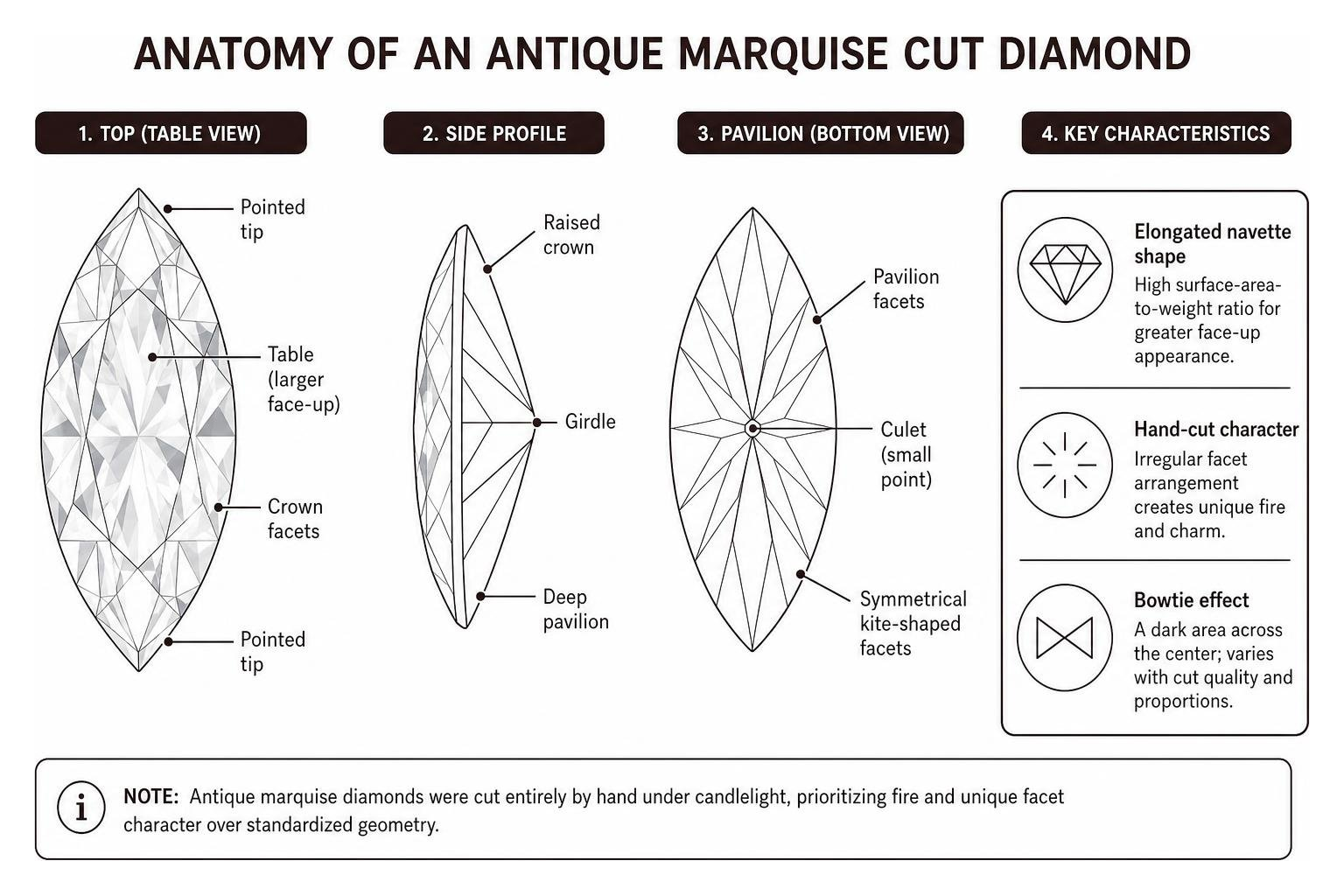
Assessing an antique diamond requires a slightly different approach than grading modern, machine-cut stones. Antique diamonds were cut entirely by hand under candlelight, prioritizing fire and unique facet character over standardized geometry.
Assessing Diamond Proportions and the Bowtie Effect
The elongated navette shape features a high surface-area-to-weight ratio, giving it a larger face-up appearance than round brilliants of equivalent carat weight. However, cut quality determines how evenly the diamond returns light across its length.
- Length-to-Width Ratio: Traditional marquise cuts generally aim for a classic ratio between 1.75:1 and 2.15:1. Ratios below this can appear stout, while higher ratios produce an ultra-slender silhouette.
- The Bowtie Effect: Because of how light reflects through the central facets of elongated stones, a dark shadow resembling a bowtie can appear across the center table. While subtle contrast is natural in fancy shapes, an overly dark or dead zone indicates poor pavilion depth.
- Comparative Visuals: The visual dynamics of a marquise cut share similarities with oval diamond engagement rings and elongated pear-shaped diamond styles. All three shapes maximize finger coverage, but the marquise provides the sharpest symmetrical points.
Settings, Metal Choices, and Structural Integrity
Because the marquise cut narrows to two sharp tips, setting architecture is critical for long-term wear. The pointed ends contain internal stress planes that are susceptible to chipping if struck against hard surfaces.
- V-Prong Protection: The industry gold standard for setting marquise diamonds includes dedicated chevron or V-shaped prongs encasing both sharp points.
- Side Support: In addition to end caps, four to six side prongs keep the wide belly of the diamond secure.
- Bezel Mountings: For active lifestyles, modern bezel set engagement rings encase the entire perimeter in a protective rim of precious metal, preventing snags and protecting fragile antique edges.
- Antique Metal Wear: When inspecting a genuine vintage ring, check the base of the shank and the under-gallery for thinning metal, worn prongs, or previous solder repairs.
Buying Guide: Authentication, Provenance, and Ethical Value
Navigating the estate market requires a blend of aesthetic appreciation and technical due diligence. Whether you purchase an authentic historic piece or commission a vintage-inspired modern design, understanding diamond grading and provenance ensures lasting confidence.
Evaluating Antique Rings and Modern Fine-Jewelry Alternatives
Buying genuine antique jewelry carries inherent charm, but older settings often present challenges such as worn prongs, brittle metal alloys, or compromised side stones. If you appreciate vintage character but desire modern structural integrity, a contemporary marquise diamond engagement ring offers precision casting, balanced proportions, and conflict-free sourcing while honoring historic romance.
Provenance, Certification, and Ring Resizing Considerations
Before acquiring any historic diamond, insist on third-party documentation. An authentic vintage diamond should come with an independent grading report from a globally recognized laboratory such as the Gemological Institute of America (GIA). A formal report verifies the diamond's natural origin, carat weight, color grade, and clarity characteristics.
- Hallmarks and Maker's Marks: Authentic antique rings often bear assay stamps and maker's hallmarks inside the band that reveal the era, metal purity, and country of origin.
- Resizing Realities: Antique rings with engraved shanks, pierced galleries, or accent stones along the band are challenging to resize without disrupting structural symmetry. Confirm sizing feasibility with a master jeweler before purchasing.
- Ethical Sustainability: Antique diamonds represent a sustainable jewelry choice because they rely on recycled materials with zero new mining impact. If you choose to craft a new ring with vintage appeal, modern custom engagement rings offer the opportunity to use recycled precious metals and ethically sourced natural or lab-grown diamonds.
Frequently Asked Questions About Antique Marquise Rings
How do I protect the delicate pointed tips of an antique marquise cut?
Ensure the setting uses protective V-shaped prongs or a full perimeter bezel around both tips. Have a professional jeweler inspect the prong tension and metal integrity at least once a year, and remove the ring during heavy physical activities.
Are antique marquise diamonds more ethical and sustainable than modern stones?
Yes. Antique diamonds are inherently sustainable because they are part of a circular jewelry economy. Reusing vintage diamonds avoids new mining, land disruption, and modern industrial processing.
How can I verify if an antique marquise ring is authentic?
Look for verified period hallmarks stamped inside the shank, inspect the stone for historical facet configurations (such as larger open culets or steeper crown angles), and insist on an independent laboratory report from the GIA alongside a professional appraisal.
Conclusion
The antique marquise diamond remains a poetic symbol of aristocratic romance, uniting historical craftsmanship with a flattering navette profile. Whether you choose a century-old Edwardian platinum heirloom or design a modern interpretation sculpted with vintage sensibilities, this silhouette stands out as an enduring work of wearable art.
At John Atencio, every design reflects five decades of hand-crafted excellence, utilizing responsibly sourced natural and lab-grown diamonds set in recycled precious metals. In-stock styles ship via FedEx 2-day service, while custom engagement rings and special orders typically take 6–8 weeks to hand-craft. Online orders can also be shipped directly to Canada.
To learn more about selecting the right fancy shape for your bridal set, explore the comparative brilliance of marquise and fancy cut diamonds with our comprehensive gemstone guide.
— Lex Atencio

