
1 Carat Total Diamond Earrings Sizing and Style Breakdown

Sizing and Visual Impact of 1 Carat Total Diamond Earrings
Choosing the right diamond size comes down to understanding how weight translates into visual coverage on the earlobe. Diamond carat measures weight rather than millimeter size, so the cut proportions dictate how expansive each stone appears when worn. Understanding diamond carat weight measurement helps you evaluate how diamonds reflect light and occupy space. This distinction matters because two pairs of 1 carat total diamond earrings can look remarkably different depending on whether the weight is concentrated in a single focal point or distributed across a series of smaller stones.
Total Carat Weight (CTW) vs. Individual Stone Carat
The distinction between total carat weight (often abbreviated as CTW or ctw) and individual stone carat weight is essential:
- 1 Carat Total Weight (1.00 ctw): Refers to the collective weight of all diamonds in the pair. In a classic two-stone stud set, each ear carries approximately 0.50 carats.
- 1 Carat Per Earring (2.00 ctw): Features a full 1.00 carat stone in each ear, creating a significantly larger footprint.
Maintaining twin diamond symmetry ensures that both stones display identical proportions, cut quality, and visual balance. When jewelers reference total weight terminology, they are describing the combined mass of every diamond in the finished pair, not the size of any single stone. This distinction helps you compare options accurately and understand why a pair of 1 carat total diamond earrings may appear more understated than a pair with one carat in each ear.
Physical Dimensions of 1 Carat Total Diamond Earrings
A well-cut, 0.50-carat round brilliant diamond measures approximately 5.0 mm in diameter. Across two ears, a pair of 5.0 mm round stones offers substantial light performance and clear earlobe coverage without pulling the piercing downward. The round brilliant cut is engineered to maximize light return, with 58 precisely angled facets that bounce light from the table through the crown and back to the eye.
When evaluating multi-stone designs of the same total weight, the surface area reflection is dispersed across several smaller stones. While a solitaire concentrates brilliance into a single focal point, multi-stone settings spread scintillation across a broader pattern. This means a journey-style pair with graduated stones may cover more vertical distance on the ear while each individual diamond appears smaller than a 5.0 mm solitaire. Understanding millimeter sizing alongside carat weight gives you a more complete picture of how the earrings will sit on the earlobe and interact with light throughout the day.

Classic Studs vs. Multi-Stone Journey Styles
The silhouette of an earring defines how it catches ambient light and complements facial features. Two popular configurations for 1.00 ctw earrings are the classic solitaire stud and the articulated journey drop. Each style offers distinct advantages depending on your wardrobe, lifestyle, and the occasions where you plan to wear them. Classic studs provide a clean, symmetrical presence that works seamlessly with professional attire and casual looks alike. Journey drops introduce movement and vertical elongation, making them a natural choice for evening events and formal gatherings.
| Feature | Classic Solitaire Studs | Multi-Stone Journey Drops |
|---|---|---|
| Diamond Layout | Single diamond per ear (~0.50 ct each) | Multiple graduated diamonds per ear |
| Typical Dimensions | ~5.0 mm diameter per stone | 2.20 mm to 3.60 mm graduated stones |
| Movement | Fixed on earlobe | Articulated, graceful sway |
| Best For | Everyday signature wear, active lifestyles | Evening wear, vertical silhouette lengthening |
| Setting Architecture | Prongs (3-prong martini, 4-prong basket) | Linear or curved drop channel/prong bar |
Classic Solitaire Stud Settings and Backings
Classic studs remain an enduring choice because of their functional simplicity and versatility. The architecture of the setting influences both light entry and security:
- Three-Prong Martini Settings: Provide a low-profile fit that sits close to the earlobe, minimizing tip-forward tilt. Explore our lab-grown three-prong diamond studs for a modern, minimalist profile.
- Four-Prong Baskets: Offer a traditional, balanced frame that protects the girdle edge of each diamond.
- Backing Mechanisms: Standard friction butterfly backs offer ease of use for daily routines, while threaded screw backs or locking mechanisms provide additional mechanical security.
The choice between three-prong and four-prong settings affects both aesthetics and practicality. Three-prong martini settings expose more of the diamond's surface area to light, potentially enhancing brilliance, while four-prong baskets provide a more protective frame that may be preferable for those with active lifestyles. Friction butterfly backs remain the most common choice for their simplicity, but screw backs offer peace of mind for earrings worn daily or during travel.
Graduated Multi-Stone and Journey Drop Earrings
Journey and drop earrings arrange diamonds in a linear, cascading formation. In a 1.00 ctw journey pair, each earring features a series of graduated diamonds ranging from 2.20 mm up to 3.60 mm. The progression from smaller to larger stones creates a sense of movement even when the earring is still, drawing the eye along the vertical line of the design.
These designs introduce fluid movement and catch light from shifting angles, offering an elongated aesthetic that transitions naturally into formal evening wear. The articulated joints between stones allow each diamond to move independently, creating a subtle sparkle that shifts as you turn your head. This dynamic quality makes journey drops particularly effective for candlelit dinners, receptions, and other settings where ambient light is softer and more directional.
Diamond Origins and Precious Metal Considerations
The harmony between the diamond and its setting shapes the piece's structural longevity and overall brilliance. Selecting the right combination of diamond origin and metal purity ensures that your 1 carat total diamond earrings remain beautiful and secure through years of wear. According to the Gemological Institute of America, diamond quality is assessed through the 4Cs—cut, color, clarity, and carat weight—which together determine a stone's visual performance and value.
Evaluating Diamond Quality in 1 Carat Total Diamond Earrings
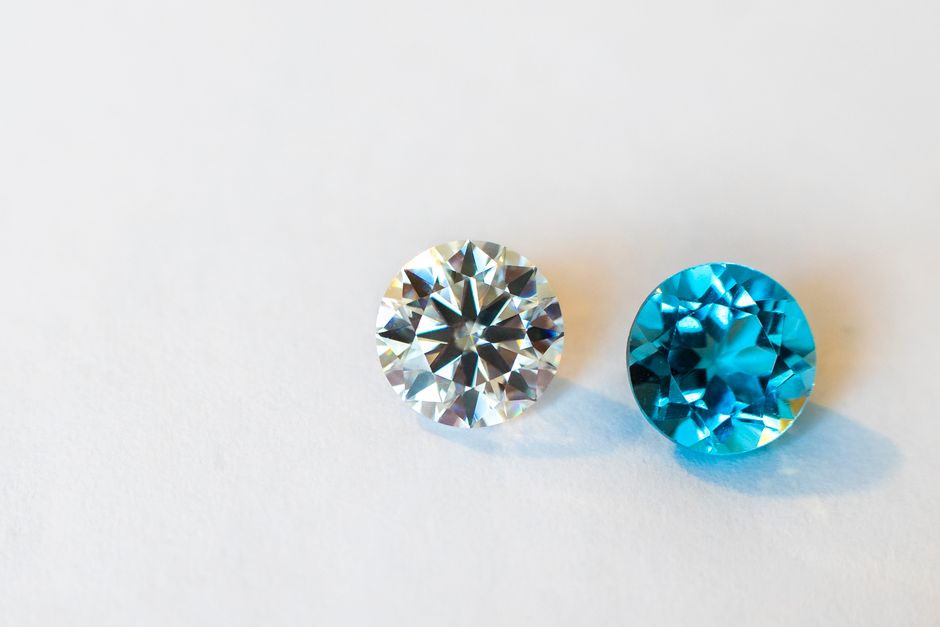
Whether you choose mined stones or chemical vapor deposition (CVD) lab-grown diamonds, assessing the 4Cs ensures optimal visual performance:
- Color (G-H Grade): Diamonds in the near-colorless G-H range appear crisp and white when mounted in white, yellow, or rose precious metals.
- Clarity (VS to SI Grade): VS (Very Slightly Included) and SI (Slightly Included) stones keep inclusions microscopic, delivering an eye-clean appearance where clarity characteristics do not interrupt light return.
- Cut: An exquisite cut maximizes brilliance and scintillation, ensuring that a 5.0 mm round stone returns bright, balanced reflections.
For earrings worn at conversational distance, the G-H color range and VS to SI clarity grades offer an excellent balance of beauty and value. Inclusions that are invisible to the naked eye have no practical impact on the earring's appearance, while the near-colorless tone ensures the diamonds read as bright white against the skin. The cut remains the most important factor for sparkle, as even a flawless diamond will appear dull if its proportions do not optimize light return.
Choosing the Right Metal: 9K, 14K, and 18K Solid Gold
Gold alloys vary in purity, weight, and tone:
- 9K Gold: Contains 37.5% pure gold. Highly durable against scratches due to its higher alloy content, though lighter in rich gold saturation.
- 14K Gold: Contains 58.3% pure gold. Represents a durable, versatile standard for everyday fine jewelry.
- 18K Gold: Contains 75% pure gold. Offers substantial heft, rich color depth, and natural hypoallergenic properties, making it an ideal canvas for fine diamonds.
To explore how metal alloys influence daily wear and aesthetics, review our 14k and 18k solid gold earring guide. The higher the gold content, the softer and more lustrous the metal becomes. For earrings that will be worn daily, 14K gold offers an excellent compromise between durability and richness. For those with sensitive skin, 18K gold's higher purity reduces the likelihood of irritation from alloy metals.
Price Ranges, Everyday Wearability, and Care Maintenance
Building an enduring jewelry wardrobe involves balancing craftsmanship, lifestyle needs, and long-term care. Explore our curated diamond essentials collection for classic, everyday designs. The value of fine diamond earrings extends beyond their initial purchase, as proper care and thoughtful material selection ensure they remain a cherished part of your collection for decades.
Budget and Valuation Factors
The value of diamond earrings depends on several core factors:
- Diamond Origin: CVD lab-grown diamonds offer an accessible path to larger carat weights and higher clarity grades, while natural diamonds carry value rooted in their geological rarity.
- Metal Choice: Premium alloys, such as 18-karat gold and platinum, require greater craftsmanship and material investment than lower-karat options.
- Setting Craftsmanship: Handcrafted, sculptural settings provide structural integrity that keeps diamonds secure over decades of wear.
Certification standards also play a role in valuation. Diamonds accompanied by grading reports from recognized gemological laboratories provide documented assurance of the stone's quality characteristics. This documentation becomes particularly valuable when insuring your earrings or evaluating them for future upgrades. While certification does not change the visual beauty of a diamond, it offers transparency and confidence in your investment.
Routine Cleaning and Maintenance for Solid Gold
Maintaining diamond sparkle requires regular, gentle cleaning to remove everyday lotions, oils, and dust:
- Soak: Submerge earrings in a bowl of warm water mixed with a few drops of mild dish soap for 10 to 15 minutes.
- Clean: Use a soft-bristled baby toothbrush to gently clean around the diamond prongs and beneath the basket where residue accumulates.
- Rinse & Dry: Rinse thoroughly in warm running water (with the drain covered) and pat dry with a lint-free cloth.
- Inspect: Regularly check prongs for slight bends or loosening, avoiding excessive force when securing earring backs.
Beyond routine cleaning, periodic professional inspection helps catch early signs of wear before they become problems. A jeweler can check prong tension, verify that stones are secure, and polish the metal to restore its original luster. For solid gold earrings, oxidation is minimal, but exposure to chlorine, salt water, and harsh chemicals can dull the finish over time. Removing your earrings before swimming, showering, or applying cosmetics extends the life of both the metal and the diamonds.
Frequently Asked Questions About 1 Carat Diamond Earrings
What is the difference between 1 ctw and 1 carat per earring?
A 1.00 ctw pair splits the total weight between two earrings, delivering two 0.50-carat stones (approximately 5.0 mm each). A "1 carat per earring" pair totals 2.00 ctw, with each earring holding a single 1.00-carat stone (approximately 6.5 mm each). The terminology can be confusing because both descriptions reference "1 carat," but the actual visual impact and cost differ significantly. A 1.00 ctw pair offers a refined, everyday presence, while a 2.00 ctw pair makes a bolder statement with noticeably larger stones.
What clarity and color grades offer the best value for 1 ctw earrings?
For 0.50-carat stones in stud earrings, a G-H color grade paired with VS or clean SI clarity delivers an eye-clean look with bright white sparkle, offering an optimal balance of beauty and value. At this carat weight, inclusions are less visible than in larger stones, so you can confidently select SI clarity diamonds that remain eye-clean without paying a premium for higher grades. The G-H color range sits in the near-colorless category, appearing white to the naked eye while costing less than D-F colorless stones.
What shipping and delivery policies apply to fine diamond earrings?
When ordering fine jewelry, verified shipping ensures your piece arrives safely. John Atencio orders are delivered via secure domestic carriers, typically shipping via FedEx 2-day service. Please note that John Atencio does not ship internationally to customers. John Atencio provides a 15-day return window so you can confirm the fit and brilliance of your piece in person. This policy allows you to examine the earrings in natural light, try them on, and ensure they meet your expectations before making a final commitment.
Conclusion
A pair of 1.00 ctw diamond earrings offers an ideal balance of scale, comfort, and brilliance. Whether set in a clean three-prong stud or an articulated drop, this carat weight serves as a foundational element of any fine jewelry collection. The versatility of 1 carat total diamond earrings makes them equally appropriate for a morning meeting, an afternoon errand, or an evening celebration. We invite you to explore exquisite diamond stud earrings for women and find a handcrafted piece tailored to your personal style. With proper care and thoughtful selection, these earrings become more than an accessory—they become a signature of your everyday elegance.
