
Why the 1 Carat Solitaire Is the Gold Standard of Engagement Rings

Why a 1 Carat Solitaire Remains a Classic Choice
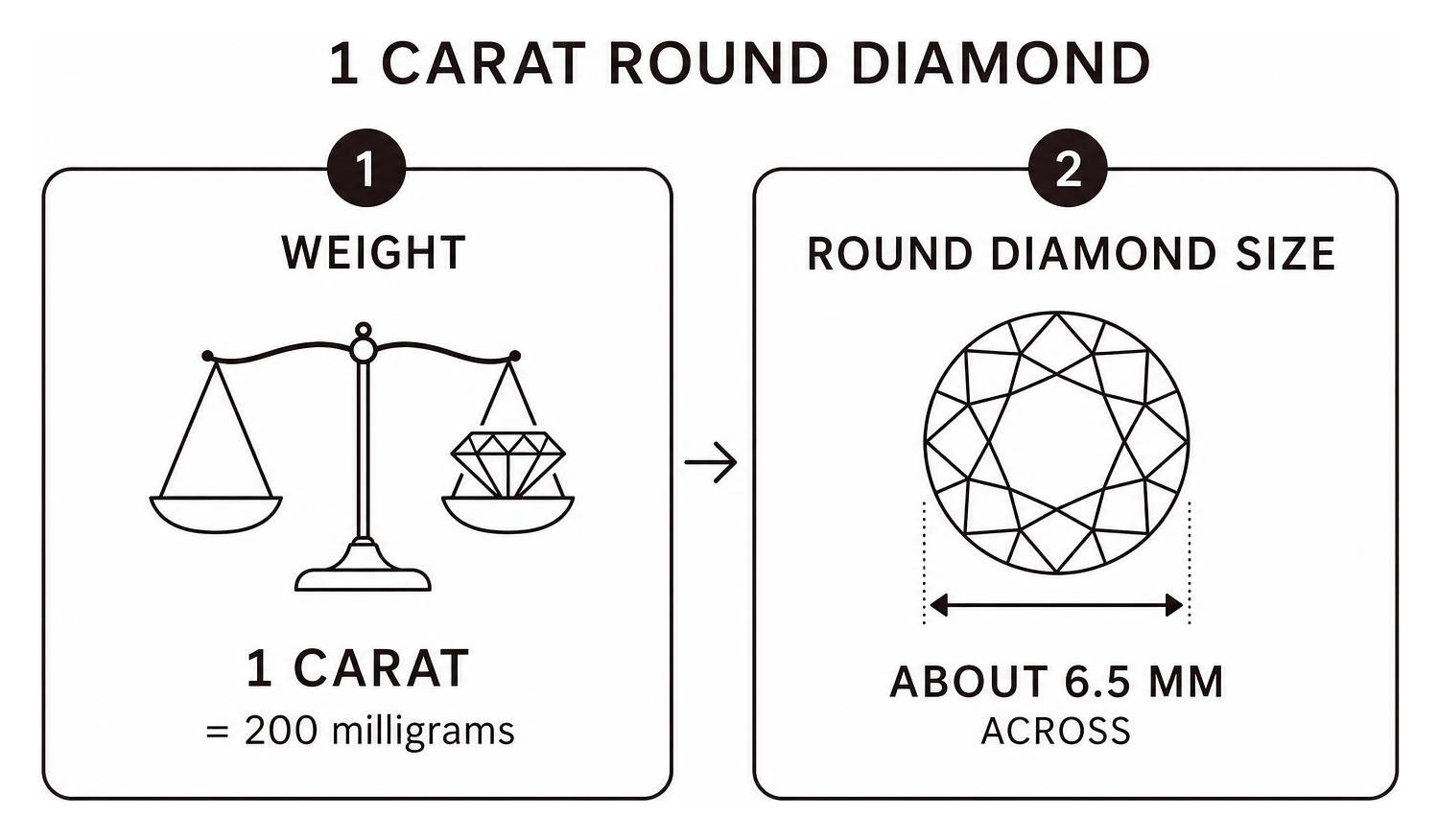
A 1 carat solitaire is a ring with one center diamond weighing 1 carat, or exactly 200 milligrams. In a well-cut round brilliant diamond, that weight typically measures about 6.5 millimeters across: large enough to make a clear statement, yet balanced for many hand shapes and daily wear.
The smart way to choose one is to prioritize cut first, then select a shape, setting, and band width that suit the wearer's finger proportions and personal style. A great cut creates the brightness and sparkle people notice most; carat weight alone does not. For a deeper understanding of how these factors interact, the Gemological Institute of America provides authoritative research on diamond quality and grading.
"Solitaire" describes the design, not the diamond grade. The center stone stands alone, allowing its shape, light performance, and handcrafted setting to do the visual work. From a sleek bezel to a classic four- or six-prong setting, this simple format can feel timeless, bold, or distinctly personal.
At John Atencio, qualifying domestic orders typically ship via FedEx 2-day service. John Atencio does not ship internationally to customers.
I am Lex Atencio, Executive Vice President at John Atencio, where I help clients explore handcrafted diamond jewelry with clear guidance on design, sourcing, and lasting wear. A 1 carat solitaire offers an especially versatile starting point for creating an engagement ring with real personal meaning.
Understanding the Appeal of the 1 Carat Solitaire
The 1 carat mark holds a celebrated place in bridal design. It represents an enduring cultural milestone, symbolizing commitment through an aesthetic that transcends passing trends. A solitaire ring highlights the center gem without the distraction of side stones, giving the design an effortless versatility that pairs gracefully with any wedding band.
Finger Coverage and Visual Scale
How a diamond looks on the hand is a matter of proportion. A standard 6.5 mm round diamond offers distinct presence across various finger sizes:
- Petite Fingers (Sizes 3–5): The stone occupies a generous percentage of the finger width, delivering substantial visual impact.
- Medium Fingers (Sizes 6–7): The diamond rests in classic equilibrium, balancing finger coverage with elegant band exposure.
- Larger Fingers (Sizes 8+): The diamond provides refined sparkle, which can be enhanced with broader band profiles or distinctive architectural metalwork.
Selecting the right band width can dramatically alter perceived proportions. A delicate 1.8 mm to 2.0 mm band accentuates the diamond's size, while a bolder, sculptural band creates a cohesive piece of wearable art.
The 4Cs: Balancing Cut, Clarity, Color, and Carat
Understanding the 4Cs of diamond quality empowers you to maximize beauty and value:
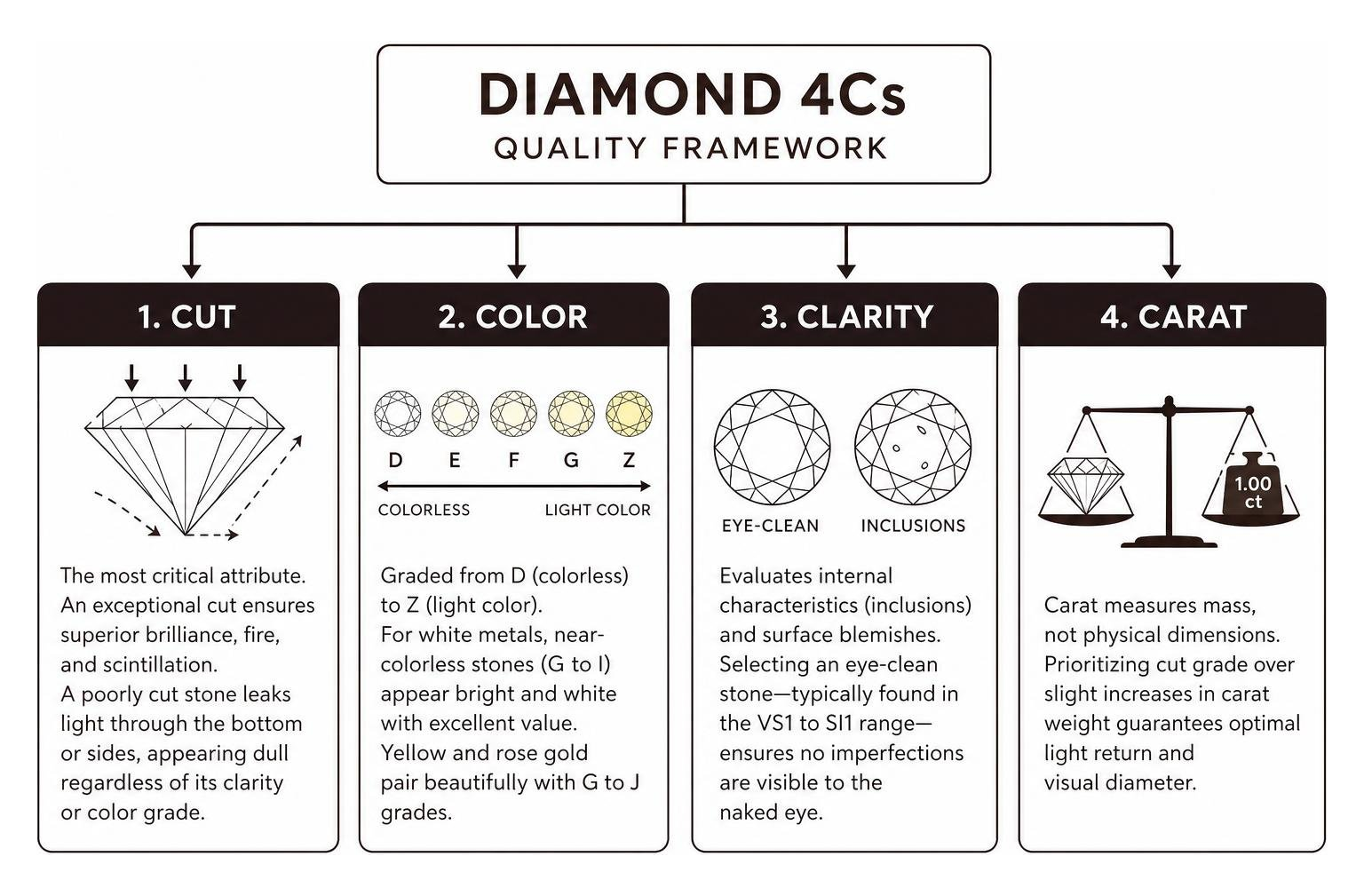
- Cut: The most critical attribute. An exceptional cut ensures superior brilliance, fire, and scintillation. A poorly cut stone leaks light through the bottom or sides, appearing dull regardless of its clarity or color grade.
- Color: Graded from D (colorless) to Z (light color). For white precious metals like platinum or white gold, stones in the near-colorless range (G to I) appear bright and white while offering exceptional value. Yellow gold and rose gold settings pair beautifully with G to J grades, as the warm metal naturally complements subtle undertones.
- Clarity: Evaluates internal characteristics (inclusions) and surface blemishes. Selecting an "eye-clean" stone—typically found in the VS1 to SI1 range—ensures no imperfections are visible to the naked eye.
- Carat: Carat measures mass, not physical dimensions. Prioritizing cut grade over slight increases in carat weight guarantees optimal light return and visual diameter.
Setting Styles and Diamond Shapes for Solitaire Rings
A thoughtfully designed setting secures the diamond while elevating its natural geometry. The pairing of precious metal and architectural mounting establishes the entire character of the ring.
Choosing the Best Diamond Cut for a 1 Carat Solitaire
While round diamond engagement rings remain the most sought-after choice—commanding over 75% of solitaire selections due to their 58-facet fire—fancy diamond shapes offer distinct profiles:
- Oval Cut: Elongates the finger and presents a larger surface area per carat than a round diamond.
- Princess Cut: Offers modern square geometry with sharp, brilliant sparkle.
- Emerald Cut: Features step-cut facets that create an understated "hall-of-mirrors" effect, celebrating purity and clarity.
- Pear Shape: Combines the brilliance of a round cut with the tapered drama of a marquise point.
| Diamond Shape | Relative Surface Spread | Primary Light Characteristic |
|---|---|---|
| Round Brilliant | Baseline (6.5 mm) | Maximum Fire and Brilliance |
| Oval | High (~10% larger visual spread) | Elongated Scintillation |
| Princess | Moderate (Square footprint) | Crisp, Geometric Sparkle |
| Emerald | High (Broad top table) | Linear Luster and Clarity |
| Pear | High (Extended silhouette) | Asymmetrical Brilliance |
Popular Solitaire Settings: Prongs, Bezel, and Cathedral
The right setting balances security, daily comfort, and design aesthetic:
- Four-Prong Mount: Minimal metal coverage allows maximum light entry, giving the diamond an airy, floating appearance.
- Six-Prong Mount: Adds structural security and accentuates the round silhouette of the stone.
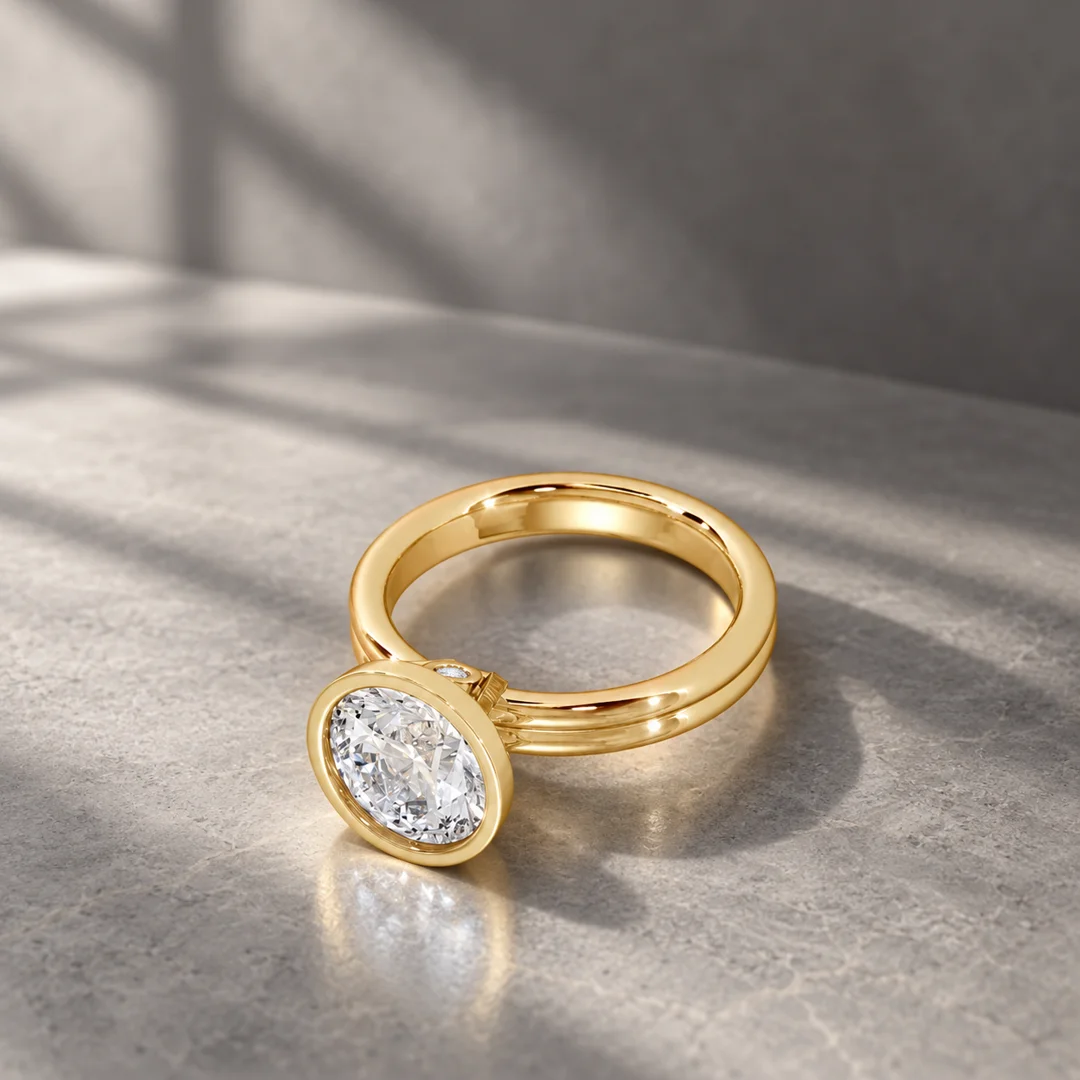
- Bezel Setting: Wraps the diamond's perimeter in a protective metal collar, offering a sleek, snag-free profile ideal for active lifestyles.
- Cathedral Setting: Gracefully sloping shoulders elevate the center stone, adding architectural depth to the profile.
When considering a classic mount, couples often evaluate solitaire vs halo engagement rings to decide whether they prefer pure, unadorned simplicity or a surrounding frame of accent diamonds. For curated designs, you can explore solitaire engagement rings by John Atencio or browse our complete selection of all engagement rings.
Cost Factors, Diamond Types, and Smart Buying Strategies
Navigating diamond options involves balancing stone origin, quality benchmarks, and metal selection.
Pricing and Budgeting for a 1 Carat Solitaire
Engagement ring investments vary based on cut precision, diamond origin, and mounting craftsmanship. Setting costs reflect the choice of premium 18-karat gold or platinum alongside artisan handcrafting. To establish a comfortable budget tailored to your goals, review our guide on how much should you spend on an engagement ring, and reference our detailed diamond pricing guide to understand market dynamics.
Natural vs. Lab-Grown Diamonds and Certification
Both natural and lab-grown diamonds consist of pure crystallized carbon and exhibit identical chemical, physical, and optical properties:
- Natural Diamonds: Formed deep within the Earth over billions of years, valued for their rarity and enduring geologic history.
- Lab-Grown Diamonds: Created through advanced technological processes replicating natural growth conditions, offering an accessible price point for larger carat weights or higher clarity grades.
When making a purchase, independent certification from trusted gemological laboratories such as the Gemological Institute of America (GIA) or International Gemological Institute (IGI) is essential. These grading reports document the 4Cs and correspond to microscopic laser inscriptions on the diamond's girdle. If you are researching remotely, our guide on how to shop for diamonds online provides essential insights on reviewing certificates and avoiding pitfalls like strong fluorescence, which can occasionally cause haziness in natural diamonds.
If you are exploring regional options, discover engagement rings Denver or review curated 1 carat engagement rings Denver CO to experience settings in person.
Frequently Asked Questions About Solitaire Engagement Rings
What is the exact millimeter size of a 1 carat round solitaire?
A properly proportioned 1 carat round brilliant diamond measures approximately 6.5 millimeters in diameter. If a stone's cut is overly deep, weight remains hidden below the girdle, making the diamond appear smaller (e.g., 6.1 mm). Conversely, a shallow cut may yield a wider diameter but compromises brilliance and light reflection.
How do I clean and care for a solitaire ring at home?
To maintain brilliance at home:
- Soak the ring in warm water mixed with mild, gentle dish soap for 15 to 20 minutes.
- Gently brush behind the setting and around the prongs using a clean, soft-bristled baby toothbrush.
- Rinse thoroughly under warm running water (ensure the drain is securely covered).
- Pat dry with a lint-free microfiber cloth.
- Schedule a professional cleaning and prong inspection annually to guarantee structural security.
Does a 1 carat solitaire setting provide enough security for daily wear?
Yes. Quality settings crafted in premium metals such as 18-karat gold or platinum are engineered to endure daily wear. Bezel settings offer maximum protection by encasing the stone's edges, while cathedral and heavy-prong settings provide exceptional defense against daily impact.
Conclusion: Selecting Your Timeless Solitaire
A 1 carat solitaire remains the definitive gold standard because it strikes the perfect balance of visual proportion, lasting elegance, and artistic versatility. At John Atencio, every ring is designed as a piece of wearable art, hand-crafted using responsibly sourced natural or lab-grown diamonds set into 18-karat gold, 14-karat gold, or platinum.
We invite you to explore our distinctive solitaire diamond engagement rings to find the design that speaks to your shared journey.
Please note that John Atencio ships domestic orders via FedEx 2-day service for dependable and secure delivery. John Atencio ships internationally to Canada only.