

Why 1 Carat Diamond Stud Earrings with Screw Backs Keep Your Diamonds Safe

Why Screw Backs Help Keep 1-Carat Diamond Studs Secure
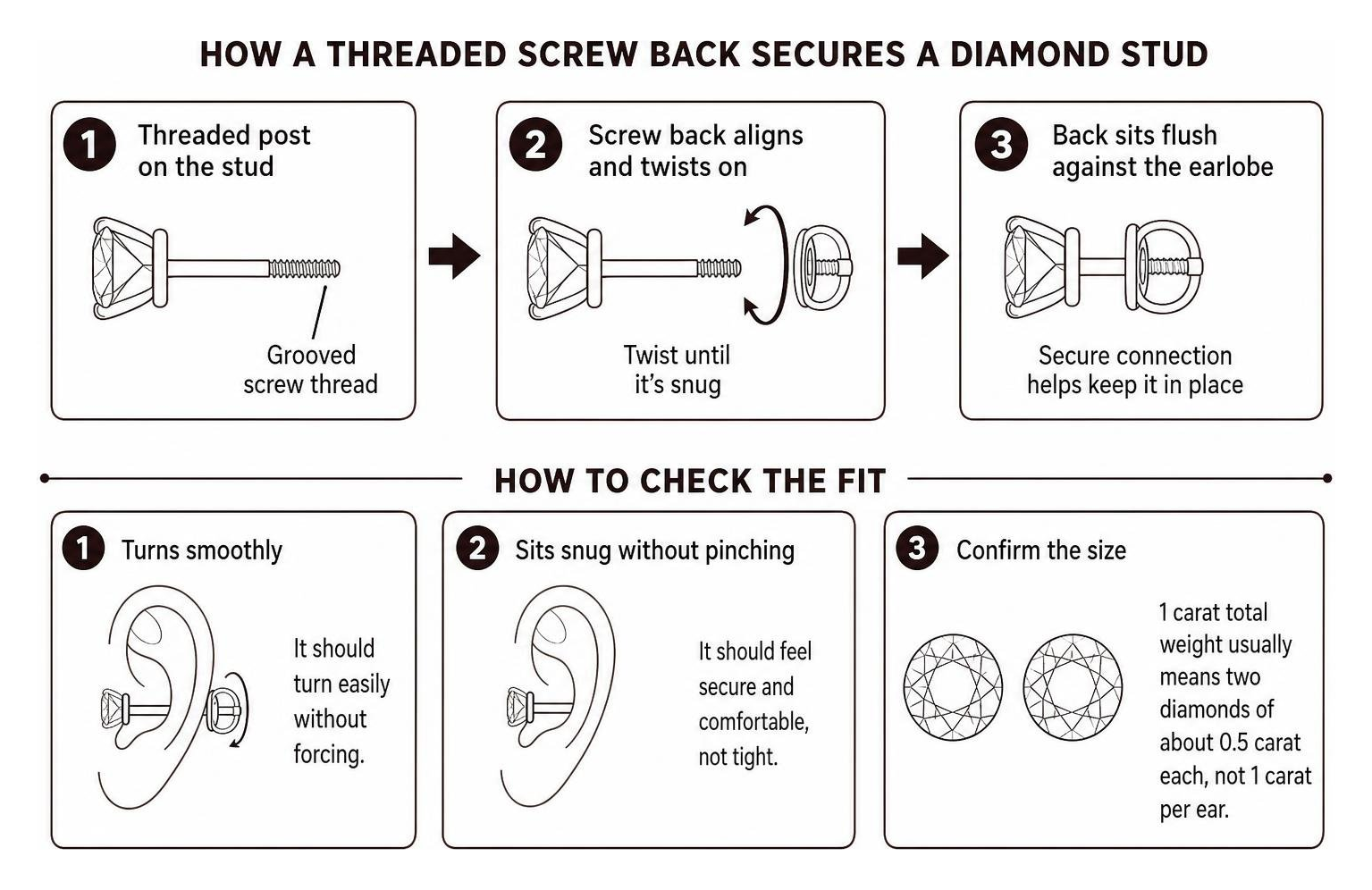
Choose 1-carat diamond stud earrings with screw backs if you want a backing that is less likely to slip off during daily wear. The back twists onto a threaded post rather than relying on friction alone. Check that it turns smoothly and sits snugly without pinching. Also confirm the size: 1 carat total weight usually means two diamonds of about 0.5 carat each, not 1 carat per ear.
A secure back helps keep the earring on your ear; it does not replace regular checks of the setting that holds the diamond. If you are ordering for a milestone, allow for timing too. John Atencio typically ships in-stock styles via FedEx 2-day service, while custom engagement rings and special orders typically take 6-8 weeks to hand-craft. Online orders can also ship to Canada.
I'm Lex Atencio, Executive Vice President at John Atencio. My fine-jewelry experience helps me guide buyers searching for 1 carat diamond stud earrings screw back toward the details that matter most: fit, stone size, and security.
Understanding 1 Carat Diamond Stud Earrings with Screw Backs
When investing in fine diamond jewelry, security is just as essential as sparkle. A classic diamond stud is designed to be worn continuously—from morning board meetings and gym sessions to evening galas. However, standard push backings (also known as butterfly or friction backs) rely entirely on physical tension against a smooth metal post. Over time, that tension relaxes, turning a wardrobe staple into an accidental loss waiting to happen.
Threaded screw backs eliminate this risk by using precision machining. The earring post features a grooved screw thread, and the earring back contains matching internal threads. Instead of pushing the clutch onto the post, you screw it into position until it sits comfortably flush against the rear of your earlobe.
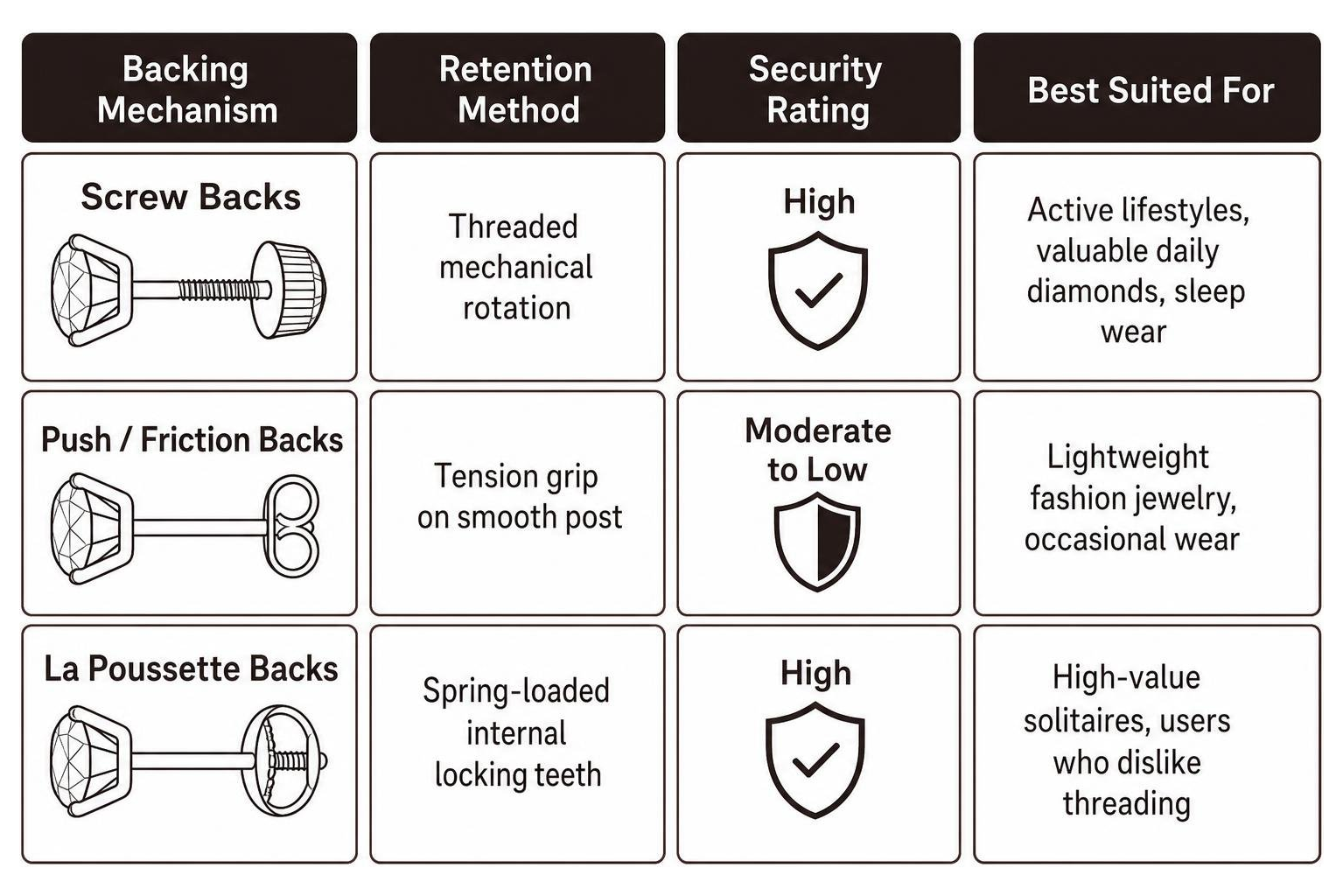
| Backing Mechanism | Retention Method | Security Rating | Best Suited For |
|---|---|---|---|
| Screw Backs | Threaded mechanical rotation | High | Active lifestyles, valuable daily diamonds, sleep wear |
| Push / Friction Backs | Tension grip on smooth post | Moderate to Low | Lightweight fashion jewelry, occasional wear |
| La Poussette Backs | Spring-loaded internal locking teeth | High | High-value solitaires, users who dislike threading |
As the Gemological Institute of America outlines in its educational materials on selecting stud styles, balancing your lifestyle requirements with backing security ensures your investment stays where it belongs.
Why choose 1 carat diamond stud earrings screw back for daily security
The primary reason fine jewelry collectors gravitate toward threaded closures is physical reliability. Standard friction clutches are notorious for catching on chunky knit sweaters, scarves, motorcycle helmets, or bath towels. When pulled abruptly, a push back easily slides right off the post.
A threaded screw back cannot be pulled off in a single motion. It requires deliberate rotational turns to unscrew. Whether set in classic four-prong baskets or minimalist secure 3-prong stud earrings, pairing threaded posts with your diamonds creates peace of mind for daily wear.
Potential drawbacks and handling of threaded posts
While screw backs offer outstanding retention, they do require a slight learning curve:
- Cross-Threading: If the backing is tilted when you begin twisting, the delicate metal threads can bind. Always ensure the back is aligned straight with the post before turning.
- Post Thickness: Threaded posts are slightly thicker than smooth friction posts to accommodate the groove depth. If your ear piercings are sensitive or very narrow, you may feel mild tightness during the first few days of wear.
- Thread Hygiene: Hair products, lotions, and natural oils can collect in the screw grooves, making the backing stiff to turn. A quick soak in warm soapy water keeps the threads operating smoothly.
Sizing, Total Carat Weight, and Diamond Quality Factors
Choosing diamond studs requires a solid understanding of diamond geometry. Unlike rings, which are viewed up close from multiple angles, diamond stud earrings are viewed primarily face-on from a distance.

For a deeper dive into proportions, table percentages, and setting options, explore our complete 1-carat diamond earrings guide or review our comprehensive 1 ct diamond earrings buying guide.
Total Carat Weight (CTW) vs. Individual Stone Carat Weight
One of the most frequent points of confusion among buyers is the distinction between Total Carat Weight (CTW or CT T.W.) and individual stone carat weight:
- 1.00 Carat Total Weight (CTW): The combined weight of both earrings is one full carat. Each individual earring features a 0.50-carat diamond measuring approximately 5.0 to 5.2 millimeters across.
- 1.00 Carat Per Ear (2.00 CTW Solitaires): Each earring holds a full 1.00-carat diamond measuring approximately 6.4 to 6.5 millimeters in diameter.
If you desire a single standout gem in each lobe, consult our solitaire 1 stone diamond earrings guide. For those who prefer maximum visual drama, stepping up to larger 3 carat total weight diamond stud earrings offers expansive face-up coverage.
Grading Impact: Color, Clarity, and Certification (GIA vs. IGI)
Diamond beauty is governed by cut precision, color purity, and clarity characteristics:
- Color Grades: The D–F range represents completely colorless diamonds, providing an icy look in white gold. Near-colorless diamonds in the G–J range offer exceptional visual value, appearing bright and white face-up once mounted in precious metal.
- Clarity Grades: VVS to VS clarity grades guarantee that the stones are completely clean to the naked eye. Even SI grades frequently offer brilliant light performance without noticeable visible inclusions.
- Independent Certification: Always ensure your diamonds are accompanied by reputable independent grading dossiers from institutes such as the GIA (Gemological Institute of America) or IGI (International Gemological Institute).
If you are weighing balance between stone size and grading thresholds, our 2ct diamond stud earrings buying guide walks through optimal cut and symmetry parameters.
Natural vs. Lab-Grown Diamonds and Precious Metal Settings
Both natural mined diamonds and lab-grown diamonds provide identical visual brilliance, physical hardness, and optical fire. The choice between them comes down to personal philosophy and budget optimization.
- Natural Diamonds: Formed deep within the Earth over billions of years, mined diamonds represent enduring rarity and geologic wonder.
- Lab-Grown Diamonds: Created in controlled laboratory environments using Advanced Chemical Vapor Deposition (CVD) or High Pressure High Temperature (HPHT) methods, lab diamonds share the exact crystal lattice of mined gems.
Price comparison for 1 carat diamond stud earrings screw back settings
Choosing between lab-grown and mined stones significantly influences your overall fine jewelry investment:
- Natural Diamond Studs: Reflect a substantial premium based on geographic scarcity, high grading credentials (such as D–F color and VVS clarity), and heirloom value retention over generations.
- Lab-Grown Diamond Studs: Allow collectors to acquire pristine color and clarity grades at an accessible entry point, making them popular for active everyday wear.
Precious metal choices also play a role. Premium solid golds—such as 14K and 18K white, yellow, or rose gold—offer superior strength and lasting value compared to gold-plated silver alternatives, which wear down quickly with daily contact.
Metal durability and long-term care
For high-security stud earrings, metal composition matters:
- 14K Gold: Blends 58.3% pure gold with durable alloy metals (such as nickel, copper, or silver). This formulation offers superior tensile strength, making 14K gold the industry standard for threaded posts and prongs that undergo regular rotational friction. Review our 14k diamond earrings guide for 2026 for metal selection details.
- 18K Gold: Contains 75% pure gold, delivering a rich, warm yellow luster or an ultra-refined white gold finish. While slightly softer than 14K, it is hypoallergenic and kind to sensitive ears.
- Rhodium Plating: White gold studs are finished with a microscopic layer of bright rhodium. To preserve their mirror-like shine, plan on professional rhodium re-plating every few years.
Buying Considerations, Hidden Costs, and Customer Protections
A fine jewelry purchase should always come with comprehensive support and clear documentation:
- Transparent Return Windows: Reputable fine jewelers provide 30-day return or exchange periods to inspect the stone brilliance, post thickness, and threading ease at home.
- Craftsmanship Warranties: Look for lifetime guarantees covering manufacturing defects, prong integrity checks, and ultrasonic cleanings.
- Appraisals and Insurance: Keep your independent grading certificates and purchase appraisal updated. Adding fine jewelry coverage to a homeowner's policy or specialized jewelry policy protects against catastrophic loss.
- Routine Maintenance: Factor in minor periodic upkeep, such as re-tightening prongs or replating white gold mounts, to keep your studs pristine.
Frequently Asked Questions About 1-Carat Diamond Stud Earrings
How tight should I screw the backings on diamond stud earrings?
Turn the backing until it rests flush against your earlobe with gentle finger-tight tension. Never force or over-tighten the backing with tools, as excessive torque can strip the micro-threads or cause earlobe discomfort. Check the snugness with a quick touch of your fingers when getting dressed.
Are lab-grown diamonds as durable as natural diamonds in stud earrings?
Yes. Lab-grown diamonds rate a perfect 10 on the Mohs hardness scale, sharing the identical chemical and crystalline structure of mined diamonds. They are completely scratch-resistant to daily environmental contact and will never cloud or change color over time.
How do I clean and maintain threaded screw back posts?
Clean your diamond studs every few weeks by soaking them in warm water mixed with mild, lotion-free dish soap. Use an extra-soft toothbrush to gently clean around the basket prongs and brush along the spiral grooves of the threaded post to clear away cosmetic buildup.
Conclusion
A pair of 1-carat diamond stud earrings represents effortless sophistication and lasting elegance. By selecting precision-machined screw backs, you ensure that your treasured solitaires remain secure on your ears throughout every busy day and evening celebration.
At John Atencio, every design is hand-crafted with artistry, attention-to-detail, and master gem-setting standards. In-stock styles ship via FedEx 2-day service, while custom engagement rings and special orders typically take 6–8 weeks to hand-craft. Online orders can be shipped throughout the US and also to Canada.
To explore our complete curated gallery of fine solitaires, find diamond stud earrings for women for the perfect holiday gift or contact our expert design team to create a personalized heirloom.
— Lex Atencio, Executive Vice President