
Buying a 1ct Solitaire Diamond Ring in Yellow Gold: Key Setting and Quality Tips

How to Choose a 1-Carat Diamond Solitaire in Yellow Gold
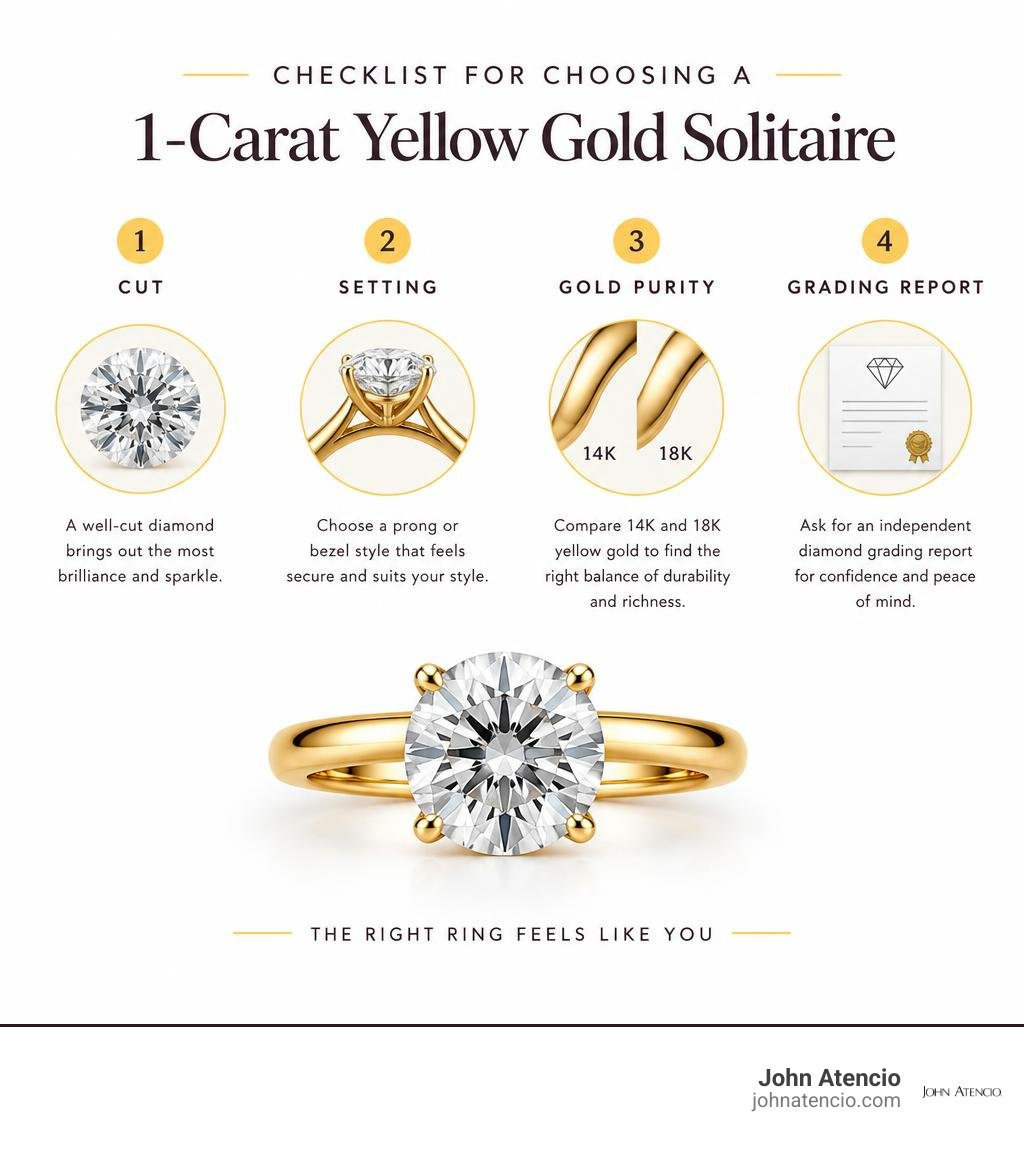
Start with the diamond's cut, then check the setting. A well-cut 1-carat diamond can look bright and lively, while a secure setting keeps it suited to daily wear. Compare 14K and 18K yellow gold, choose a prong or bezel style you love, and ask for an independent diamond grading report. "1ct" means the diamond weighs one carat; it does not tell you how large it will look or how well it will sparkle.
A 1ct solitaire diamond ring in yellow gold should feel personal, not like a default choice. Band shape, finish, and diamond shape can make a simple solitaire distinctly yours. If timing matters, in-stock styles typically ship via FedEx 2-day service. Custom engagement rings, sizing changes, and special orders typically take 6-8 weeks to hand-craft, and online orders can be shipped throughout the US and to Canada.
I'm Lex Atencio, Executive Vice President at John Atencio Jewelry. My experience in jewelry informs this guide for anyone selecting a 1ct solitaire diamond ring in yellow gold and weighing the details that make a ring worth choosing. For independent guidance on evaluating diamond quality, the Gemological Institute of America's diamond buying guide is a useful reference.
Selecting the Perfect 1ct Solitaire Diamond Ring in Yellow Gold Setting

Selecting an engagement ring setting is both an aesthetic decision and an architectural one. A solitaire design strips away peripheral distractions, focusing all attention directly on the center stone and the sculptural lines of the precious metal holding it.
When you select a yellow gold setting, you bring an intrinsic warmth and historic pedigree to the design. Yellow gold provides a rich contrast that frames the brilliance of the center stone. Understanding the basic properties of precious metals begins with our glossary on what is gold, where gold content and alloy durability are defined.
A well-crafted setting must properly balance structural integrity with visual delicacy. When choosing the right carat size, proportion is everything. A 1-carat diamond offers a versatile scale: substantial enough to make a distinctive statement on the hand, yet nimble enough to pair seamlessly with low-profile daily wear rings and artistic bands.
The Significance of Diamond Size in a 1ct Solitaire Diamond Ring in Yellow Gold
The "1ct" mark refers strictly to carat weight—specifically 200 milligrams—not geometric surface dimensions. For a standard round brilliant diamond, a 1.00-carat weight typically translates to a diameter of roughly 6.4 to 6.5 millimeters.
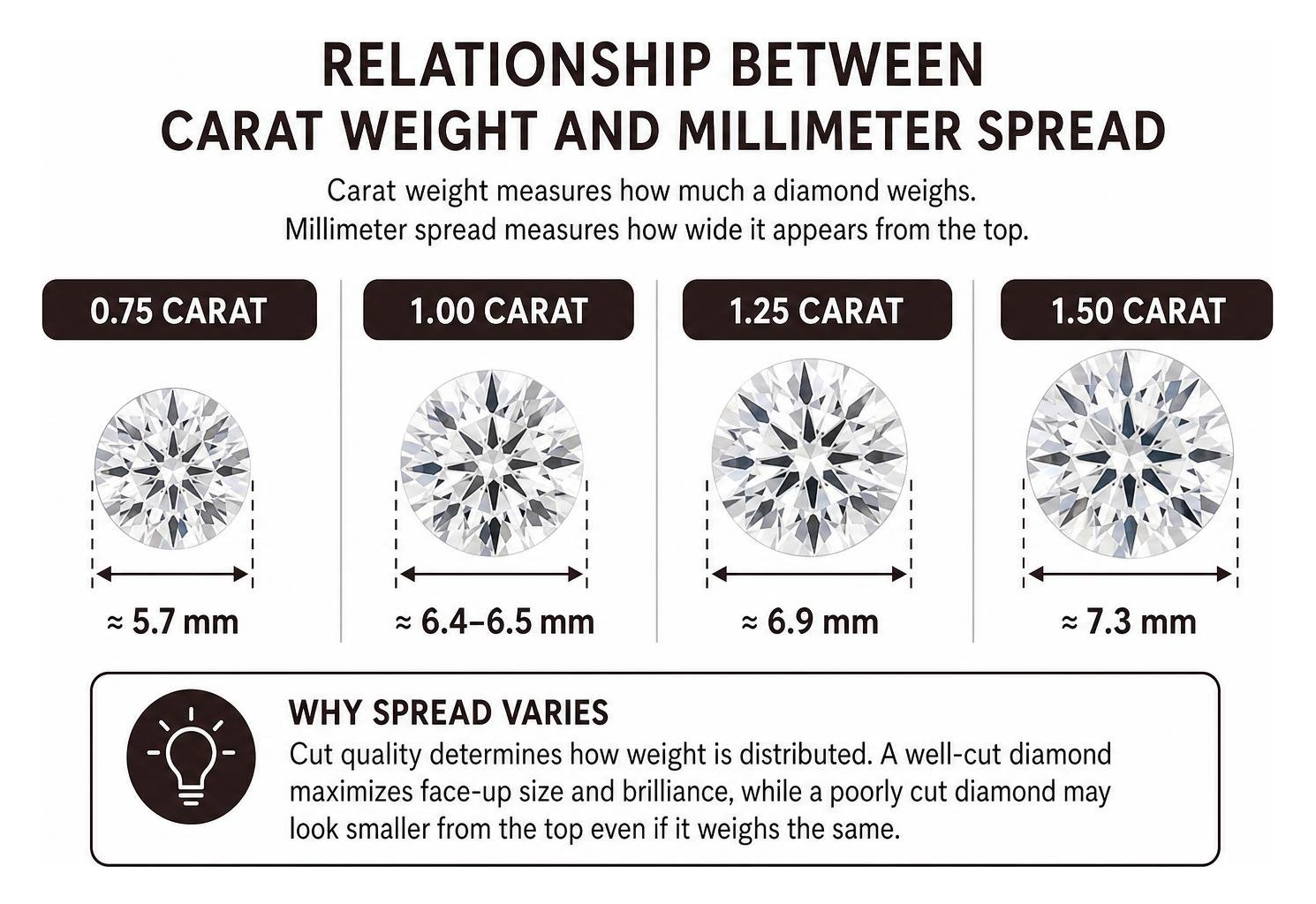
However, cut quality dictates how that weight is distributed. A poorly cut stone may hide unnecessary weight in a deep pavilion (the bottom of the diamond), causing it to appear noticeably smaller from the top view than a masterfully cut diamond of identical weight. In our world of solitaire diamond engagement rings, ensuring that the diamond exhibits full visual spread and exceptional light reflection is the true hallmark of fine jewelry design.
Maximizing Value for Your 1ct Solitaire Diamond Ring in Yellow Gold
Creating value when investing in fine jewelry involves understanding where to focus your resources. In deciding how much you should spend on an engagement ring, smart buyers focus on visual performance rather than arbitrary numbers on a grading certificate.
- Natural Diamonds: Mined over billions of years, natural diamonds represent geological history and enduring rarity.
- Lab-Grown Diamonds: Sharing identical chemical, physical, and optical properties with mined diamonds, lab-grown gems provide an opportunity to secure pristine clarity and larger dimensions within your target budget.
- Craftsmanship Over Mass Production: Mass-market mountings often skimp on metal weight, resulting in thin prongs that wear down rapidly. Investing in a solid, architectural mounting ensures your center stone remains safe over decades of continuous wear.
Evaluating Diamond Quality: The 4Cs in Warm Gold Settings
Navigating the 4Cs of diamond quality—Cut, Color, Clarity, and Carat—requires a slightly different strategy when setting a diamond in yellow gold compared to white metals. Knowing how to pick a diamond means understanding how your diamond interacts directly with the surrounding precious metal. The Gemological Institute of America's 4Cs diamond guide offers a helpful independent reference for these quality factors.
Diamond Cut and Light Performance
Cut is paramount. It determines how effectively a diamond's facets refract and reflect light back to the viewer's eye.
A diamond graded "Excellent" or "Ideal" in cut directs light through its crown with minimal leakage through the sides or bottom. This dynamic creates three critical elements of beauty:
- Brilliance: The total white light returned to the eye.
- Fire: The dispersion of white light into vivid rainbow spectral colors.
- Scintillation: The sparkle and pattern of light and dark flashes created when the ring moves.
A masterfully cut diamond masks minor body color and microscopic inclusions purely through sheer sparkle and light return.
Color and Clarity Optimization for Yellow Gold
In white gold or platinum settings, diamonds in the lower color ranges (I through K) may reveal subtle body warmth against the icy white prongs. Yellow gold, however, provides a complementary, warm backdrop.
This environment allows you to select diamonds in the G, H, I, or even J color grades without noticing tinting from above. The rich tones of yellow gold reflect into the stone, making near-colorless diamonds look bright and lively while freeing up resources for higher cut grades.
| Diamond Color Range | Grade Category | Visual Appearance in Yellow Gold | Visual Appearance in Platinum / White Gold |
|---|---|---|---|
| D – F | Colorless | Exceptionally crisp; contrasts vividly with yellow metal | Pure icy brilliance; no discernible tint |
| G – H | Near-Colorless | Excellent balance; appears bright white against gold | Crisp, clean face-up appearance |
| I – J | Near-Colorless | Warmth blends harmoniously with yellow gold mounting | Very faint warm undertone may be detectable |
| K – M | Faint | Subtle warm glow; vintage aesthetic | Noticeable champagne/yellowish tint |
For clarity, prioritize "eye-clean" stones—typically found within the VS1, VS2, and clean SI1 grades. Inclusions situated toward the outer edges of the stone can often be artfully concealed beneath a gold prong during setting.
Solitaire Ring Setting Styles and Diamond Shapes
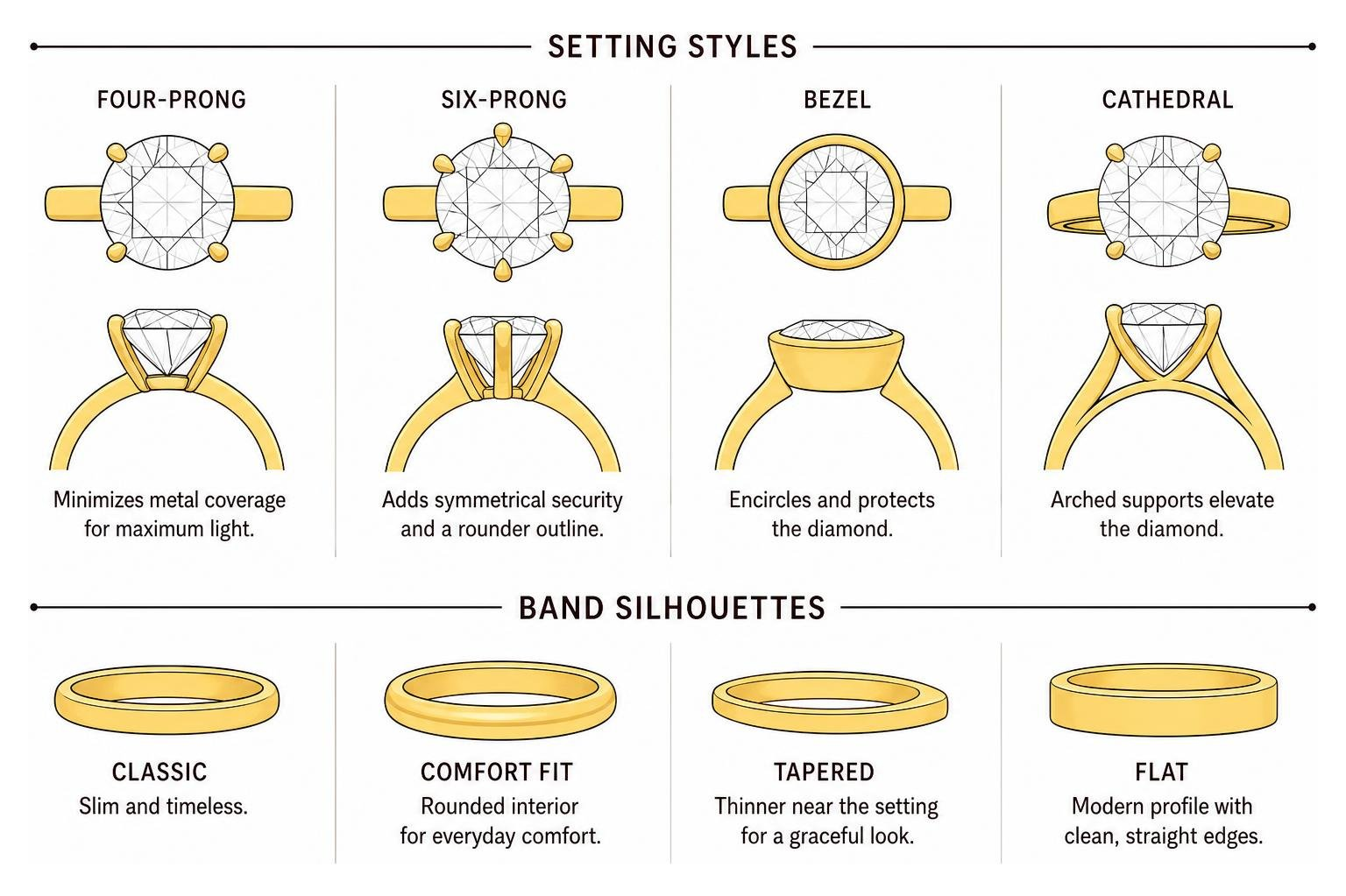
The solitaire style is a versatile foundation. Through varying band profiles, prong configurations, and textural treatments, a single center stone can express sleek minimalism, vintage romance, or modern architectural boldness.
Setting choices include:
- Classic Four-Prong: Minimizes metal coverage, letting maximum light enter the stone from all angles.
- Six-Prong Setting: Adds symmetrical security and lends a rounder outline to circular diamonds.
- Bezel Setting: A modern rim of yellow gold completely encircles the diamond, protecting the girdle against accidental impacts.
- Cathedral Setting: Graceful arches of gold sweep upward from the band to flank the center diamond, elevating its presence on the finger.
For those drawn to slender contours, thin band engagement rings offer a delicate aesthetic that accentuates the diamond's relative size.
Finishes also change the ring's character: while a mirror polish remains a classic, tactile options like our 14k yellow gold satin polish finish introduce understated texture.
Classic and Fancy Diamond Shapes
While the round brilliant remains an iconic choice, fancy-cut diamonds provide distinct silhouettes:
- Oval Cut: The Essence Solitaire Oval Engagement Ring creates an elongated line on the finger, offering a larger surface area than a round stone of equivalent carat weight.
- Cushion Cut: The Essence Solitaire Cushion Engagement Ring blends curved corners with modern faceting for a romantic, pillow-like profile.
- Princess Cut: For clean, contemporary geometry, the Essence Solitaire Princess Cut Engagement Ring delivers crisp 90-degree corners and dynamic brilliance.
- Radiant Cut: The Essence Solitaire Radiant Engagement Ring combines the structured silhouette of an emerald cut with the intense sparkle of brilliant-cut facets.
Band Details, Textures, and Customization
A solitaire need not be plain. Textural touches like our yellow gold band with braid pattern add dimension to the setting.
If you have a clear vision for an original creation, our bespoke team can guide you to design your own engagement ring, shaping an architectural piece that fits your lifestyle.
Metal Purity and Durability: 14K vs. 18K Yellow Gold
Pure gold (24 karat) is naturally soft, malleable, and prone to bending, making it unsuitable for securing fine gemstones. To provide structural strength, pure gold is alloyed with balancing metals such as copper, silver, and zinc.
Our exploration of 18 karat yellow gold highlights why this purity level is prized in fine jewelry: it offers a deep, buttery tone alongside comfortable weight. According to the Gemological Institute of America, karat purity directly affects a gold alloy's color, hardness, and resistance to wear.
| Feature | 14K Yellow Gold | 18K Yellow Gold |
|---|---|---|
| Gold Purity | 58.3% Pure Gold | 75.0% Pure Gold |
| Color Hue | Warm, soft champagne-yellow | Rich, radiant, classic yellow |
| Durability & Hardness | Higher resistance to scratches and scuffs | Slightly softer; develops a soft patina over time |
| Hypoallergenic Profile | Very good for most skin types | Outstanding; suited for sensitive skin |
Maintenance and Care for Yellow Gold Rings
Yellow gold retains its warm color without requiring rhodium plating over time. However, keeping the diamond and mounting clean ensures consistent light return and beauty:
- Routine At-Home Soaks: Place your ring in a shallow bowl of warm water mixed with a few drops of mild dish soap. Allow it to soak for 15 minutes to loosen accumulated lotions and oils.
- Gentle Brushing: Use a clean, extra-soft toothbrush to lightly clean underneath the diamond's setting, where debris often gathers and blocks light transmission.
- Rinse and Pat Dry: Rinse thoroughly in lukewarm running water (remember to plug the drain first) and dry with a lint-free microfiber cloth.
- Annual Professional Inspections: Visit a professional jeweler every 12 months to verify prong tension and check for signs of wear.
Authenticity, Hallmarks, and Diamond Certification
When acquiring a 1-carat diamond ring, independent third-party certification is essential. Premier institutions like the Gemological Institute of America (GIA) provide grading reports detailing precise measurements, carat weight, cut, color, and clarity.
On the ring's interior, verify the metal hallmarks:
- "14K" or "585" denotes 14-karat gold (58.5% purity).
- "18K" or "750" denotes 18-karat gold (75% purity).
- A registered maker's mark (such as John Atencio) identifies the design house and confirms its origin.
Frequently Asked Questions About 1ct Yellow Gold Solitaire Rings
What color grade looks best in a yellow gold solitaire ring?
For yellow gold settings, the G through J color grades offer an ideal balance of visual beauty and value. The warm tones of yellow gold complement faint color hints, making a near-colorless diamond look clean and white face-up while allowing you to allocate more of your budget toward cut quality.
Is 14K or 18K yellow gold better for an everyday engagement ring?
Both purities work well for daily wear. Choose 14K if you have an active lifestyle and want extra scratch resistance; choose 18K if you prefer a richer yellow color, higher gold purity, and a substantial feel.
How do I protect and secure a 1-carat diamond in a solitaire setting?
Select a setting built with solid, well-proportioned prongs or a full bezel. Avoid wearing your ring during heavy lifting or high-impact activities, and have the prongs inspected by a jeweler at least once a year.
Conclusion
A 1-carat yellow gold solitaire ring is an enduring choice, balancing classic style with warm, wearable design. By prioritizing cut quality and pairing your center stone with an architecturally sound setting, you create a piece meant to be enjoyed for a lifetime.
At John Atencio, our designs bring a distinctive approach to bridal jewelry, balancing clean lines with comfortable wear. Explore our collection of distinctive solitaire diamond engagement rings or collaborate with our team to create a custom piece.
In-stock styles will ship via FedEx 2-day service, while custom engagement rings and special orders are typically hand-crafted in 6–8 weeks. Online orders can throughout the US and to Canada.
— Lex Atencio, Executive Vice President

